15 Back to School Hairstyles Braids That Are Fast, Fresh, and Actually Last All Day
Does this sound familiar? It’s 7 AM, school starts in 45 minutes, your kid is sitting in the kitchen chair, and you’re staring at their hair with absolutely no plan. Or maybe you’re the student — scrambling to look put-together before first period. Either way, back to school hairstyles braids are the answer I wish someone had handed me years ago. I’ve researched, tested, and compiled the most practical, age-appropriate, and genuinely beautiful braided styles for students of every age and hair type.
So, what are the best back to school hairstyles with braids? The best back to school braid hairstyles are secure, low-maintenance styles that stay neat through a full school day. Top options include Dutch braids, French braids, fishtail braids, box braids, cornrows, and braided ponytails — all of which hold well for 6–10 hours without constant touch-ups.
Keep reading — I’m covering all 15 braid styles with step-by-step guidance, age recommendations, hair type notes, a full comparison table, care tips, and everything you need to walk out the door looking great on the very first day.
Why Braids Are the Ultimate Back-to-School Hairstyle
Let me be direct about this: braids are the smartest back-to-school hair decision you can make. They keep hair off the face during class, survive gym class and outdoor recess, work with school dress codes, look intentional even on rushed mornings, and — here’s the real kicker — many braided styles get better looking as the day goes on. A braid that was slightly tight in the morning softens beautifully by lunch. Try saying that about a blowout.
Beyond practicality, braids are a genuine form of self-expression. From sleek and polished for middle school to bold and creative for high school, there’s a braided back-to-school look for every personality, age group, and hair texture. Let’s get into all 15 of them.
15 Back to School Hairstyles Braids for Every Age and Hair Type
1. Classic French Braid

Source: @Instagram
If there’s one braid every school-age person should know — or every parent should master — it’s the French braid. It’s the backbone of school-ready hair: elegant enough to look intentional, secure enough to survive an entire school day, and universally appropriate from kindergarten through senior year.
The French braid starts at the crown and incorporates new sections of hair as it travels down toward the nape. Three working sections — left, right, center — cross alternately over the center while new hair is added from each side. The result is a flat, woven braid pressed close against the head. For beginners, practice on slightly damp hair — it’s easier to grip and holds the braid tighter. Secure the end with a small elastic and finish with a light-hold spray for all-day staying power. Works on all face shapes and all hair textures.
The Dutch braid takes this concept and flips it beautifully — literally.
2. Dutch Braid (Reverse French Braid)

Source: @Instagram
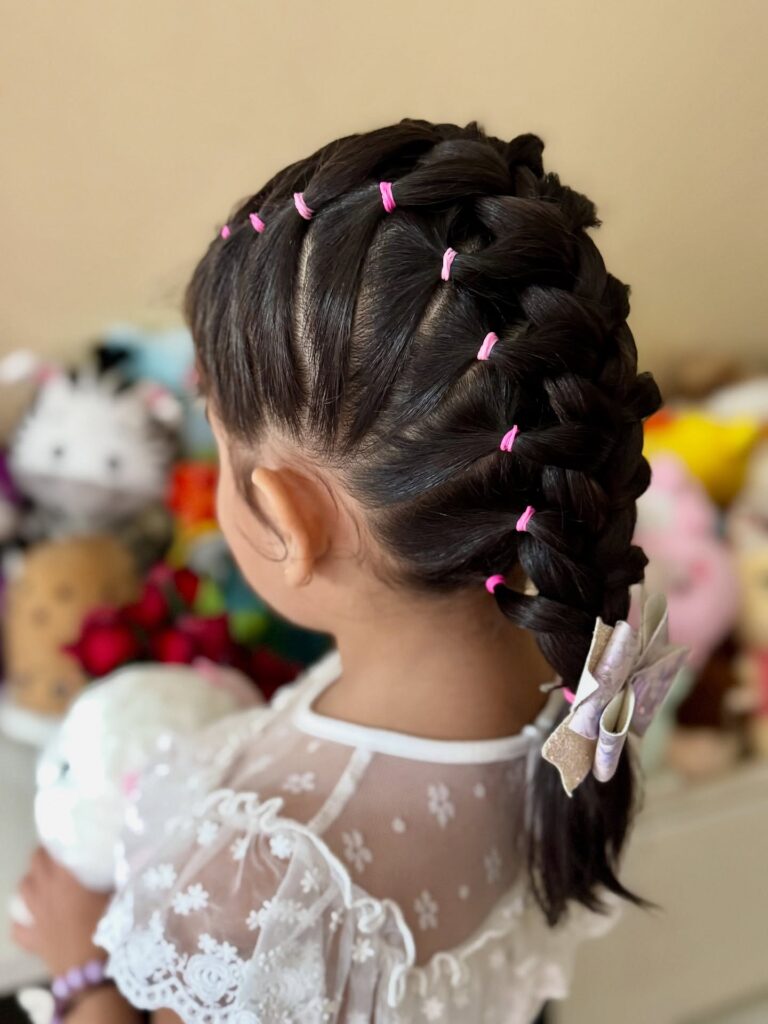
The Dutch braid is made using the exact same technique as the French braid, except the sections cross under rather than over the center — which makes the braid sit on top of the hair instead of flat against it. The raised, three-dimensional look is bolder, more textured, and honestly more striking than a French braid, while being equally secure.
For school, the Dutch braid is a genuine go-to. It stays put through gym class, reading periods, and cafeteria chaos alike. Spray each section lightly as you braid to keep flyaways controlled. For a softer, more relaxed look, gently tug the outer edges of the braid after finishing — this “pancaking” technique widens the braid and creates a full, voluminous effect. Works beautifully on all hair textures, particularly gorgeous on wavy hair where the texture shows through the raised braid.
3. Double Dutch Braids

Source: @Instagram
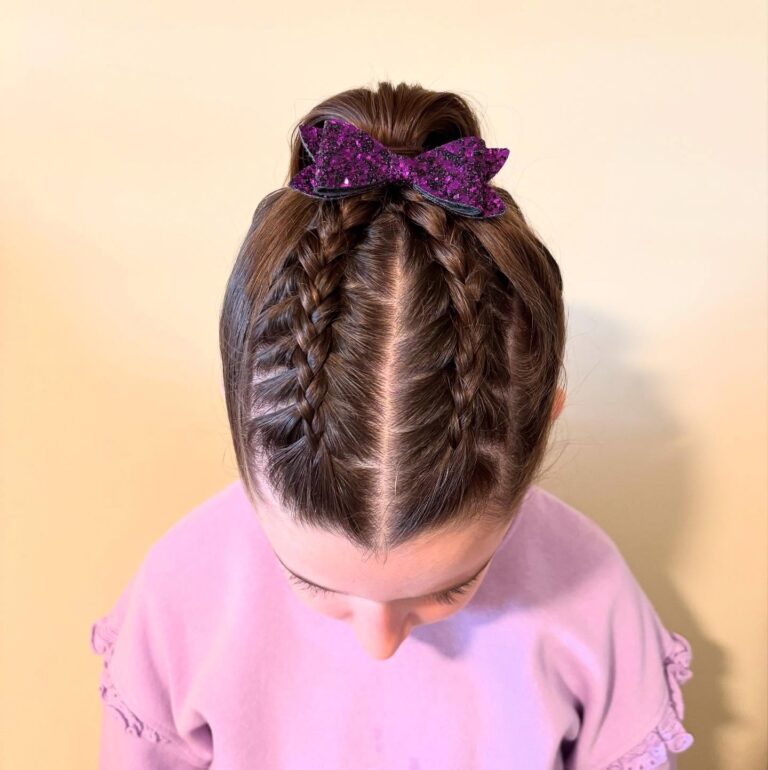
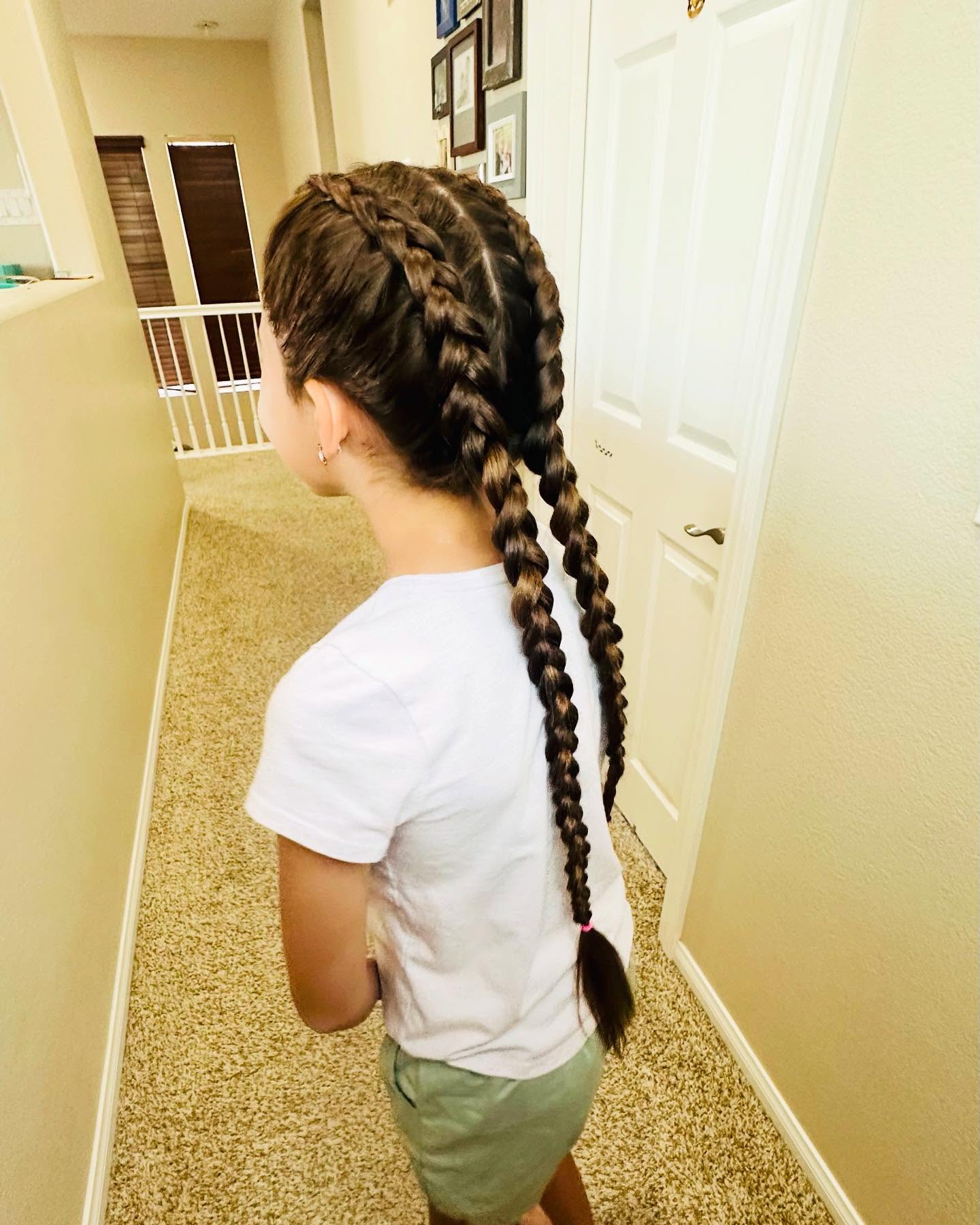
Two Dutch braids — one on each side of a center part, running from crown to nape — are the ultimate school braid for active kids and teens. This style is completely symmetrical, keeps all hair fully contained, survives literally any physical activity, and looks undeniably cool. Gymnasts, athletes, and style-conscious students all wear this one for good reason.
Part the hair precisely down the center from forehead to nape. Then Dutch braid each side independently, starting at the crown and incorporating hair as you go down. Secure each braid with a matching elastic at the nape. For a more polished school look, tie a small ribbon or scrunchie over each elastic. For a sportier look, leave the elastics plain. This style works on all hair lengths from bob to very long and suits all face shapes. It’s especially flattering on round faces, as the vertical lines of the braids elongate the face.
4. Simple Three-Strand Braid with Accessories

Source: @Instagram
Never underestimate the classic three-strand plait. It sounds too basic — but with the right accessories woven through or clipped onto it, this braid transforms into something genuinely special for the first day of school. Think: small pearl pins woven through the braid, a silk ribbon tied at the base, or metallic cuffs slid over individual sections.
This is the fastest braid on the list — under two minutes for most hair lengths. It’s also the most beginner-friendly for kids learning to do their own hair. The key is keeping the tension even as you braid, which prevents a lopsided, lumpy result. For school, secure the end with a strong elastic and spray lightly for hold. This braid works on all hair textures and all hair lengths above the shoulders.
5. Fishtail Braid

Source: @Instagram
The fishtail braid looks like it took thirty minutes of professional-level skill. It didn’t. Once you get the hang of the two-section technique — taking a thin slice from the outer edge of one section and crossing it to join the other — it becomes almost meditative. And the result is a beautifully intricate, woven texture that looks genuinely impressive at school.
For back-to-school, the fishtail braid works equally well as a single braid down the back, a side fishtail braid, or a fishtail ponytail. For a more effortless look, gently tug the outer edges after finishing to loosen and widen the braid. This “messy fishtail” style is enormously popular with high school students. Works best on medium to thick hair and suits all face shapes. On fine hair, a light texturizing spray before braiding gives the hair something to grip.
6. Braided Ponytail

Source: @Instagram
The braided ponytail is the smart person’s upgrade to a plain ponytail. Secure hair in a high or low ponytail first, then braid the entire length of the ponytail in any style — three-strand, fishtail, rope braid — and secure the end with a second elastic. Instant upgrade. Maximum practicality.
What I love about this style for school is the flexibility. A high braided ponytail reads as energetic and sporty — great for younger students or active teens. A low braided ponytail reads as polished and sophisticated — perfect for older students who want a put-together look without a lot of effort. Wrap a small section of hair around the elastic at the base to conceal it for a more refined finish. Works on all hair types and lengths above the shoulder.
7. French Braid Pigtails

Source: @Instagram
Two French braids — one on each side — but worn lower and finished with the ends left loose or in small buns at the nape. This is the quintessential look for younger school-age children, and it’s genuinely adorable without trying too hard. More importantly, it keeps every strand of hair completely out of the face for an entire school day.
For little ones, start with clean, slightly damp hair and a good detangling spray. Part the hair down the center, then French braid each side starting at the temple, incorporating hair as you go. Secure each braid with a colorful or character-themed elastic for an extra touch of personality. This style works beautifully on hair from chin-length to long, and the two-braid structure suits all face shapes.
8. Cornrow Braids

Source: @Instagram
Cornrows are a traditional and protective braiding style where hair is braided flat against the scalp in continuous rows, typically running from the hairline toward the nape. They are deeply rooted in African cultural heritage, practical, long-lasting, and a genuinely excellent choice for back-to-school styling — particularly for natural hair textures.
Cornrows can be done in straight rows, curved designs, or geometric patterns, and they last for days to weeks depending on hair care. For school, this means one styling session provides multiple days of neat, contained, school-appropriate hair. This is a significant practical advantage for busy families. Cornrows are best done by an experienced braider for clean, even results, and they work primarily on natural, coily, and kinky hair textures. Always moisturize the scalp before and after installation.
9. Feed-In Braids (Knotless Box Braids Style)

Source: @Instagram
Feed-in braids are a gentler, more scalp-friendly evolution of traditional box braids. Instead of attaching extension hair with a knot at the root — which creates tension and potential breakage — feed-in braids gradually incorporate extension hair into the braid as it progresses, distributing the weight more evenly and reducing scalp stress significantly.
For school-age students with natural hair, feed-in braids are an ideal protective style. They’re lightweight, comfortable to wear during a long school day, and look clean and polished from the first day of installation. Styles can range from simple straight-back feed-in braids to more elaborate parting designs. They typically last 4–8 weeks with proper care — meaning one installation covers the first stretch of the school term. Works on coily and kinky hair textures.
10. Braided Crown (Halo Braid)

Source: @Instagram
The braided crown — or halo braid — is a single braid that wraps all the way around the head like a crown, pinned in place with bobby pins to create a circlet effect. It’s romantic, elegant, and surprisingly achievable once you understand the basic technique. For school, it reads as polished and intentional without crossing into “too fancy” territory.
The halo braid works by creating a long French or Dutch braid starting at one ear, traveling along the hairline around the back of the head, and pinning the finished braid flat against the opposite side. The end is tucked and hidden under the braid. This style works beautifully for school picture day, presentations, or any occasion where a student wants to look particularly put-together. Suits oval, round, and heart face shapes most flatteringly. Works on medium to long hair.
11. Side Braid

Source: @Instagram
The side braid is exactly what it sounds like — a single braid swept to one side of the head, often starting from behind one ear and draping over the shoulder. Simple? Yes. Stylish? Absolutely. And it’s one of the fastest braided hairstyles to execute when you’re running short on morning time.
The side braid works as a classic three-strand, a fishtail, or a Dutch braid. For school, the Dutch side braid is particularly striking because the raised braid creates visual dimension and looks more elevated than a simple plait. Start the braid high at the temple or the crown for a more boho, face-framing effect. Start it lower near the ear for a cleaner, more classic look. Add a ribbon woven through for color. Suits all face shapes, particularly heart and oval. Works on all hair lengths from bob to long.
12. Waterfall Braid

Source: @Instagram
The waterfall braid is a partial French braid where instead of incorporating all the dropped sections into the braid, you let them fall free — “waterfall” — creating a flowing, cascading effect through the braid. The result is delicate, intricate-looking, and genuinely breathtaking.
For back-to-school, this style works particularly well for middle and high school students who want something pretty and distinctive without going over the top. It works best on wavy and straight hair, where the cascading sections show their natural movement. Start the waterfall braid at one temple, working it horizontally across the back of the head, then secure the braid end with a pin or clip. The loose sections tumble beautifully over the rest of the loose hair below. This style suits oval, heart, and long face shapes most flatteringly.
13. Lace Braid

Source: @Instagram
The lace braid is a variation of the French braid where hair is incorporated from only one side — either the top or the bottom — rather than from both sides simultaneously. This creates a distinctive, one-sided, ladder-like pattern that looks more intricate than a standard French braid despite being slightly simpler to execute.
For school, the lace braid works beautifully as a headband braid — running horizontally across the head from temple to temple, creating a braided headband effect that keeps shorter layers and face-framing pieces securely pinned back. This makes it particularly useful for students whose hair is too short for full updos but who still want a braid element. Works best on shoulder-length and longer hair and suits all face shapes.
14. Messy Braid Bun

Source: @Instagram
This is the style for the student who wants a braid and an updo — without doing two separate hairstyles. The messy braid bun starts as a three-strand or fishtail braid, then the braid is coiled into a bun at the nape or crown and secured with bobby pins and an elastic. The result is a textured, dimensional bun with braided detail throughout.
For extra visual interest, loosen the braid slightly before coiling it — pulling the outer edges of the braid to widen it before it’s wound into the bun. This creates a fuller, more dimensional bun with visible braid texture. Works wonderfully on thick and medium hair. On fine hair, use a texturizing spray before braiding to build grip. Particularly great for school picture day, class presentations, or any occasion that calls for something just slightly more special than a regular bun.
15. Knotted Braid Half Up Style

Source: @Instagram
The knotted braid half up is a modern, trending style where two small sections of hair from each side of the face are tied into a knot (instead of braided), then each knotted section has a small three-strand braid extending from it — the whole thing is secured at the back of the head with a clip or elastic while the rest of the hair hangs loose below.
This style is genuinely unique on this list because it combines the knot technique with braiding for a layered, editorial look that’s simultaneously casual and eye catching. It’s perfect for high school students who want to stand out stylistically without going overboard. It works on shoulder length and longer hair, suits all face shapes, and takes about 5–7 minutes once practiced. Finish with a texturizing spray for that effortlessly cool lived-in quality.
Comparison Table: 15 Back to School Braid Hairstyles at a Glance
Complete Style Selector Guide
| Braid Style | Skill Level | Time to Style | Age Group | Hair Length | Hair Texture | Hold Duration | Best Occasion |
|---|---|---|---|---|---|---|---|
| Classic French Braid | Intermediate | 5–8 min | All ages | Medium–Long | All | Full school day | Everyday |
| Dutch Braid | Intermediate | 5–8 min | All ages | Medium–Long | All | Full school day | Everyday, Sports |
| Double Dutch Braids | Intermediate | 10–15 min | All ages | Medium–Long | All | Full school day | Sports, Everyday |
| Simple Three-Strand + Accessories | Beginner | 2–3 min | Elementary | Any | All | Full school day | Everyday |
| Fishtail Braid | Intermediate | 8–12 min | Middle–High school | Medium–Long | Medium, Thick | Full school day | Everyday, Photos |
| Braided Ponytail | Beginner | 3–5 min | All ages | Medium–Long | All | Full school day | Everyday, Sports |
| French Braid Pigtails | Intermediate | 10–12 min | Elementary | Chin–Long | All | Full school day | Everyday |
| Cornrow Braids | Advanced (pro) | 45–90 min | All ages | Short–Long | Coily, Kinky | Days–Weeks | Everyday,Protective |
| Feed-In Braids | Advanced (pro) | 60–120 min | All ages | Short–Long | Coily, Kinky | Weeks | Everyday, Protective |
| Braided Crown/Halo | Advanced | 12–20 min | Middle–High school | Medium–Long | All | Full school day | Photos, Presentations |
| Side Braid | Beginner–Intermediate | 5–8 min | All ages | Bob–Long | All | Full school day | Everyday |
| Waterfall Braid | Advanced | 10–15 min | Middle–High school | Medium–Long | Straight, Wavy | 6–8 hrs | Special occasions |
| Lace Braid | Intermediate | 8–12 min | All ages | Shoulder–Long | All | Full school day | Everyday |
| Messy Braid Bun | Intermediate | 8–12 min | Middle–High school | Medium–Long | Medium, Thick | Full school day | Photos, Presentations |
| Knotted Braid Half-Up | Intermediate | 5–7 min | High school | Shoulder–Long | All | 6–8 hrs | Everyday, Trendy |
Common Mistakes and How to Avoid Them
Even the most well-intentioned school-morning braid can fall flat if these common errors slip through. Here’s what goes wrong most often — and how to fix it every time.
Starting on freshly washed, slippery hair. Freshly washed hair is smooth and soft — which sounds ideal, but it’s actually terrible for braiding. It’s too slippery to grip, and braids made on just-washed hair unravel far faster than braids made on second-day hair. For back-to-school braids, either braid the evening before or use a texturizing or volumizing spray to add grip to clean hair before you start.
Uneven tension throughout the braid. This is the most common visual flaw in homemade braids: some sections are tight, some are loose, and the braid looks lumpy and inconsistent. The fix is to consciously maintain the same amount of pull on each section from start to finish. Practice on a doll or mannequin head before working on real hair — the tactile feedback is invaluable.
Skipping the finishing spray. A braid without hairspray at the end is a braid that’s actively unraveling all day. A light to medium hold hairspray applied over the finished braid locks the texture and prevents frizz from blooming through the surface as the day progresses. Always finish with a spray.
Using the wrong elastics. Thick, bulky elastics create a clunky, disproportionate end to any braid. Use small, thin hair elastics that are proportional to the braid’s width. For delicate braids on fine hair, use a small clear elastic. For thicker braids on thick hair, use a standard small black or matching-color elastic.
Braiding too tightly for young children. A braid that’s too tight causes discomfort, headaches, and can contribute to traction alopecia in younger children whose hair follicles are more sensitive. A school braid should feel secure — not strained. If a child complains that their braid is hurting, it’s too tight. Loosen at the roots while maintaining tension through the body of the braid.
Not detangling before braiding. Attempting to braid through knots and tangles causes breakage, creates lumpy inconsistencies in the braid, and makes the process significantly more time-consuming and painful. Always detangle thoroughly with a wide-tooth comb — from ends to roots — before beginning any braid.
Similar Variations Worth Exploring
If you love back-to-school braid hairstyles and want to discover related looks, these adjacent styles are worth trying:
- Micro braids — very thin, numerous individual braids worn loose; a beautiful protective style for natural hair that looks intricate and takes minimal daily effort once installed.
- Twist braids (two-strand twists) — a protective style popular for natural and coily hair where two sections of hair are twisted around each other; faster to install than cornrows and equally long-lasting.
- Bantu knots — sections of hair twisted into small, coiled knots against the head; a culturally significant style that works as a protective look for school.
- Pull-through braid — a faux braid created using elastics rather than actual braiding technique; creates a dramatically voluminous braid look that’s ideal for fine or thin hair.
- Rope braid — two sections twisted in the same direction, then wrapped around each other in the opposite direction; fast, secure, and visually interesting.
Hair Care Tips for Back to School Hairstyles Braids
Wearing braids regularly through the school year is a smart hair strategy — but only if you’re taking care of the hair underneath those braids. Here’s what to do to keep hair healthy from September through June.
Moisturize before and between braid styles. The number one enemy of braided hair is dryness. Whether you’re wearing protective braids or daily Dutch braids, moisturized hair is less prone to breakage at the braid points and around the hairline. Use a water-based leave-in conditioner or a hair moisturizing spray before braiding and between washes.
Don’t leave protective braids in longer than recommended. Box braids, cornrows, and feed-in braids are intended to be worn for 4–8 weeks maximum. Leaving them in longer leads to matting, product buildup, and potential damage at the roots where new growth meets the braid. Stick to the recommended time frame and give hair a full week of recovery before re-installing.
Protect braids at night with a satin bonnet or pillowcase. Cotton pillowcases create friction that frizzes braids and dries out natural hair. A satin bonnet or a satin-lined pillowcase protects braided styles overnight, preserves moisture, and extends the life of the style significantly.
Avoid heavy product buildup in braids. Applying heavy creams, butters, or oils directly to cornrows or box braids causes buildup that attracts lint, makes the scalp itchy, and makes the braids look dull. Use lightweight, braid-specific sprays or diluted leave-in conditioners for moisture without residue.
Trim the ends regularly. Braided styles can mask the condition of the ends, and split ends travel upward if left unaddressed. Schedule a trim every 10–12 weeks even if you’re wearing protective braids, to keep the ends healthy and prevent breakage from working its way up the hair shaft.
Give scalp massages between protective styles. Between each protective style installation, gently massage the scalp with fingertips for 3–5 minutes. This stimulates blood flow, promotes healthy hair growth, and relieves any tension accumulated from the previous style.
Quick Reference: Back to School Braid Products by Hair Type
Recommended Braid Prep Products
| Hair Type | Before Braiding | During Braiding | After Braiding | Overnight Care |
|---|---|---|---|---|
| Fine/Straight | Texturizing spray | Light-hold gel | Medium-hold hairspray | Satin pillowcase |
| Thick/Coarse | Detangling spray + conditioner | Smoothing cream | Strong-hold hairspray | Satin bonnet |
| Wavy | Curl-defining cream | Light mousse | Flexible-hold spray | Satin pillowcase |
| Natural/Coily | Leave-in conditioner + water | Braiding cream or gel | Braid spray | Satin bonnet |
| Color-Treated | Moisturizing leave-in | Color-safe styling cream | Color-safe spray | Satin pillowcase |
Outro
Back to school hairstyles braids are more than a practical choice — they’re a way for students to show up to school feeling confident, comfortable, and like themselves. From a quick three-strand plait in two minutes to an elegant halo braid for picture day, the 15 styles in this guide cover every age, every hair type, and every morning timeline imaginable.
Learn two or three of these well, build your product toolkit, and commit to protecting the hair between styles — and braids will carry you and your family through the entire school year looking great every single step of the way.