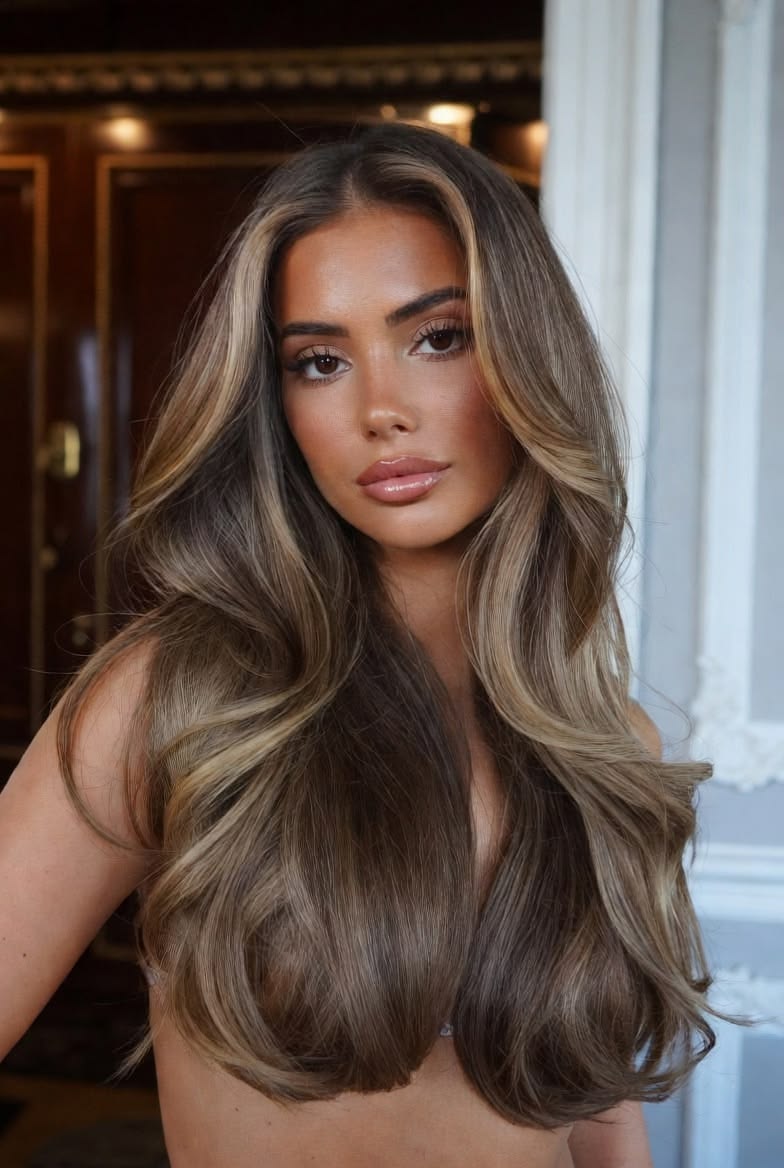
16 Honey Brown Balayage Styles: The Complete Guide to Getting It Right
If you’ve been staring at honey brown balayage photos on your phone and wondering whether it would actually work for your hair, skin tone, or lifestyle — I’m here to answer every question you didn’t even know to ask. This is the most complete guide to honey brown balayage you’ll find anywhere, with 16 specific styles, a full technique breakdown, a skin tone matching guide, common mistakes, and an honest maintenance routine.
So, what is honey brown balayage? Honey brown balayage is a hair coloring technique where warm, amber-toned brown shades are hand-painted onto sections of hair in a graduated, sun-kissed pattern. The color lightens gradually from the roots toward the ends, blending naturally without a harsh line of demarcation. It suits most hair types and skin tones.
Read on — because I’ll also explain exactly what makes honey brown balayage different from regular highlights, which skin tones it flatters most, and the one product you absolutely need to make it last.
Why Honey Brown Balayage Works on Almost Everyone
Here’s something I find genuinely interesting about this particular color. Honey brown sits in the warmest, most universally flattering section of the color spectrum. It’s not as bold as caramel, not as light as golden blonde, and not as cool as ash brown. That middle ground — amber, rich, and luminous — is where honey brown lives, and it’s the reason this color photographs so beautifully in any lighting.
The balayage technique makes it even more wearable. Because the color is painted freehand and concentrated toward the mid-lengths and ends, the roots stay dark. That means the color grows out gracefully with no dramatic regrowth line to stress about every 6 weeks. It’s genuinely one of the lowest-maintenance color options available for women who want warmth and dimension without constant touch-ups.
16 Honey Brown Balayage Styles: Every Look Explained
1. Classic Honey Brown Balayage on Dark Brown Hair
This is where most women start — and with good reason. On a dark brown base, honey brown balayage creates the warmest, most natural-looking dimension possible. The colorist hand-paints honey-toned sections starting mid-shaft and concentrating color toward the ends. The result reads as though your hair naturally lightened in the sun over a long summer. No harsh lines, no obvious process — just rich, glowing depth. Best for: Women with naturally dark brown hair who want sun-kissed color without dramatic change. Practical tip: Ask your colorist specifically for a “shadow root honey balayage” to ensure the roots stay intentionally dark for a natural grow-out.
2. Honey Brown Balayage on Black Hair
Going from black to honey brown balayage is a bigger commitment than starting from dark brown — black hair needs to be pre-lightened before the honey tone can be applied, which means bleach is part of the process. Done correctly, the result is breathtaking: deep, inky roots that fade into warm amber-honey mid-lengths and ends. Done incorrectly, you risk orange brassiness or uneven lifting. This is not a DIY job. Find a colorist with specific experience lightening very dark or black hair, and expect the process to take 3–5 hours minimum.
3. Honey Brown Balayage on Light Brown (Mousy) Hair
Women with naturally light or “mousy” brown hair often feel their hair color lacks personality — honey brown balayage is the answer. Because the base is already lighter, less bleaching is needed to achieve the honey tone, which means less damage and a faster appointment. The honey brown picks up beautifully against a light brown base, creating a bright, warm result with significant visual dimension. This is also the most achievable version of honey brown balayage for DIY attempts, though a professional result will always be more refined.
4. Honey Brown Balayage on Blonde Hair
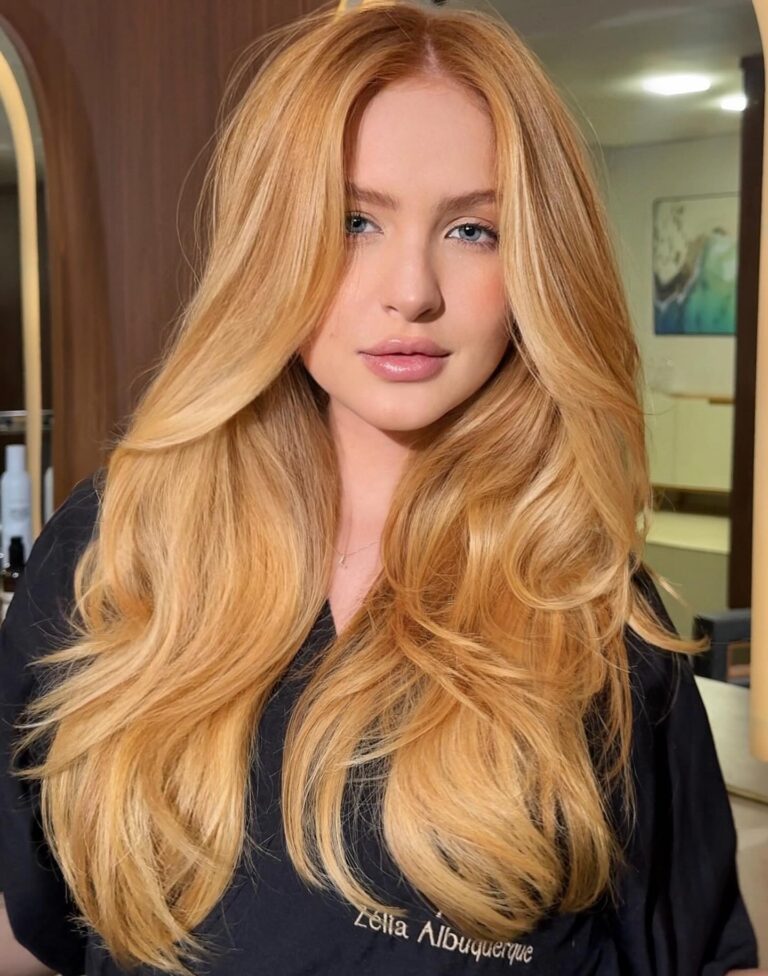
Yes — honey brown balayage works on blonde hair too, and the results are unexpectedly beautiful. Instead of lightening the hair, this version adds warm honey-brown tones to a blonde base through a process called reverse balayage or shadow balayage. Deeper honey and amber sections are painted into blonde hair to add warmth, richness, and dimension that purely blonde hair can sometimes lack. The result is a more complex, multi-tonal color that looks far more expensive than either pure blonde or pure brown alone.
5. Honey Brown Balayage with Caramel Accents

Source: @Instagram
Adding caramel alongside honey creates a multi-dimensional, layered warmth that’s richer than either color alone. Honey brown forms the primary painted sections while caramel highlights are placed more selectively — often near the face and on the surface layers where they’ll catch light most effectively. Together they create a color that looks like it has been professionally sunlit from multiple angles simultaneously. This is the style for women who want maximum dimensional warmth with a high-end finish.
6. Honey Brown Balayage with Copper Tones
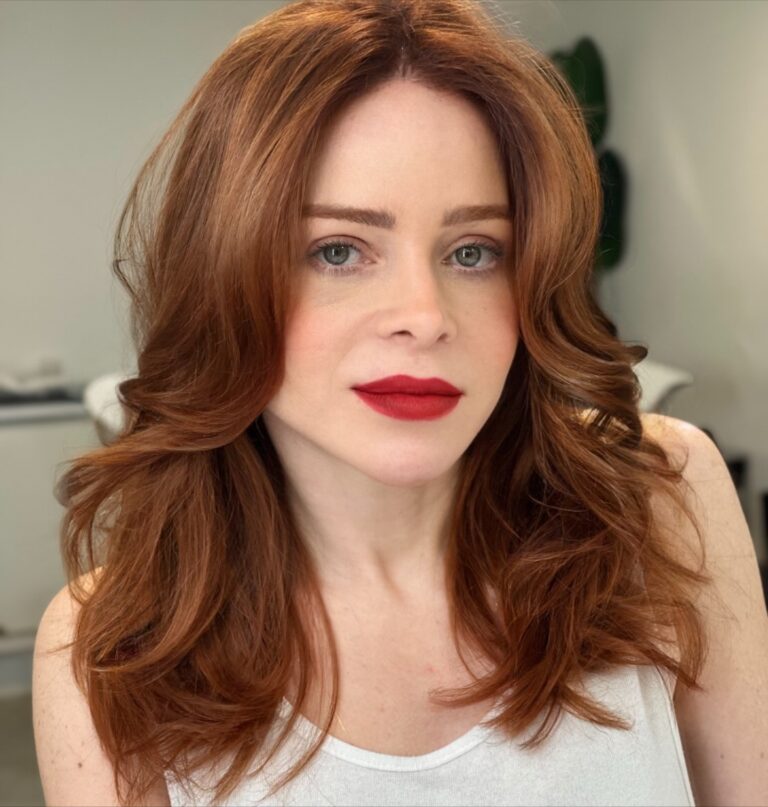
Copper-infused honey brown balayage leans into the red-amber spectrum rather than the golden spectrum of classic honey. The result is fiery, rich, and particularly stunning in autumn and winter months. Copper tones work best on women with warm or olive skin undertones — the warmth in the hair complements the warmth in the skin and creates a very cohesive, intentional look. Copper-honey balayage does require more toning maintenance to keep the copper from fading to orange, so plan for a gloss or toning treatment every 6–8 weeks.
7. Honey Brown Balayage for Short Hair (Bob or Lob)
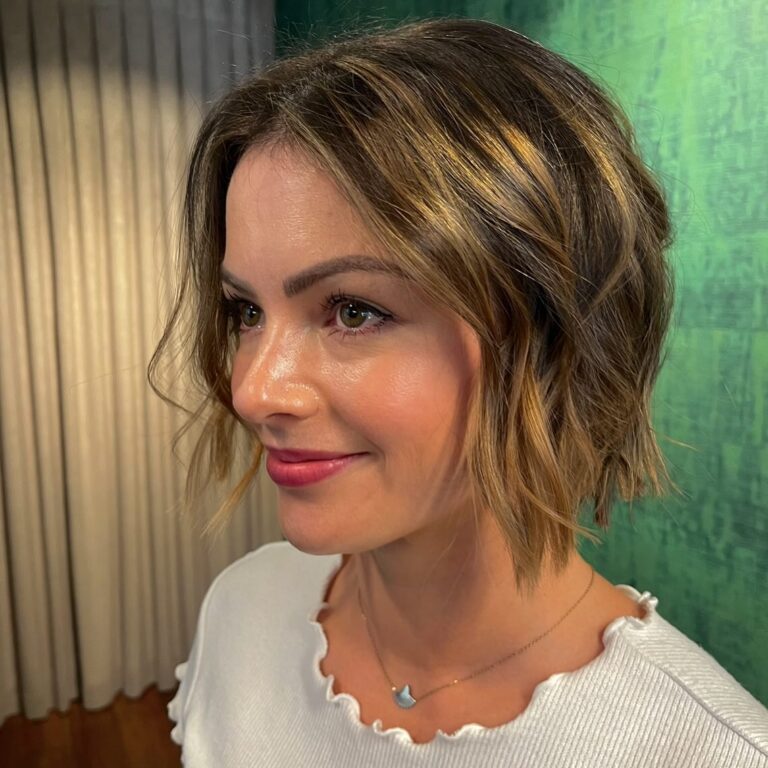
Balayage on short hair requires a completely different application approach — and different results. On a bob or lob, there’s less length for the gradual gradient effect to develop, so the color is typically more concentrated and dramatic. Honey brown balayage on a bob creates a bold, face-framing warmth that feels modern and intentional rather than subtle. The shorter the hair, the more the balayage looks like highlights rather than a gradient — but the warmth of honey brown makes it work beautifully regardless. Ask your colorist to concentrate color around the face for maximum framing effect.
8. Honey Brown Balayage for Curly Hair
Curly and coily hair textures interact with balayage differently than straight or wavy hair — and I mean this in the best possible way. Because curls spiral and coil, the painted color catches light from multiple angles simultaneously, creating a prismatic, glowing effect that straight-haired balayage simply can’t replicate. Honey brown on curly hair looks alive. Important technique note: Balayage on curly hair should be applied to stretched or slightly dried hair so the colorist can see where the color is landing. The curl pattern will naturally blend the color further once the hair contracts back into its natural shape.
9. Honey Brown Balayage for Wavy Hair

Source: @Instagram
Wavy hair might actually be the ideal texture for honey brown balayage. The natural wave pattern creates peaks and valleys — and the balayage technique, which concentrates color on the surface and mid-lengths, perfectly highlights the peaks of each wave. The overall effect is that every wave catches the honey light differently, creating natural movement and warmth that looks almost three-dimensional. Medium-length wavy hair with honey brown balayage is probably the most reliably beautiful result in this entire list.
10. Honey Brown Balayage with Money Piece
Adding a bright money piece — heavily lightened sections at the very front of the hairline on either side of the face — to a honey brown balayage creates a high-contrast, face-framing effect. The money piece is usually lightened closer to golden or warm blonde than the rest of the honey brown balayage throughout the hair. Together, the bright face-framing pieces and the warm mid-length and end color create a graduated, multi-intensity warmth that radiates from the face outward. This is the style for women who want their color to immediately draw attention to their facial features.
11. Honey Brown Balayage with Lowlights

Source: @Instagram
Adding darker brown lowlights alongside honey brown balayage prevents the finished look from reading as one-dimensional or flat. Where highlights add brightness, lowlights add depth and shadow — woven in between the honey sections to simulate the multi-tonal complexity of naturally highlighted hair. The result is far more realistic than standard balayage alone and suits women with thicker, denser hair where single-process color can sometimes look flat. Ask for “dimensional honey balayage with chocolate lowlights” for a sophisticated, natural-looking result.
12. Honey Brown Balayage Ombre
A honey brown ombre is a more defined version of standard balayage — the transition from dark roots to honey ends is more dramatic and gradient-like, almost as if the hair gets progressively lighter and warmer toward the tips. Where standard balayage creates scattered, natural-looking painted sections, ombre creates a full-panel gradient. On dark hair especially, honey brown ombre makes a bold statement — the dark-to-honey transition is immediately visible and intentional. This is the choice for women who want their color to make a clear statement rather than a subtle one.
13. Honey Brown Balayage on Natural (4c) Hair

Source: @Instagram
Natural hair with kinky-coily texture is absolutely stunning with honey brown balayage — and it’s a style that often gets overlooked in mainstream color content. The application on 4c hair requires patience and skill: the tight curl pattern means the colorist needs to work methodically through each section to ensure even color distribution. The honey tone creates a beautiful contrast against the depth of a natural black or dark brown base. Critical note: Natural hair, particularly 4c, is more susceptible to damage during lightening. Bond-building treatments (Olaplex, Wellaplex) during processing are non-negotiable, and deep conditioning must follow every session.
14. Subtle Honey Brown Balayage (For Conservative Settings)

Source: @Instagram
Not everyone wants a dramatic transformation. Subtle honey brown balayage — sometimes called “barely there” balayage — involves painting just a handful of very fine sections with honey color, primarily at the very tips and outermost surface layers. The effect is almost imperceptible in dim light but glows in sunlight. It’s the perfect solution for women in professional environments where visible color isn’t fully accepted, or for those who want to test the waters with balayage before committing to a more impactful look. It also requires the least processing and is the gentlest version on hair health.
15. Bold Honey Brown Balayage (High-Contrast)
On the opposite end of the spectrum — bold, high-coverage honey brown balayage covers a significant portion of the hair’s surface in honey tones, leaving only the roots and innermost layers in the dark base color. The result is a dramatically warm, sun-bleached look that’s far more striking than standard balayage. This works best on women who already have some lightening history in their hair or are starting from a medium (rather than very dark) base. Bold honey balayage is the choice for maximum impact and, appropriately, requires the most maintenance to keep the honey tone from fading or going brassy.
16. Honey Brown Balayage with Glossing Treatment

Source: @Instagram
This is less a separate style and more a finishing technique that every honey brown balayage should end with — but that most articles never mention. A clear or honey-toned gloss applied after the balayage seals the cuticle, boosts shine dramatically, and deposits a thin layer of warm toning pigment that intensifies the honey color and prevents brassiness from appearing in the first week after your appointment. The gloss lasts 4–6 weeks and can be refreshed at home with a color-depositing conditioner or gloss product in between salon visits. Always ask your colorist: “Can we finish with a gloss today?”
Comparison Table: 16 Honey Brown Balayage Styles
Which Style Fits Your Hair, Skin, and Lifestyle?
| Style | Starting Hair Color | Processing Level | Skin Tone | Maintenance | Salon Time |
|---|---|---|---|---|---|
| Classic on Dark Brown | Dark brown | Medium | All tones | Every 12–16 weeks | 3–4 hrs |
| On Black Hair | Black | High | Medium-Deep | Every 12–16 weeks | 4–5 hrs |
| On Light Brown | Light brown | Low-Medium | All tones | Every 16–20 weeks | 2–3 hrs |
| On Blonde Hair | Blonde | Low (adding depth) | Fair-Medium | Every 12–16 weeks | 2–3 hrs |
| With Caramel Accents | Dark-Medium brown | Medium | Warm/Neutral | Every 10–12 weeks | 3–4 hrs |
| With Copper Tones | Any | Medium | Warm/Olive | Every 6–8 weeks (toning) | 3–4 hrs |
| Short Hair (Bob/Lob) | Any | Medium | All tones | Every 10–12 weeks | 2–3 hrs |
| Curly Hair | Any | Medium | All tones | Every 12–16 weeks | 3–5 hrs |
| Wavy Hair | Any | Medium | All tones | Every 12–16 weeks | 3–4 hrs |
| With Money Piece | Any | Medium-High | All tones | Every 8–10 weeks | 3–4 hrs |
| With Lowlights | Dark-Medium brown | Medium | All tones | Every 12–16 weeks | 3–5 hrs |
| Ombre Version | Dark-Black | High | All tones | Every 12–16 weeks | 4–5 hrs |
| On Natural 4c Hair | Black/Dark | High (careful) | Medium-Deep | Every 12–16 weeks | 4–6 hrs |
| Subtle/Barely There | Any | Low | All tones | Every 20–24 weeks | 1.5–2 hrs |
| Bold/High-Contrast | Medium brown | High | All tones | Every 8–10 weeks | 4–5 hrs |
| With Gloss Finish | Any (finishing step) | None additional | All tones | Refresh every 4–6 weeks | 30 min add-on |
Common Mistakes and How to Avoid Them
1. Choosing the Wrong Honey Tone for Your Skin Undertone Not all honey browns are the same. If your skin has cool or pink undertones, a very warm, orange-leaning honey can clash. Ask for a honey with a slightly neutral or golden bias rather than an amber-orange one. If you have warm or olive skin, richer, amber-heavy honey tones are your best friends.
2. Skipping the Toner After Lightening Honey brown is a warm color, but it’s not orange or yellow. Without a toner applied after the bleaching stage, the lifted sections will sit at whatever brassy, uneven stage the bleach stopped at. Toning is what turns “orange and yellow” into “honey and amber.” It’s not optional.
3. Using Regular Shampoo on Balayage Sulfate-heavy shampoos strip warm pigments extremely fast. On honey brown balayage, regular shampoo can take your color from rich amber to dull, washed-out beige within a few weeks. Always switch to a sulfate-free, color-safe formula the moment you get any balayage work done.
4. Washing Hair Too Frequently Every wash removes a tiny amount of color and moisture from bleach-lifted strands. Washing balayage-treated hair every day is one of the fastest ways to fade your honey tones. Aim for 2–3 washes per week maximum and use dry shampoo on in-between days.
5. Forgetting Heat Protectant Before Styling Balayage-treated sections are chemically lightened and therefore more porous and vulnerable to heat damage than untreated hair. Applying a heat protectant before blow-drying, flat-ironing, or curling is non-negotiable — not just good advice.
6. Not Planning for Color-Depositing Maintenance Honey brown balayage fades between appointments. Rather than letting it fade to a flat, washed-out version of itself, use a color-depositing conditioner in a honey or warm brown shade every 2–3 weeks to refresh the warmth without going to the salon. This is the maintenance step that separates women whose balayage looks amazing at week 14 from those whose color looked great for two weeks and sad for the rest of the time.
Similar Variations Worth Exploring
- Caramel Balayage — Darker, richer, and slightly more orange than honey; particularly stunning on medium-dark bases
- Butterscotch Balayage — Lighter and more golden than honey; closer to blonde without fully committing to blonde
- Bronde Balayage — The blend of brunette and blonde; cooler and lighter than honey brown, suited to fair-medium skin tones
- Chestnut Balayage — Cooler-toned, red-adjacent brown; more red than honey but with similar warmth
- Toffee Balayage — Deeper and more muted than honey; suits women who want warmth without brightness
Hair Care Tips for Honey Brown Balayage
Week-by-Week Maintenance Plan
Week 1–2 (Fresh Color):
- Wait 48–72 hours after your appointment before the first wash
- Use cool water only — hot water swells the cuticle and accelerates color loss
- Apply a deep conditioning mask the day after your first post-color wash
Week 3–6 (Active Maintenance):
- Wash 2–3 times per week with sulfate-free shampoo
- Apply color-depositing conditioner in warm brown or honey tone once per week
- Use a gloss or shine serum after every wash on the balayage sections
- Heat protectant before any hot tool, every single time
Week 7–12 (Pre-Touch-Up Phase):
- Color will begin to look softer and more washed — this is normal and expected
- Step up color-depositing conditioner to twice per week
- Book your next appointment — most honey brown balayage looks best when refreshed every 12–16 weeks (subtle versions can go 20+ weeks)
Deep Conditioning: The Non-Negotiable
Bleach-lifted hair has a permanently altered cuticle structure — it’s more porous, which means it loses moisture faster than untreated hair. A weekly deep conditioning mask that stays on for at least 20–30 minutes is genuinely necessary, not optional. Look for masks with these ingredients: hydrolyzed keratin, argan oil, shea butter, or panthenol. Avoid any mask with sulfates or alcohol near the top of the ingredient list.
Outro
Honey brown balayage is warm, dimensional, low-commitment, and genuinely one of the most flattering color choices available for women with any hair type or skin tone. Whether you go subtle with barely-there painted sections or bold with a full-coverage ombre effect, the honey brown color family has something that works for virtually everyone.
The key is choosing the right tone for your skin undertone, finding a colorist who understands balayage technique (not just highlights), protecting your color investment with the right products, and using color-depositing conditioner between visits. Do those things and your honey brown balayage will look rich, warm, and luminous for months.