16 Haircuts for Men With Thick Hair That Actually Work With Your Volume
If you’ve got thick hair, you already know the struggle — it puffs out in the wrong directions, takes forever to dry, and seems to have a mind of its own the moment humidity hits. I’ve researched and compiled the most genuinely useful, barber-tested, and up-to-date guide to haircuts for men with thick hair, including exactly what to tell your barber, what products to use, and the one mistake that thick-haired men make more than any other.
So, what are the best haircuts for men with thick hair? The best haircuts for men with thick hair include textured crops, tapered fades, undercuts, side parts, slick backs, and buzz cuts. These styles manage bulk, reduce weight, and work with natural density rather than against it. The right cut depends on hair texture, face shape, and lifestyle.
Keep reading and I’ll break down all 16 haircuts in full detail — including what to ask your barber word-for-word, which products to use for each style, and a complete maintenance and care guide specifically for thick hair.
Why Thick Hair Needs a Different Approach Entirely
Here’s something most hair articles don’t tell you: thick hair isn’t just “more hair.” It behaves fundamentally differently from fine or medium hair. It holds more moisture, takes longer to dry, is heavier at the roots, and expands outward rather than falling down when grown out. A haircut that looks fantastic on fine hair can look like a mushroom on thick hair.
The goal with thick hair isn’t to fight the density — it’s to direct it. The right haircut shapes the bulk, removes weight in strategic places, and creates a silhouette that works with your hair’s natural tendencies. That’s what every style on this list is designed to do.
16 Haircuts for Men With Thick Hair
1. Textured Crop
Source: @Instagram
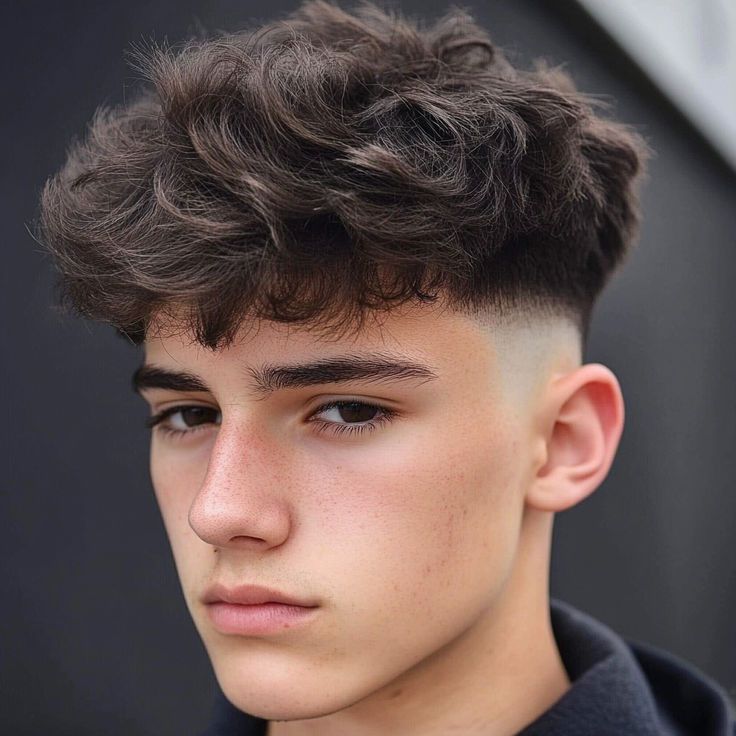
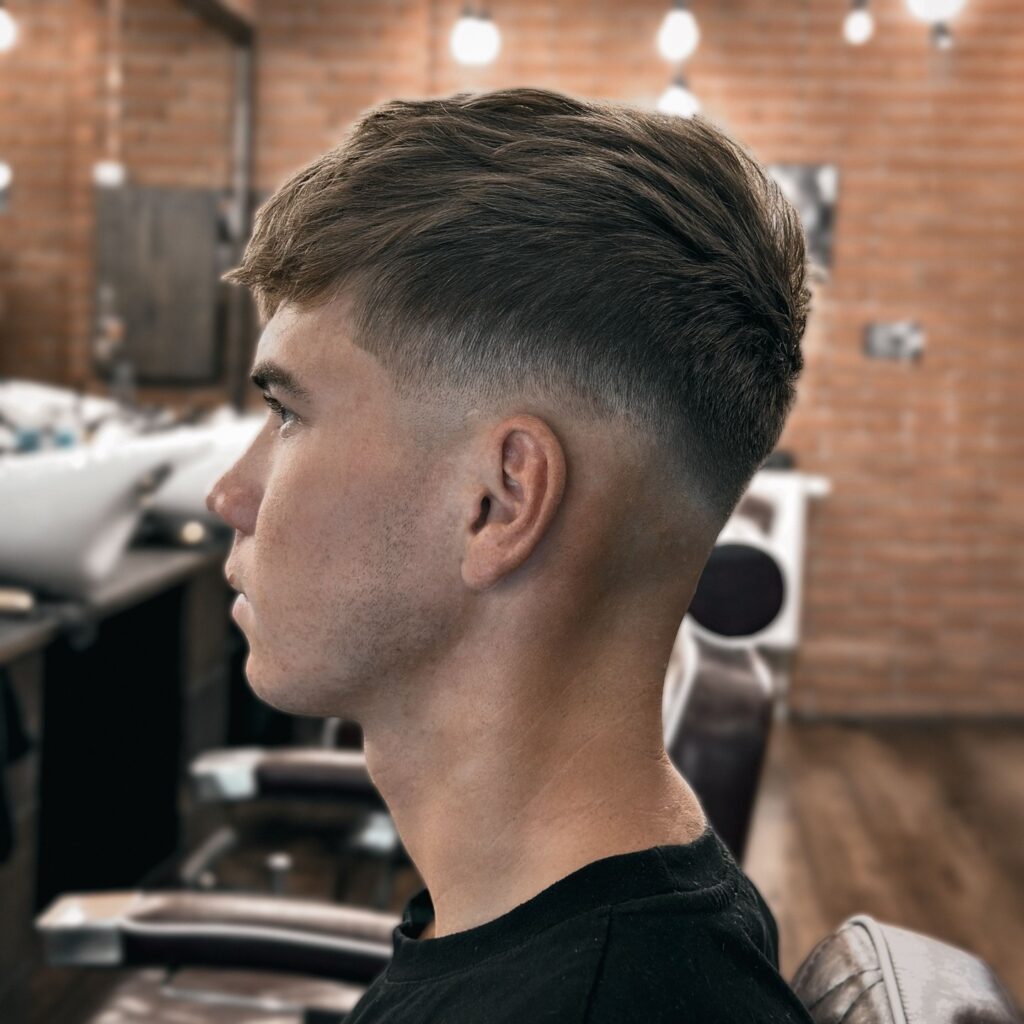
The textured crop is arguably the single best haircut for men with thick hair right now. The sides are faded or tapered short, while the top is cut to a uniform length (usually 1.5–3 inches) with point-cutting or razor techniques that create texture and remove bulk without reducing overall length dramatically.
The textured finish is key. A blunt, uniform top on thick hair creates a solid, immovable block of mass. Point-cutting the top with scissors or working in a razor removes internal bulk while preserving length — the hair moves, layers, and sits naturally rather than piling up. Ask your barber specifically for “point-cut texture” on the top and a skin or low fade on the sides. Style with a matte clay or paste — a pea-sized amount worked through slightly damp hair, then air dried or blow-dried forward. The textured crop looks equally sharp in a boardroom or a bar.
2. High Skin Fade With Length on Top
Source: @Instagram
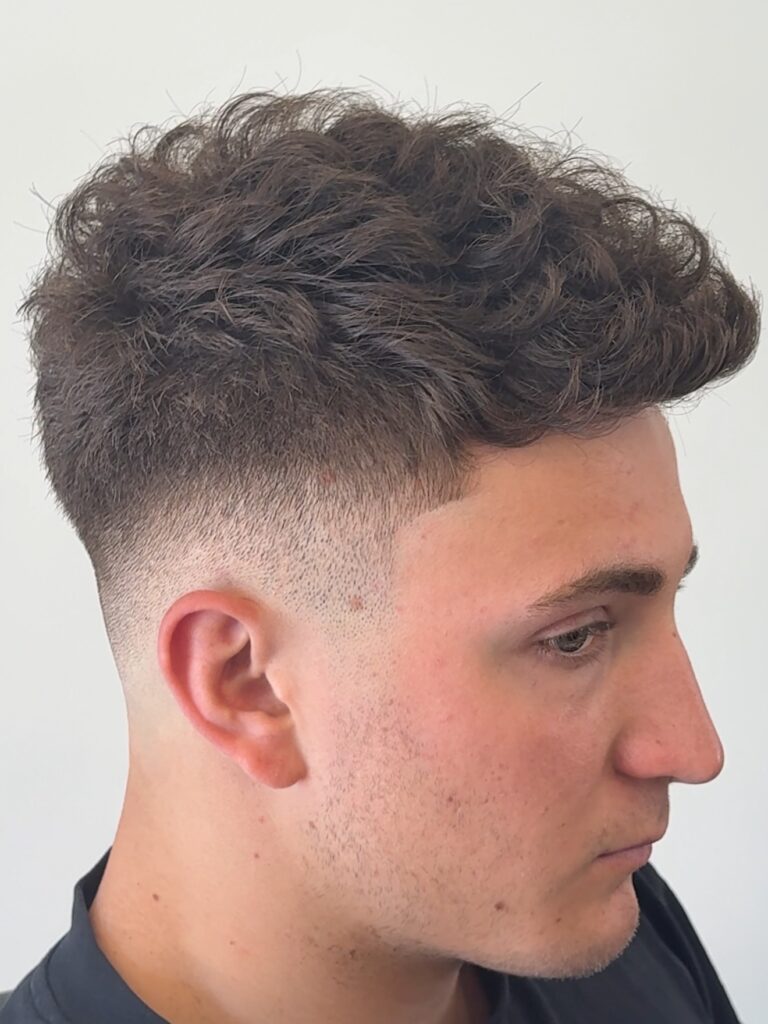
A high skin fade takes the sides down to the skin, transitioning upward into the longer top section. For thick hair, the dramatic contrast between bare skin and full, dense hair on top creates a clean, structured silhouette that prevents the “big head” effect that longer sides can create.
The height of the fade matters specifically for thick hair. A low fade on thick hair still leaves a lot of bulk at the sides, which adds width. A high fade — starting the skin portion at or above the temples — keeps that width tightly controlled. The top can be left longer (3–5 inches) for styling options like a quiff or slick back, or kept shorter (1–2 inches) for a more low-maintenance look. A high fade needs touch-ups every 2–3 weeks to stay sharp.
3. Classic Taper With Side Part
Source: @Instagram
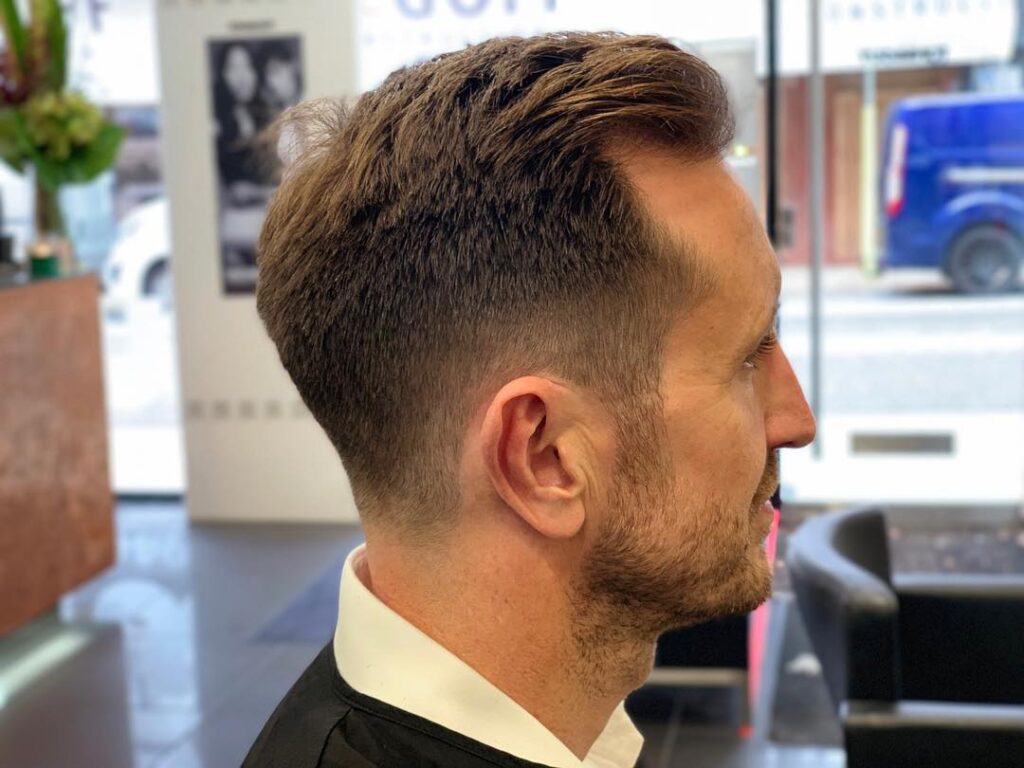
The classic taper with a side part is the most timeless, versatile cut for thick hair and the go-to for professional environments. Unlike a fade, a taper doesn’t go to the skin — it gradually reduces in length from the sides down to the neckline, leaving a clean, natural-looking finish.
For thick hair, ask the barber to thin the sides internally during the taper — this is called “thinning” or “texturizing” the sides with shears, and it removes bulk without removing visible length. The side part on top creates a directional, controlled flow to the hair that prevents it from expanding sideways. Use a medium-hold pomade or cream on the top section, combed through for definition. The classic taper ages extremely well as the cut grows out — it looks intentional even at 4–5 weeks post-cut.
4. Undercut
Source: @Instagram
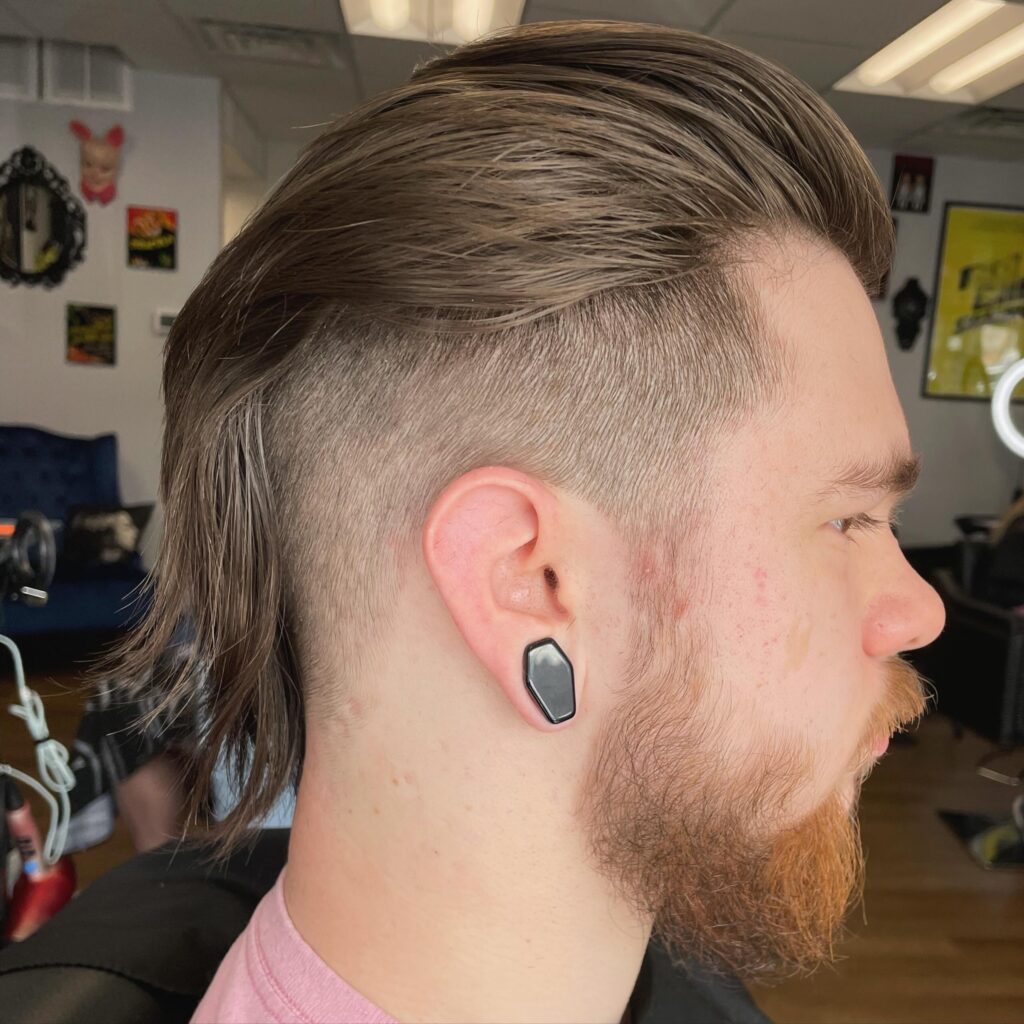
The undercut disconnects the top from the sides entirely — the sides are cut very short (often with clippers at a low guard or to skin), while the top is left significantly longer, with no blending between the two sections. The result is a bold, high-contrast look that keeps thick hair’s volume concentrated on top where it’s most flattering.
The disconnect of the undercut means the sides never compete with the top for visual attention. All the density is directed upward. This works brilliantly for men with very thick, voluminous hair who want a dramatic, fashion-forward look. The longer top can be styled slicked back, pushed to one side, or worn loosely forward. The trade-off: the harsh line where the undercut meets the longer top is quite visible, so it requires more frequent barber visits (every 3 weeks) to stay clean.
5. Buzz Cut (With a Guard, Not a Zero)
Source: @Instagram
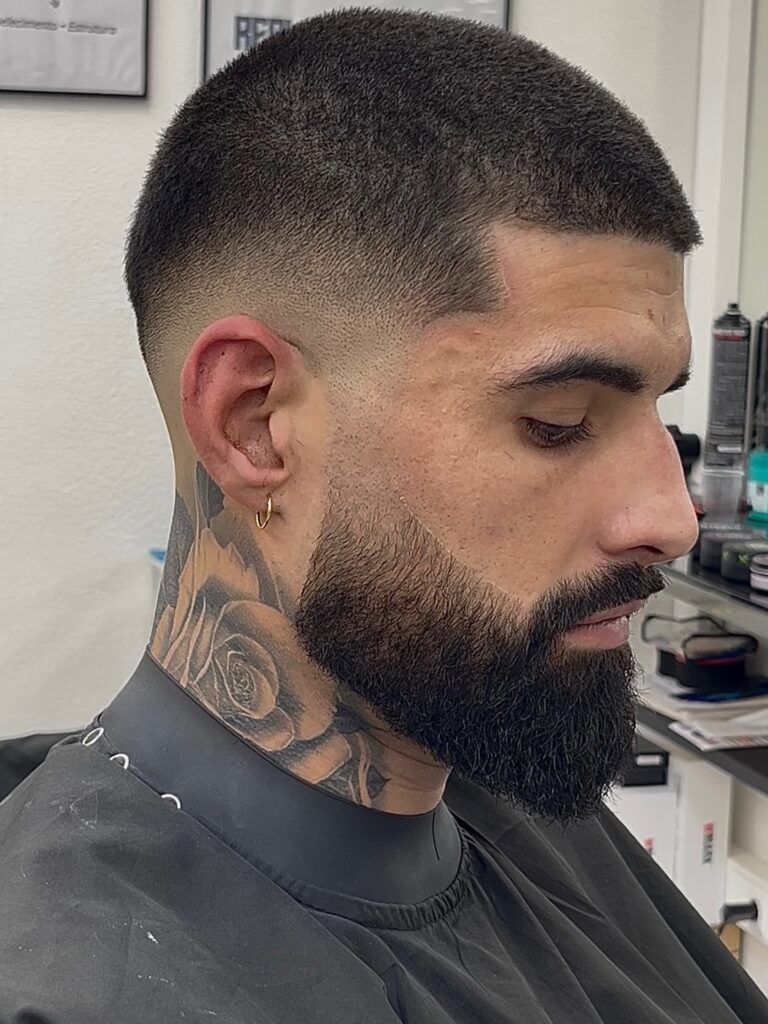
The buzz cut is the ultimate reset for thick hair — it removes all the unpredictability of managing length and leaves a clean, even canvas. But for thick hair specifically, a zero (no guard, to the skin) often looks harsh and can emphasize the shape of the skull. Instead, a guard 2 or 3 buzz cut (roughly 6–10mm) leaves just enough density to show the hair’s natural color depth and softens the overall appearance.
A buzz cut on thick hair actually looks better than on fine hair — the density creates a full, even coverage across the entire head with no thin patches. It photographs well, requires zero daily styling, and is the most heat-efficient option during summer. Pair with a well-maintained beard for a complete, masculine look that balances the simplicity of the cut. Touch up every 2–3 weeks to keep it tight.
6. Slick Back
Source: @Instagram
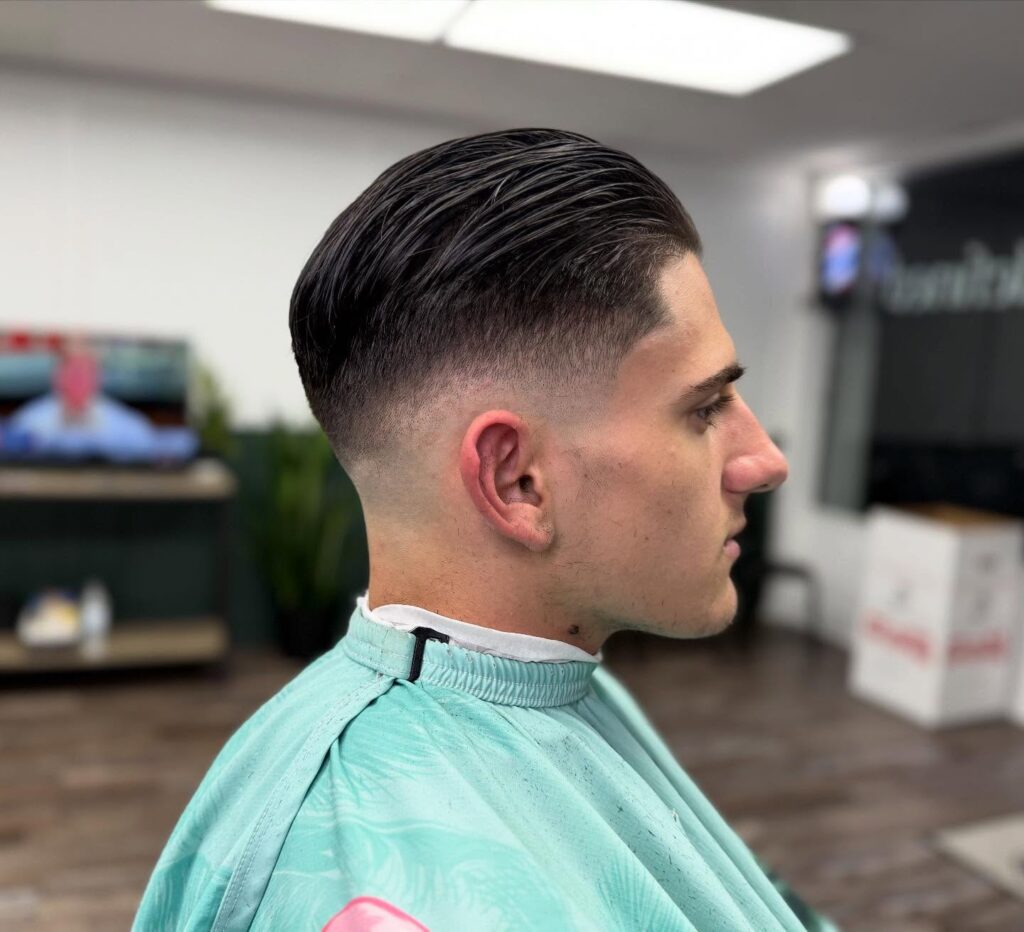
The slick back works by taking advantage of thick hair’s natural weight. Apply a strong-hold product — a traditional pomade or a water-based equivalent — to damp hair and comb everything straight back from the hairline. The hair’s density keeps it in place; no hairspray or additional product needed on most thick hair types.
The sides should be faded or tapered for the cleanest execution — a slick back with full, unstyled sides looks unfinished and wide. The top should be cut at a length that allows combing back without the hair folding at the crown (usually 3 inches or longer is ideal). A high-shine pomade creates a wet, dramatic finish; a matte pomade or clay achieves a more natural, dry look. The slick back is one of the sharpest professional and formal styles for thick-haired men.
7. French Crop (Caesar Cut Variation)

Source: @Instagram
The French crop sits the fringe just above the eyebrows in a horizontal line across the forehead, with the sides short and the top at a uniform length of 1–2 inches. Unlike a textured crop, the French crop keeps the fringe intentionally blunt and forward-falling rather than textured upward.
For thick hair, the forward-falling fringe actually works well because the hair’s weight naturally pushes it forward rather than poking upward. The blunt fringe creates a strong, horizontal line that’s very intentional-looking. Ask for the fringe to fall about 1cm above the brow and the sides at a skin or low fade. Minimal product required — a small amount of styling cream or nothing at all, since the hair’s natural density holds the fringe in place.
8. Quiff
Source: @Instagram
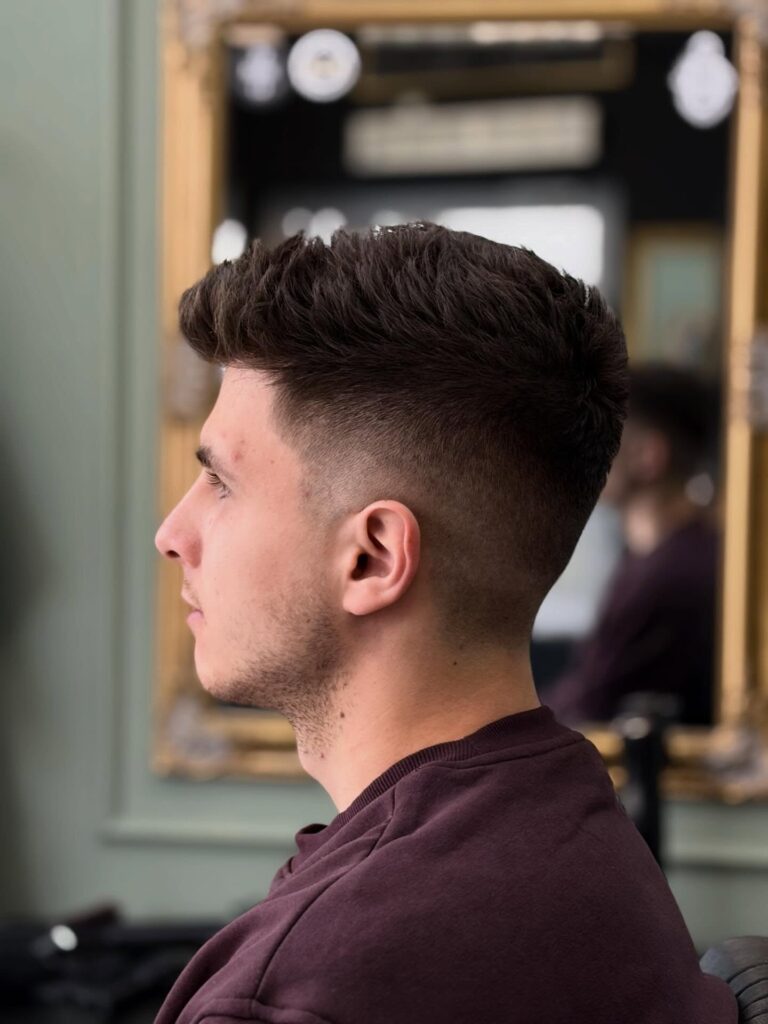
The quiff takes the front section of the hair, pushes it upward and backward, and creates a voluminous ridge at the front of the head before the hair falls back. It’s a fundamentally theatrical style — and thick hair is perfectly suited for it because the volume required is built right in.
A quiff on fine hair requires volumizing products and a blow-dryer aimed upward for maximum lift. On thick hair? The lift is already there. You’re just directing it. Use a medium-hold clay or mousse, work it through damp hair, then blow-dry the front section upward and backward using a round brush or just your fingers. The quiff suits most face shapes but is particularly flattering on longer, oval, and rectangular faces where the vertical height is a visual asset.
9. Low Fade With Waves (360 Waves or Textured Waves)
Source: @Instagram
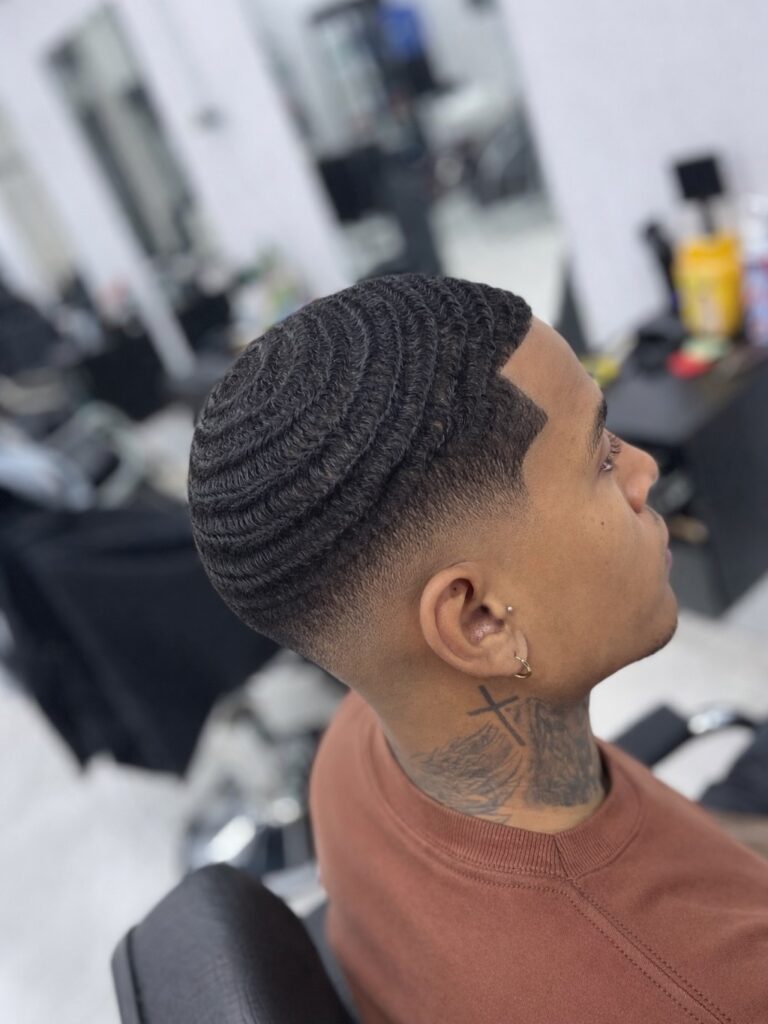
For thick-haired men with naturally coily or wavy hair, a low fade combined with 360 waves on top creates a clean, graphic, and deeply personal style. The waves are created through consistent brushing technique over time — the short length (usually a 1.5–2 guard on top) combined with daily brushing trains the hair to lie in concentric wave patterns.
The low fade keeps the sides managed and defined without competing with the wave pattern on top. This style requires daily commitment — brushing for 5–10 minutes each day with a boar bristle brush, wearing a du-rag at night to preserve the pattern, and moisturizing with a wave cream to prevent dryness. But the result is one of the most visually distinctive and impressive styles for thick, coily hair.
10. Pompadour
Source: @Instagram
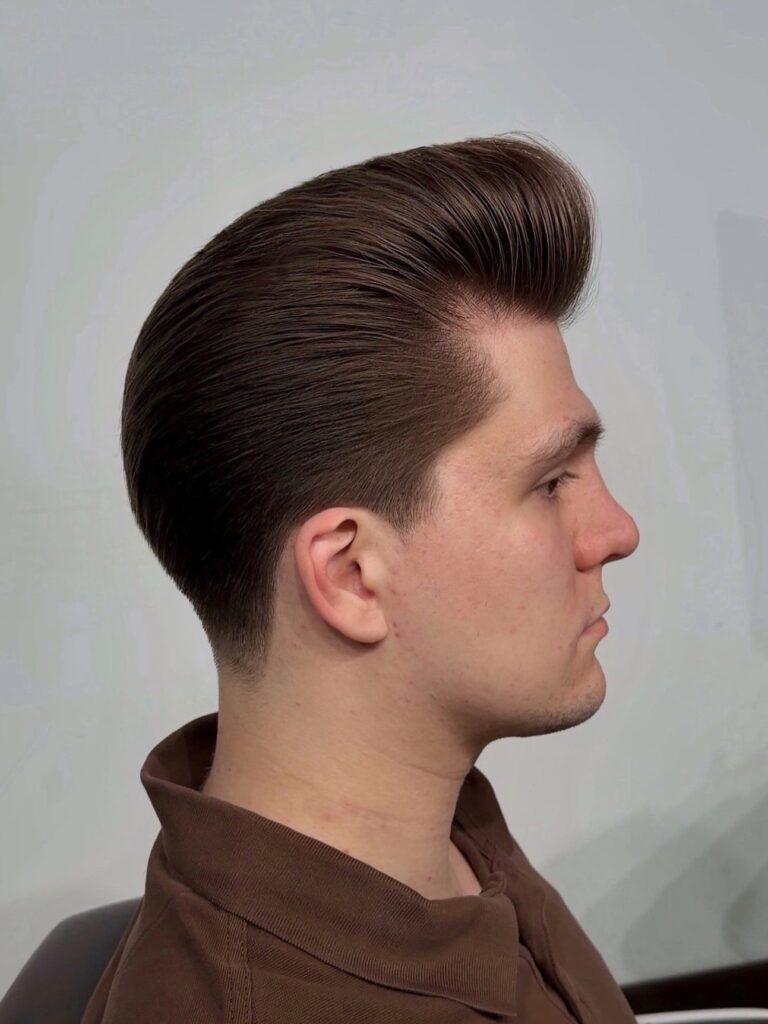
The pompadour takes the front section high and full, with the sides much shorter. It’s volume-first by design — making it one of the few styles where thick hair is genuinely a competitive advantage. The more hair you have to work with, the more dramatic the pompadour.
For a modern interpretation, keep the sides at a mid or high fade and leave 4–6 inches on top. Blow-dry the front section upward and backward using a round brush, then shape with a strong-hold pomade. The pompadour is one of the more high-maintenance styles on this list — it needs to be styled each morning and touched up at the barber every 3 weeks. But when executed well, it’s one of the most impactful and memorable looks a thick-haired man can wear.
11. Ivy League (Princeton Cut)
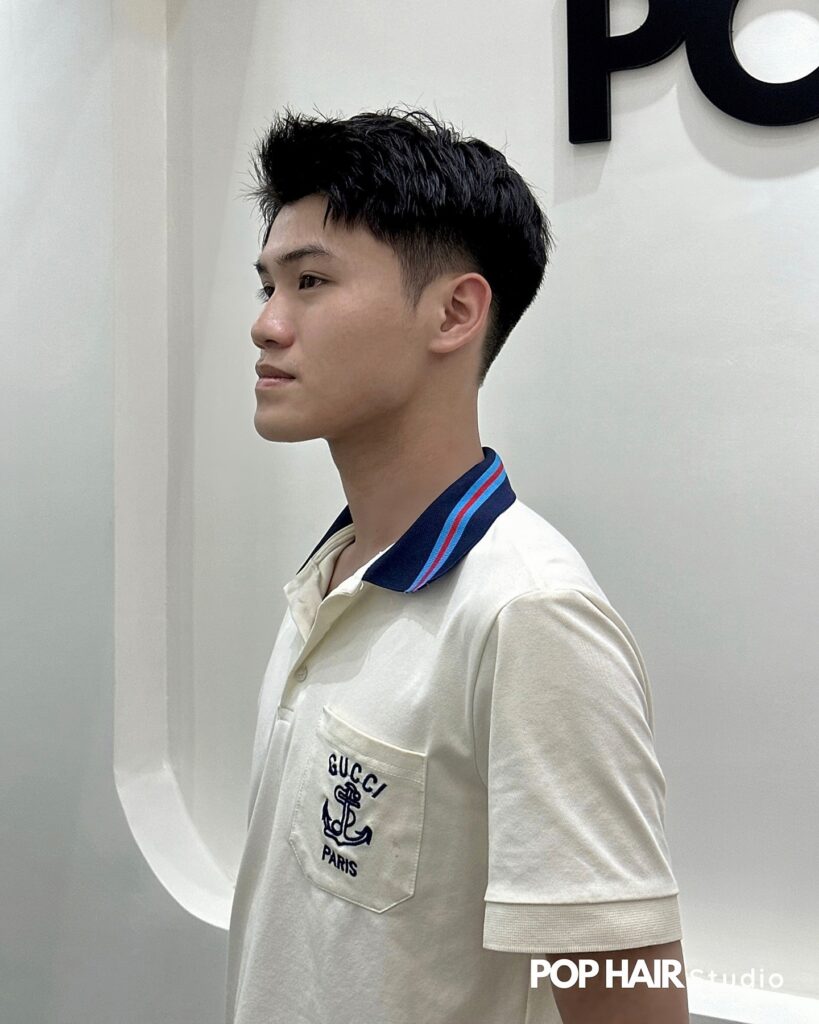
Source: @Instagram
The Ivy League, also called a Princeton cut, is a longer version of the crew cut — long enough on top to part and comb to one side, but still fairly conservative in length (usually 1.5–3 inches on top, tapered at the sides). It’s the haircut equivalent of a blazer: smart, versatile, and appropriate everywhere.
For thick hair, the Ivy League requires internal thinning of the top section — otherwise the hair piles up at the part and refuses to lie flat. Ask the barber to use thinning shears on the top section to remove bulk without removing visible length. A light-hold pomade or cream, combed through on the side that the part falls, is all the product needed. This style grows out gracefully and is low-maintenance between barber visits.
12. Crew Cut
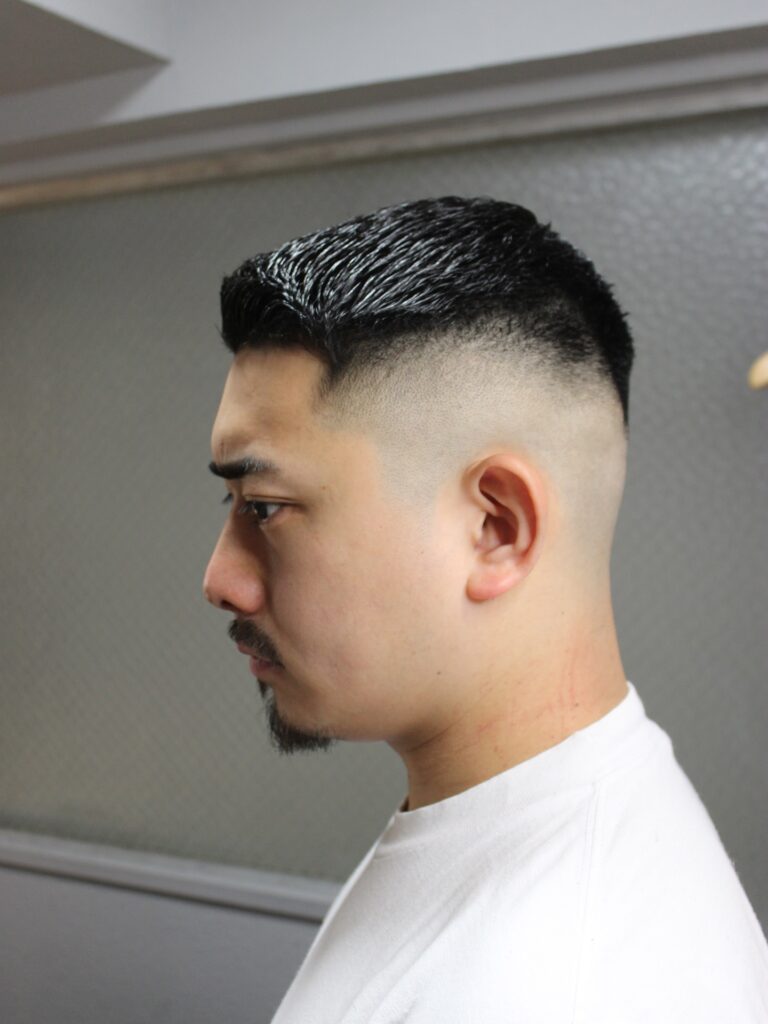
Source: @Instagram
The crew cut is a short, clean cut that’s longer at the top (usually graduated from front to back) and tapered at the sides. It’s one of the most consistently flattering cuts for thick hair because the shorter length on top manages the bulk without completely removing it, and the gradual taper at the sides prevents width.
The key for thick hair: ask for a scissor-over-comb technique rather than pure clipper work on the top. Scissors give more control and allow the barber to remove interior bulk specifically, which clippers can’t do as precisely. The crew cut is a great starting point for men who’ve never had their thick hair cut with texture in mind — it’s immediate, noticeable improvement.
13. Faux Hawk
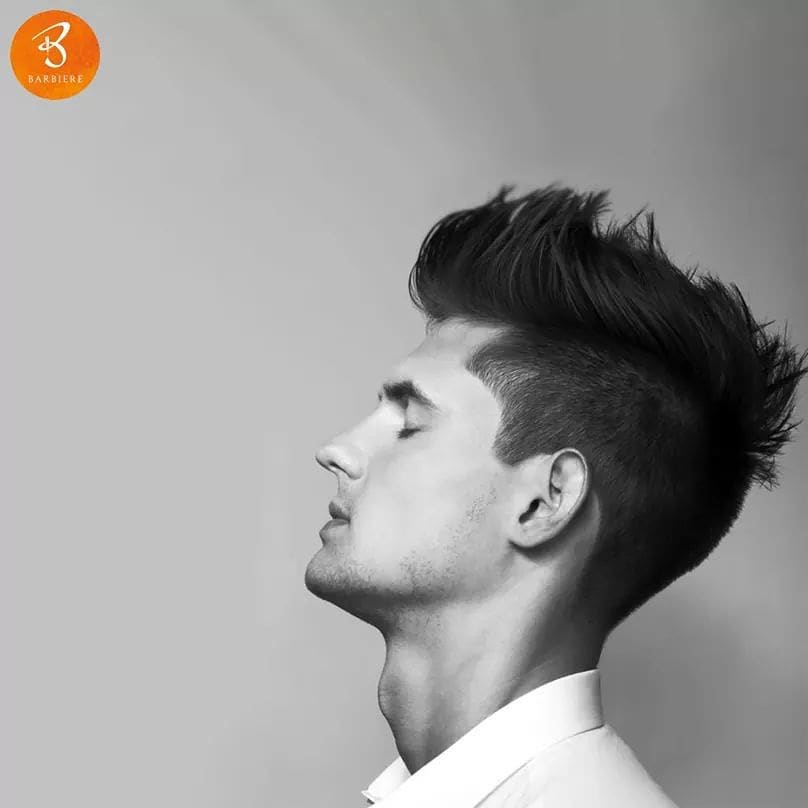
Source: @Instagram
The faux hawk creates the silhouette of a mohawk — height down the center, tight sides — without the commitment of actually shaving the sides. The sides are faded tight while the center strip is left longer and styled upward. On thick hair, the center section stands up with minimal product due to natural density and weight distribution.
For thick hair, the faux hawk requires a high or mid fade on the sides — any lower and the side hair competes visually with the styled center. Use a strong-hold clay or fiber on the center section, work it through with fingers, and squeeze upward from root to tip. The faux hawk suits oval, square, and diamond face shapes particularly well and gives thick-haired men an expressive, fashion-forward option that doesn’t require daily primping once the technique is down.
14. Long Layered Hair (Shoulder Length)
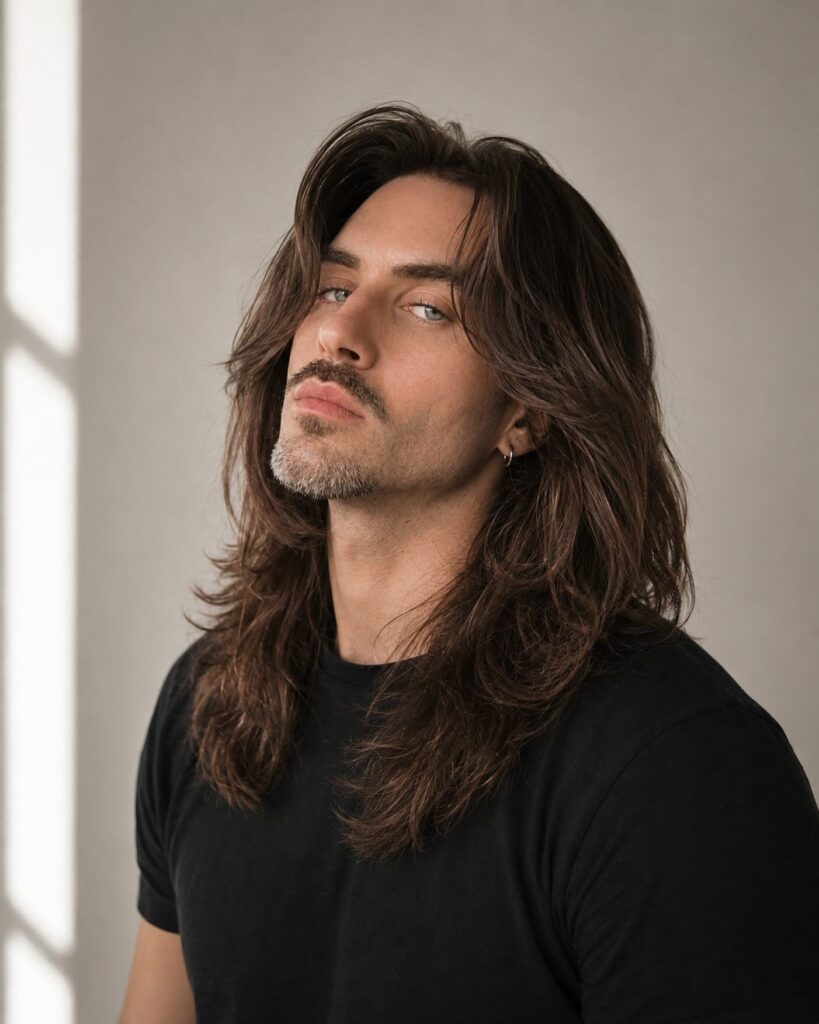
Source: @Instagram
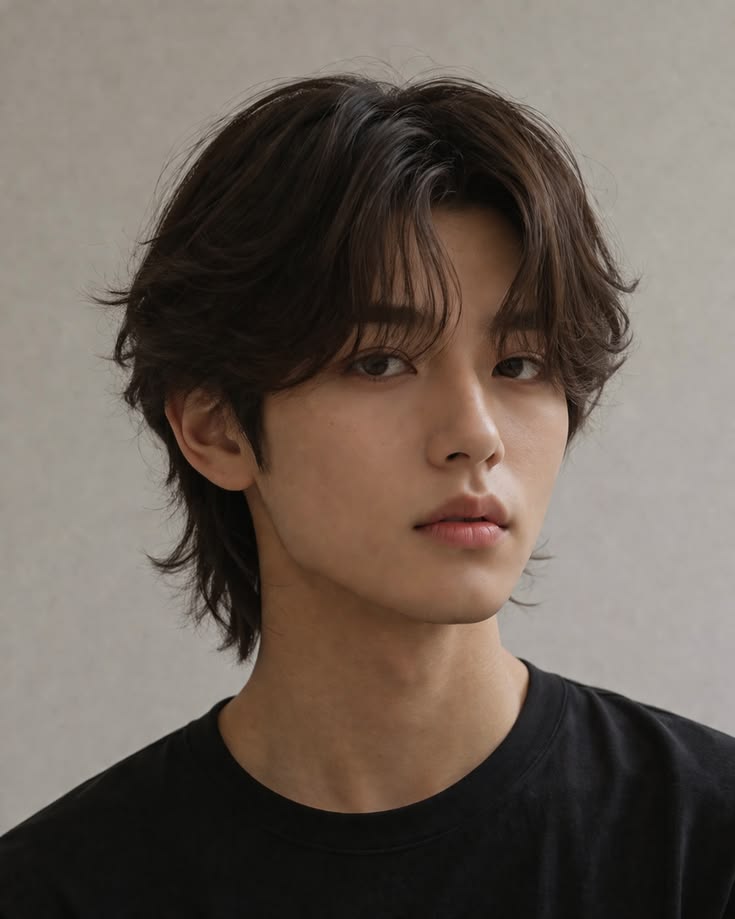
Long hair on thick-haired men can look spectacular — when layered correctly. Without layers, thick hair grown long becomes a dense, heavy curtain that loses shape. With layers cut throughout, the hair develops movement, dimension, and a natural flow that looks intentional and effortlessly cool.
Ask specifically for “long layers throughout” and “point-cut ends” rather than a blunt all-one-length cut. The layers should be distributed from root to tip, not just at the ends. A leave-in conditioner and lightweight hair oil (a few drops of argan oil worked through damp ends) define the layers without weighing the hair down. Long-haired thick men should also ask about “thinning” — strategically removing interior bulk with thinning shears while preserving the outer shape and length.
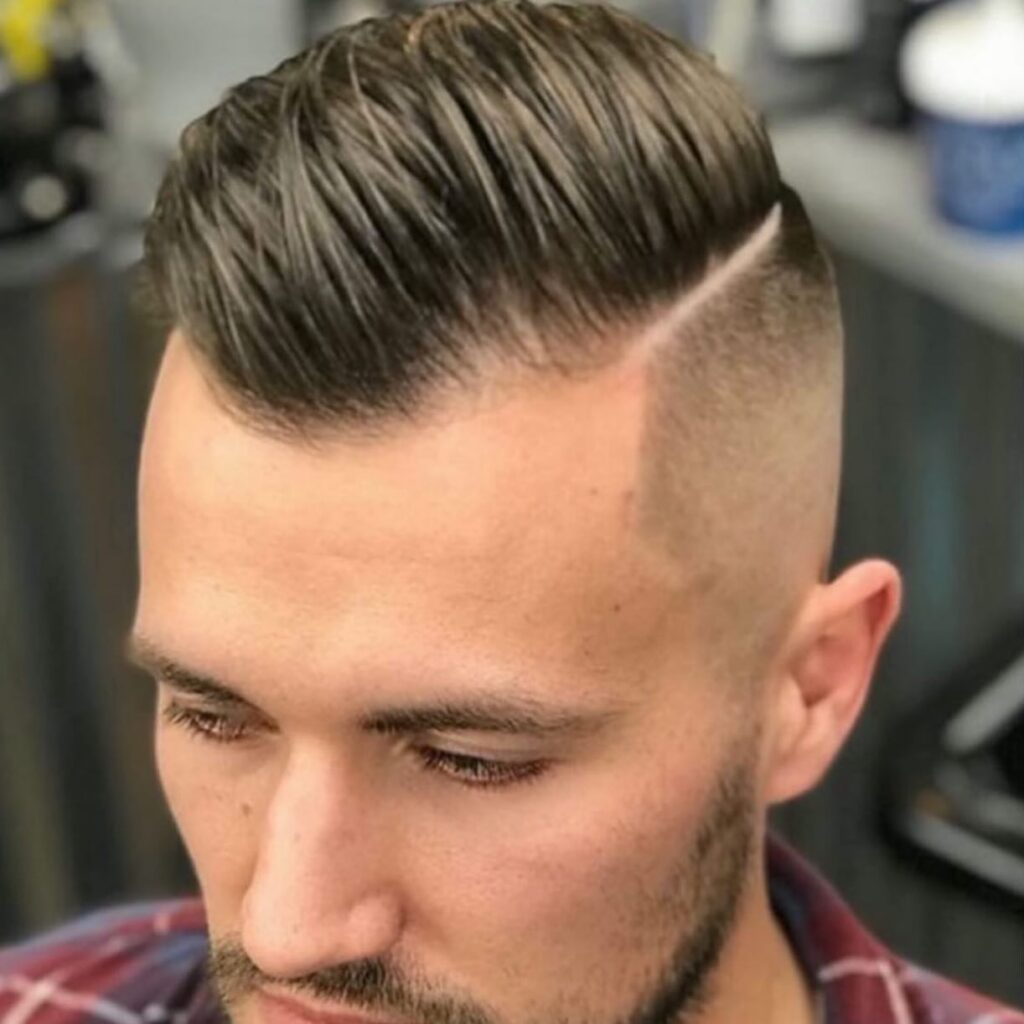
15. Side Part With Hard Part
Source: @Instagram
The hard part takes the classic side part and makes it architectural — instead of a soft natural part, the barber shaves a clean, razor-sharp line directly into the scalp. On thick hair, this creates a striking contrast between the dense, styled top section and the bare line of the part.
The hard part works particularly well on thick hair because the density of the styled section makes the contrast more dramatic. Ask for the hard part to follow your natural part line (or slightly lower) and request a fade on the below-the-part side. Keep the top well-styled — a hard part with a messy top looks unintentional. A medium-hold product combed neatly to the side completes the look.
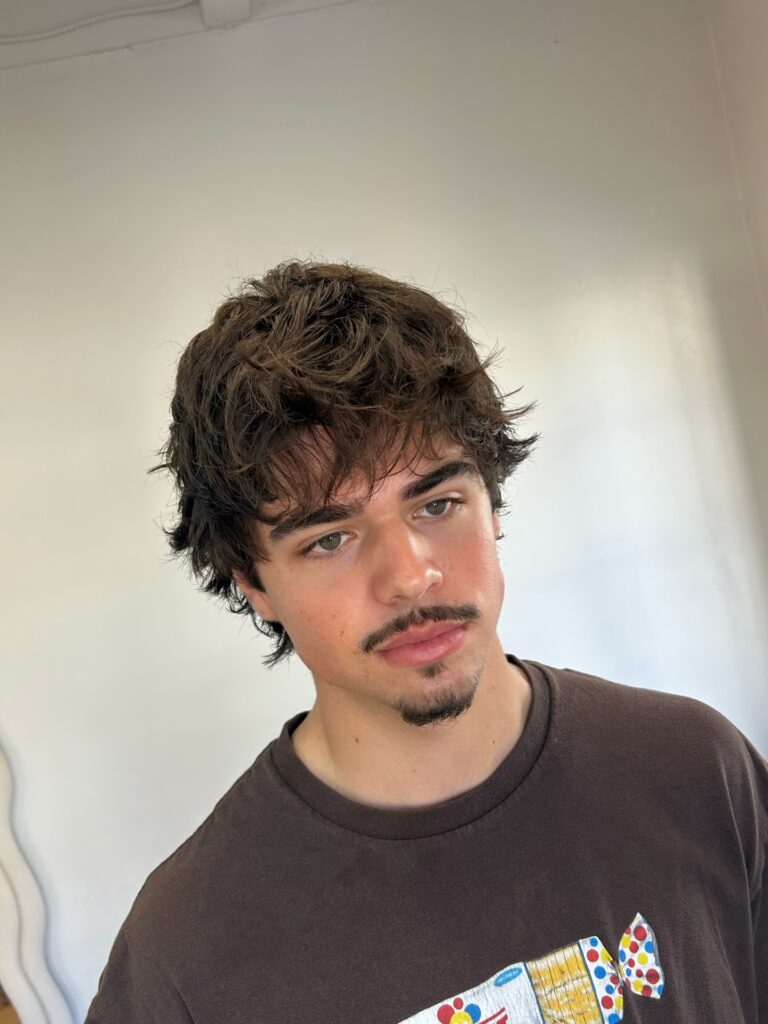
16. Messy Natural Texture Cut
Source: @Instagram
Not every thick-haired man wants structure and precision. The messy natural texture cut embraces the natural growth patterns, waves, and movement of thick hair rather than imposing a strict shape on it. The barber removes weight throughout with thinning shears and point-cut ends to prevent the triangle-shaped expansion that untreated thick hair tends toward — but otherwise lets the hair do what it naturally wants.
The result is a genuinely effortless look that actually requires effort to achieve: the difference between controlled-messy and genuinely unkempt is internal thinning and clean ends. Style with a salt spray or light texturizing cream on damp hair, scrunch, and air dry. Run fingers through the dry result for a few seconds. That’s it. This style is incredibly low-maintenance once established and suits men whose personal aesthetic leans relaxed and natural.
Master Comparison Table: 16 Haircuts for Men With Thick Hair
Side-by-Side Guide by Face Shape, Lifestyle, and Maintenance
| Haircut | Face Shape | Maintenance Level | Barber Frequency | Best For | Key Product |
|---|---|---|---|---|---|
| Textured Crop | All shapes | Low–Medium | Every 4–5 weeks | Everyday, Office | Matte clay or paste |
| High Skin Fade + Length | Oval, Square | Medium | Every 2–3 weeks | Athletic, Modern | Light pomade |
| Classic Taper + Side Part | All shapes | Low | Every 4–5 weeks | Professional, Formal | Medium pomade |
| Undercut | Oval, Long | Medium | Every 3 weeks | Fashion-forward | Strong hold clay |
| Buzz Cut (Guard 2–3) | All shapes | Very Low | Every 2–3 weeks | Minimal effort | None needed |
| Slick Back | Oval, Round | Medium | Every 3–4 weeks | Professional, Formal | High shine pomade |
| French Crop | All shapes | Very Low | Every 4–5 weeks | Casual, Everyday | Styling cream or none |
| Quiff | Oval, Long, Rect. | Medium | Every 3–4 weeks | Statement, Events | Medium clay or mousse |
| Low Fade + Waves | All shapes | High (daily brush) | Every 3–4 weeks | Signature style | Wave cream + boar brush |
| Pompadour | Oval, Square | High | Every 3 weeks | Statement, Events | Strong pomade |
| Ivy League | All shapes | Low | Every 4–5 weeks | Professional, Versatile | Light pomade |
| Crew Cut | All shapes | Very Low | Every 3–4 weeks | Casual, Athletic | None or light cream |
| Faux Hawk | Oval, Square, Diamond | Medium | Every 3 weeks | Edgy, Fashion | Strong clay or fiber |
| Long Layered | Oval, Long | Medium | Every 6–8 weeks | Relaxed, Creative | Argan oil + leave-in |
| Hard Part Side Part | All shapes | Medium | Every 3 weeks | Sharp, Polished | Medium-hold comb product |
| Messy Natural Texture | All shapes | Very Low | Every 6–8 weeks | Casual, Natural | Salt spray or light cream |
Common Mistakes Men With Thick Hair Make — And How to Fix Them
Mistake 1: Asking for “Thinning” Without Specifying Where
Some barbers use thinning shears all over, including the outer layer, which creates a frayed, frizzy appearance rather than controlled volume reduction. Fix: Ask specifically for “internal thinning” — bulk removed from underneath and inside the section, not the visible outer surface.
Mistake 2: Growing It Out Without a Shape
Thick hair grown out without regular trims doesn’t develop gracefully — it expands outward, loses definition, and starts resembling a shrub. Fix: Even if you’re growing it out, schedule a shape-up (not a full cut) every 6–8 weeks to maintain the outer boundary while the length increases.
Mistake 3: Using Too Much Heavy Product
Heavy waxes, thick pomades, and excessive gel weigh thick hair down in clumps, creating separation and patches where the product pools. Fix: Use less product than you think you need. Start with a dime-sized amount for most styles. Water-based products distribute more evenly through thick hair than oil-based ones.
Mistake 4: Skipping the Blow-Dryer
Many thick-haired men air dry because their hair dries “eventually anyway.” But air-drying thick hair while it’s been combed or styled into a direction causes it to dry into that direction permanently for the day — often not the direction you want. Fix: Rough dry with a blow dryer for 2–3 minutes to set the style direction before the hair dries on its own.
Mistake 5: Choosing Styles Based on Photos of Fine-Haired Men
A curtain hairstyle on a man with fine, silky hair looks completely different on thick, dense hair. Fix: When showing barbers reference photos, try to find examples on men with similar hair density. A barber can also tell you immediately whether a reference photo is achievable on your hair type.
Mistake 6: Not Communicating Density to the Barber
Walking in and just saying “I want a fade” leaves the barber guessing about how to handle your specific density. Fix: Always say upfront: “I have very thick hair that tends to [expand outward / sit flat / grow fast / etc.]” A good barber will adjust their technique accordingly.
Similar Variations to Explore
If you love the haircuts in this guide, here are closely related directions worth researching:
- Edgar cut — a sharp, blunt-fringed variation of the textured crop particularly popular in Latin barbering culture
- Drop fade — a fade variation where the fade line drops behind the ear, creating a curved silhouette that works well with thick hair
- Burst fade — a circular fade around the ear, giving a unique, modern shape to side sections
- Disconnected pompadour — a more extreme version of the undercut pompadour where the side and top are completely separate
- Two-block cut — a Korean-influenced style with very short, shaved sides and a longer, flowing top; extremely popular for straight thick hair
Hair Care Tips for Men With Thick Hair
Thick hair needs care that’s specifically calibrated to its density and behavior. Generic advice for “all hair types” often misses the mark entirely.
Shampoo less frequently than you think. Thick hair retains natural oils longer than fine hair — shampooing daily strips those oils and leaves the hair dry and difficult to manage. Most thick-haired men do well with 2–3 washes per week, using dry shampoo at the roots on in-between days.
Deep condition regularly. Thick hair tends toward dryness because the sheer volume of strands means the scalp’s natural oil doesn’t travel as easily to the mid-lengths and ends. A weekly deep conditioning treatment or hair mask applied to the mid-lengths and ends (not the scalp) dramatically improves manageability and shine.
Invest in a quality wide-tooth comb for detangling. Never drag a fine-tooth comb through dry thick hair — it causes breakage at the mid-shaft. Detangle with a wide-tooth comb starting from the ends and working upward, ideally on damp (not dripping wet) hair with a leave-in conditioner.
Use a microfiber towel or air-dry. Regular cotton towels create friction against thick hair, causing frizz and tangles. A microfiber towel absorbs moisture without roughing up the cuticle. Even better: a cotton t-shirt, which is softer and less abrasive.
Protect hair from heat consistently. Blow-dryers are essential for thick hair styling, but daily heat without protection causes cumulative damage that shows as roughness, dullness, and eventually breakage. A heat protectant spray before every blow-dry session is non-negotiable.
Consider a scalp scrub monthly. Thick hair traps product residue, dead skin, and sebum at the scalp more than fine hair does. A gentle scalp exfoliant once a month keeps follicles clear and promotes healthy growth.
Outro
Thick hair is genuinely one of the most versatile assets in men’s grooming — once you know how to work with it. The 16 haircuts for men with thick hair in this guide cover everything from the ultra-low-maintenance buzz cut to the high-impact pompadour, with specific barber instructions, product recommendations, and face-shape guidance for each. The difference between thick hair that looks unkempt and thick hair that looks intentional is almost entirely about the cut itself — the right shape, the right internal thinning, and the right product for your lifestyle. Start with the style that resonates most, take the reference photo to your barber, and watch how dramatically the right haircut transforms what you’ve always had.