
16 Widows Peak Hairstyles for Men That Turn a “Flaw” Into a Feature
I used to think my widow’s peak was the reason every haircut looked slightly off. I’d sit in the barber’s chair, explain the style I wanted, walk out looking decent — and then spend the next two weeks wondering why something felt slightly wrong around my hairline. Sound familiar? If you have a widow’s peak and you’ve been quietly frustrated by it, this guide is going to change how you see it entirely. Widow’s peak hairstyles for men aren’t about hiding a problem. They’re about leveraging a feature that, honestly, some of the most iconic-looking men in the world have.
So what are the best hairstyles for men with a widow’s peak? The best widow’s peak hairstyles for men include the slick back, side part, pompadour, undercut, buzz cut, quiff, and middle part. These styles either embrace the V-shaped hairline as a design feature or use length and styling direction to minimize its visual prominence.
Keep reading — I’m covering all 16 styles with specific advice on styling direction, product choices, face shape compatibility, and the mistakes that make a widow’s peak look worse instead of better. By the end, you’ll have a clear plan for your next barber visit.
Understanding the Widow’s Peak: What It Is and Why It Matters for Styling
A widow’s peak is a V-shaped point of hair growth at the center of the forehead, created by the natural hairline dipping lower in the middle than on either side. It’s a genetic trait — completely normal, incredibly common, and present on some of the most celebrated faces in Hollywood and beyond. Keanu Reeves. Leonardo DiCaprio. Henry Cavill. Jude Law. Colin Farrell. All widow’s peak guys. All doing just fine.
The widow’s peak becomes a styling challenge only when you choose haircuts that fight against it — specifically, any style that tries to create a perfectly even, straight fringe or hairline without accounting for the V-shape. When you style with the widow’s peak rather than against it, it stops being a problem entirely and starts being a defining characteristic of your look.
There are two broad strategic approaches:
Embrace It — Choose styles that highlight or use the widow’s peak as a focal point, making the V-shape part of the look’s identity. The slick back, middle part, and pompadour fall here.
Minimize It — Choose styles where the hair covers, blends, or draws attention away from the hairline point. Textured fringes, swept styles, and longer tops work this way.
Both strategies work. The right one for you depends on how pronounced your widow’s peak is, your face shape, and your personal aesthetic. Let’s get into the styles.
16 Widow’s Peak Hairstyles for Men
1. The Slick Back
Source: @Instagram
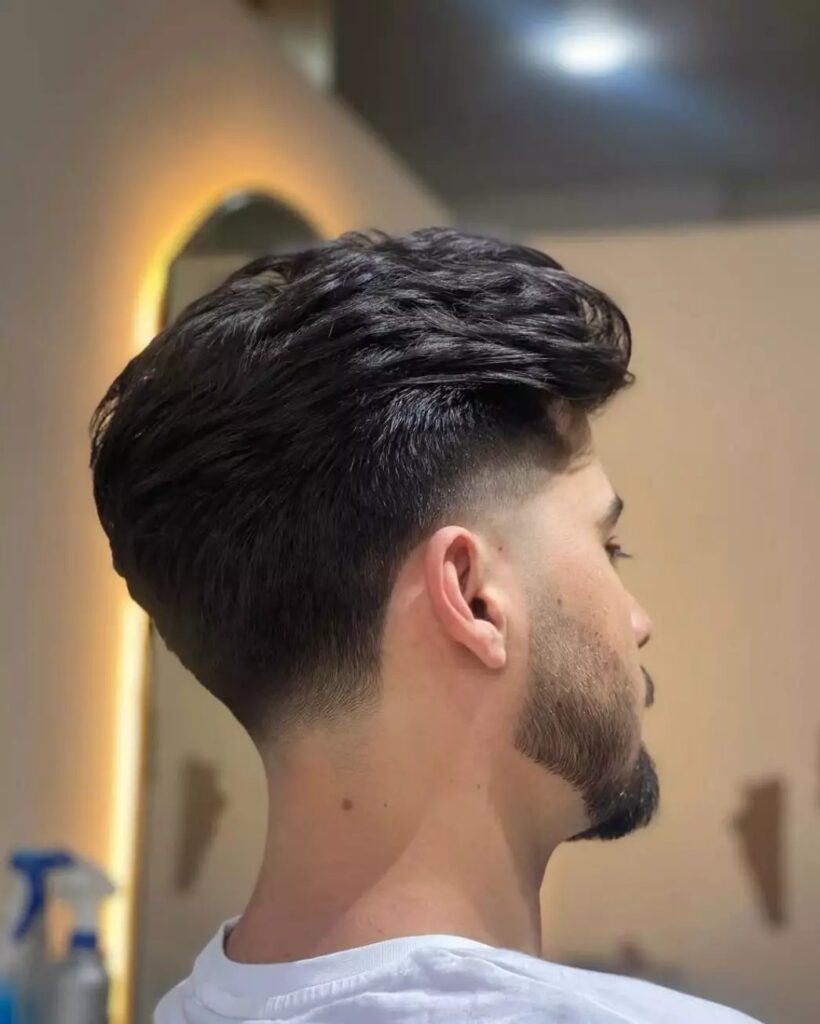
The slick back is arguably the single most powerful hairstyle a man with a widow’s peak can choose — because it doesn’t just accept the widow’s peak, it weaponizes it. When all the hair is pushed straight back from the forehead, the widow’s peak becomes a sharp, defined anchor point that gives the hairline a dramatic, architectural quality.
Think of it as the difference between an accidental V and an intentional V. Slicked back, the widow’s peak looks like a design decision. The rest of the hair flows backward in a sleek, continuous shape, and the hairline at the front becomes one of the most striking visual features of the entire look. Use a medium-to-high-hold pomade with a medium shine for a modern version, or a high-gloss gel for a classic, old-Hollywood feel. Blow-dry the hair backward while it’s damp, then apply product and comb straight back in one clean direction. This style suits oval, square, and heart-shaped faces best and works on straight to slightly wavy hair.
2. The Side Part
Source: @Instagram
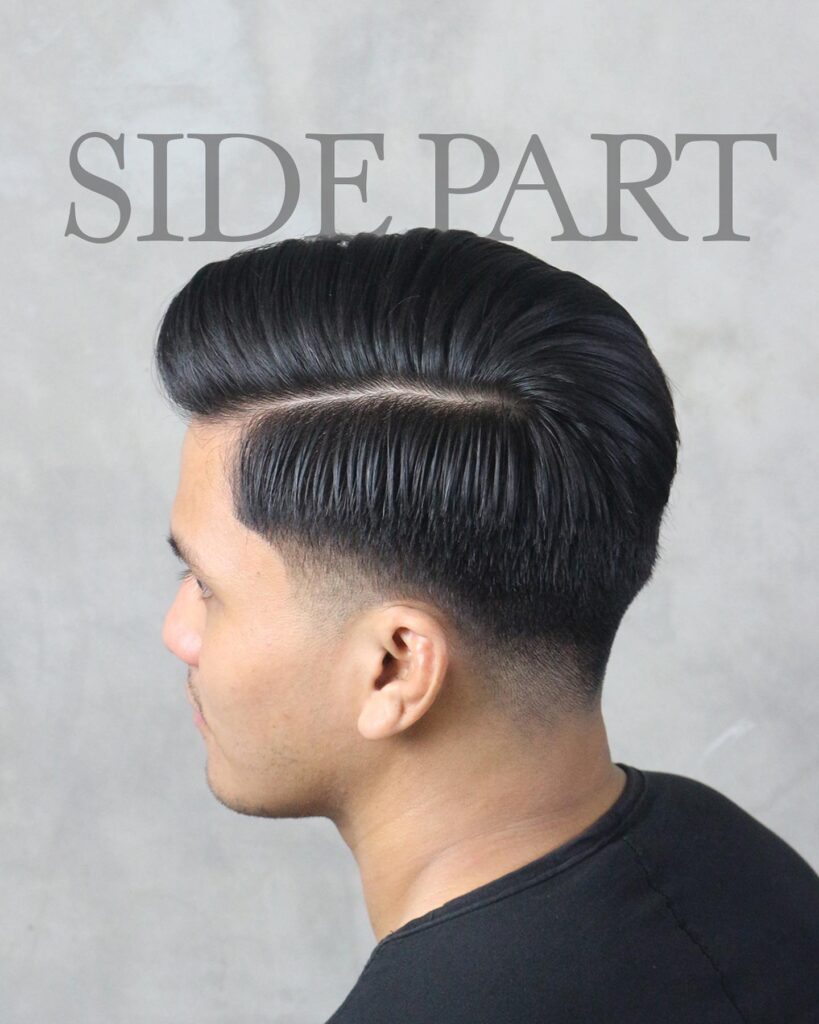
The side part is the most classic, reliable, and universally flattering style for men with a widow’s peak — and it’s been that way for over a century. The principle is simple: instead of trying to draw attention to the center of the hairline (where the widow’s peak lives), the side part shifts the visual focus to one side, creating an asymmetric sweep that naturally moves the eye away from the V-shaped point.
A deeper, more defined part amplifies this effect — the hair on the longer side sweeps broadly across the forehead and the widow’s peak disappears into the overall sweep of the hair. A more subtle part creates a softer effect while still achieving the same directional shift. Use a medium-hold pomade or clay for a matte, modern finish or a shine pomade for a classic look. The side part pairs beautifully with a fade or taper on the sides to keep the focus on the top. It’s a style that works in boardrooms, at weddings, and on casual Saturdays without requiring any adjustments.
3. The Pompadour
The pompadour is volume-first, front-and-center styling at its most theatrical — and for men with a widow’s peak, it works brilliantly because the entire front section of hair is pushed upward and backward, lifting away from the hairline entirely. The widow’s peak is visible at the base, but the dramatic height of the pompadour draws the eye upward, making the hairline feel like a foundation rather than a focal point.
Modern pompadours range from sleek and structured (think Elvis-era high gloss) to textured and relaxed (a more current, editorial interpretation). The textured version is particularly forgiving of widow’s peaks because the loose, undone texture around the hairline blurs the V-shape softly. To build a pompadour, blow-dry damp hair forward and then upward using a vent brush, building volume as you go, then apply strong-hold pomade and shape the front section into the desired lift. Pair with a mid or high fade for a sharp, modern silhouette.
4. The Undercut
The undercut’s defining feature — drastically shorter sides with a significantly longer top — creates an inherent visual focal point at the top of the head rather than the hairline. This directional emphasis works strongly in favor of men with a widow’s peak: the shaved or clipped sides create a clean frame, and the longer top hair can be styled in any direction, covering, blending, or embracing the widow’s peak depending on preference.
A textured, swept-back undercut lets the widow’s peak sit naturally at the base of a flowing top section — it reads as intentional and cool. A forward-swept fringe version partially covers the hairline and minimizes the widow’s peak for those who prefer a subtler look. The undercut is one of the most versatile starting points on this list because it doesn’t predetermine how the top hair is styled — it just creates the structural contrast that makes any top style look sharper and more deliberate.
5. Mens Quiff Hairstyles
Source: @Instagram
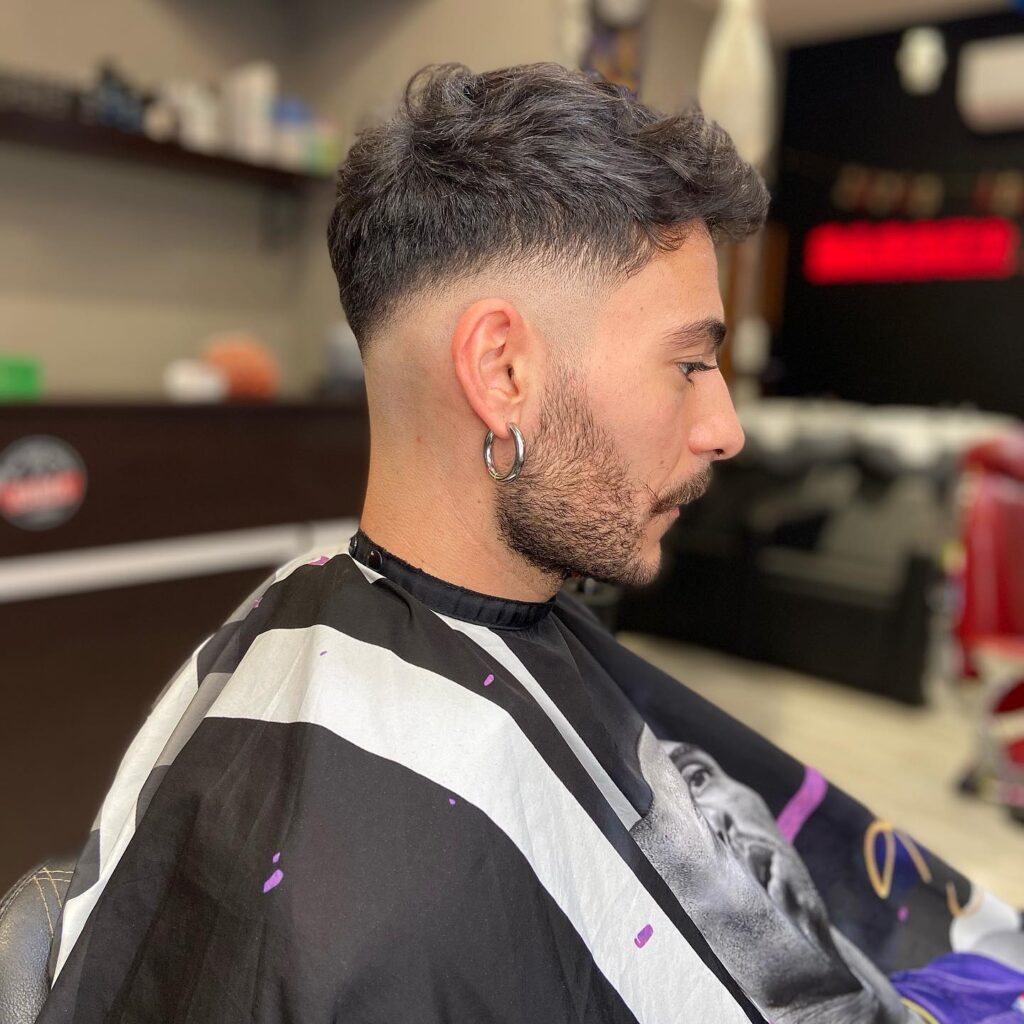
The quiff lifts and sweeps the front section of hair upward and slightly backward, creating a voluminous frontal shape that sits above and away from the hairline. Because the hair is moving up and back, it clears the widow’s peak naturally, letting it show cleanly at the base of the lifted section — which, when well-executed, actually looks intentional and sophisticated.
For men with a more pronounced widow’s peak, the quiff works especially well because the lifted front section frames the hairline and gives it context — the V becomes the launching point of the quiff rather than a random irregularity. Use a matte paste or clay for a modern, textured quiff, or a pomade for a slicker, more polished version. Blow-dry the front section upward while using a round brush or your fingers to guide the shape, then finish with product to hold the lift. A skin fade or high taper on the sides maximizes the contrast and keeps the look clean.
6. The Buzz Cut
Source: @Instageam
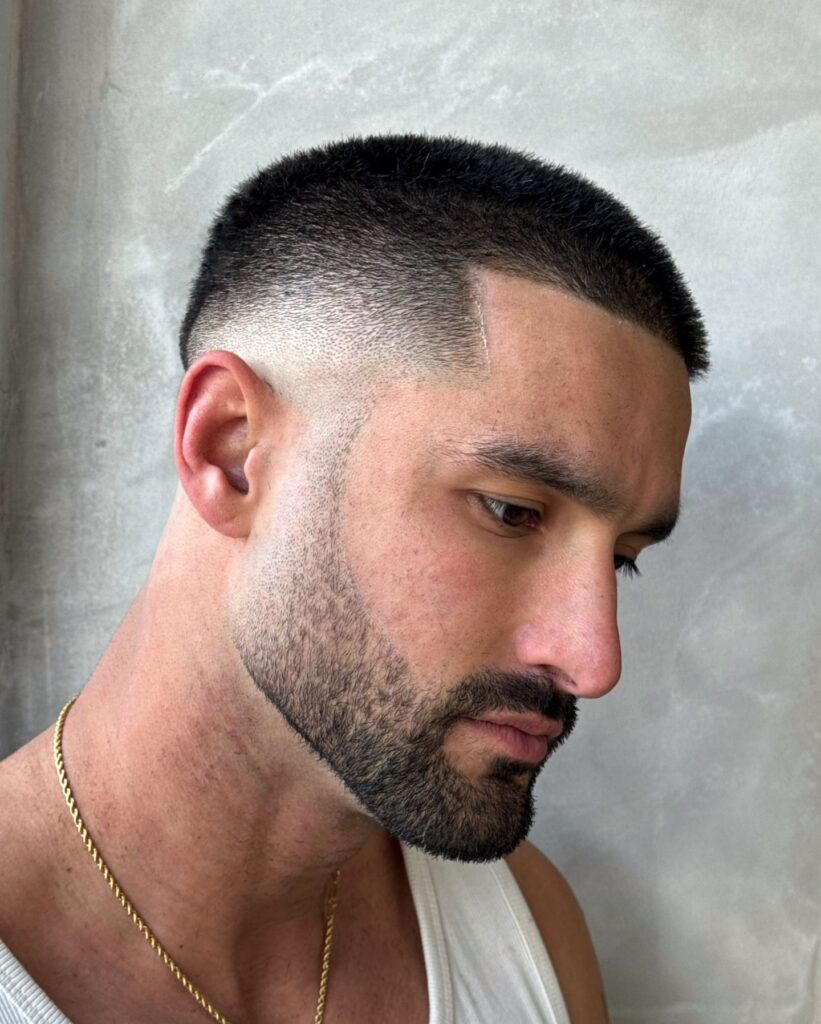
The buzz cut is the most honest approach to a widow’s peak — and I mean that in the best possible way. When you cut all the hair down to a uniform short length, the widow’s peak becomes a visible, clearly defined feature of your natural hairline. No styling, no product, no directing hair to cover or emphasize it. Just your hairline, exactly as it is, clearly visible for everyone to see.
For men with a strong, well-defined widow’s peak and a good head shape, the buzz cut actually shows it off in a way that reads as confident and intentional. It’s the hairstyle equivalent of not apologizing. Many men discover that once they buzz their hair, the widow’s peak they were self-conscious about is actually a genuinely attractive feature that adds character to their face. Use a #1 or #2 guard for a very close cut, or a #3–#4 guard if you prefer a bit more coverage. A skin fade around the temples and back keeps the look polished.
7. The Textured Crop

Source: @Instagram
The textured crop is a shorter, more modern take on the fringe concept — and it’s one of the most effective styles for minimizing a prominent widow’s peak without completely hiding it. The hair is cut short overall with a fringe that sits just at or above the eyebrow line, cut with point-cutting or razor technique to create a choppy, disconnected texture across the front.
This texture is the key. A hard-cut, blunt fringe exposes the exact shape of the hairline — including every detail of the widow’s peak. A textured, choppy fringe breaks up the line at the forehead, creating visual noise that makes the precise shape of the widow’s peak far less obvious. The textured crop works on straight to slightly wavy hair and requires minimal product — a small amount of matte clay worked through dry hair gives the texture definition without looking stiff or overdone. It’s a genuinely easy, low-maintenance style that handles widow’s peaks smartly.
8. The Middle Part
The middle part is the boldest way to embrace a widow’s peak. By deliberately parting the hair directly at the center — right where the widow’s peak sits — you make the V-shaped hairline the deliberate anchor of your entire hairstyle. Both sides of the hair fall away symmetrically from the center, and the widow’s peak becomes the intentional axis around which the style is built.
This look works best on men with softer, medium-length hair that falls naturally to the sides when parted. Curtain hair — a popular current style where medium-length hair parts in the middle and sweeps outward toward the face on both sides — is the most popular modern expression of the middle part and it suits widow’s peaks exceptionally well. The symmetry of a middle part combined with the natural symmetry of a widow’s peak creates a genuinely elegant, harmonious result. Light pomade or sea salt spray defines the hair without weighing it down.
9. The Caesar Cut
The Caesar cut is a short, horizontal fringe cut straight across the forehead at a relatively short length — typically one inch or less. It’s named after Julius Caesar (allegedly one of history’s first famous widow’s peak havers). The uniformly short, horizontally cut fringe creates a consistent visual line across the forehead that diminishes the visible sharpness of the widow’s peak by covering the hairline’s lower point.
It’s one of the most straightforward widow’s peak solutions because it simply covers the hairline with a short, flat fringe regardless of where the hairline actually sits. The Caesar works on straight to wavy hair and looks especially clean when paired with a low or mid fade on the sides. It requires minimal product — a small amount of gel or clay keeps the fringe in place. The style is clean, simple, and understated, making it an excellent choice for men in professional environments or anyone who prefers a no-fuss approach to styling.
10. Long Flow Haircut Men
Longer hair is one of the most effective widow’s peak minimizers available — simply because there’s more of it. When hair grows past the ears and falls around the face, the hairline becomes proportionally less visible relative to the overall mass of hair. The widow’s peak point is still there, but it’s a small detail in a large context rather than the first thing you notice.
The “flow” — shoulder-adjacent length that moves freely and falls naturally — works particularly well for men with wavy or curly widow’s peaks because the natural texture creates volume and movement that further diffuses the hairline’s visual sharpness. Keep the sides trimmed to avoid the “forgotten haircut” look, condition regularly to maintain healthy texture, and consider a light sea salt spray for definition and movement. This is the lowest-manipulation option on the list — just grow it, condition it, and let it do its thing.
11. High Fade with Textured Top
The high fade removes hair almost to the top of the sides, creating a very clean, uncluttered silhouette that puts all visual focus on the top section of the hair. For men with widow’s peaks, this focused attention on the top — rather than the sides and hairline area — naturally shifts where the viewer’s eye goes first.
When combined with a textured, styled top (swept back, quiff-style, or even a casual messy look), the high fade creates a look where the widow’s peak is visible but contextualized within a deliberately shaped overall style. It doesn’t hide the widow’s peak, but it gives it context that makes it look like a design element rather than an inconvenience. High fades also suit most face shapes and are one of the most versatile base cuts for experimenting with different top styles without committing to a new haircut each time.
12. The Swept-Back Style
Not everything needs to be perfectly structured. The swept-back loose style — where medium-to-long hair is casually pushed back from the face without hard product or precise styling — is one of the most effortlessly flattering options for men with widow’s peaks who prefer a relaxed, natural aesthetic.
The hair is simply encouraged backward and slightly to one side with the hands or a wide-tooth comb, with a light product (sea salt spray, light cream, or barely-there pomade) used to give it a hint of definition and hold. The widow’s peak shows naturally, but in a casual, lived-in context that reads as confident and unfussy. This works especially well for men with naturally wavy or slightly textured hair where the casual push-back creates immediate, flattering movement. It’s the style equivalent of saying “yeah, I have a widow’s peak — so does Keanu Reeves.”
13. The Side Swept Fringe
The side swept fringe is a longer, more flowing version of the side part — where the hair on top is grown out enough to sweep across the forehead and partially cover the widow’s peak area. The hair falls in one continuous sweep from one side to the other, creating a diagonal line across the forehead that breaks up the symmetry of the V-shaped hairline.
This style requires enough length on top to genuinely sweep — typically 3–5 inches minimum — and works best on straight or slightly wavy hair where the sweep lies flat and clean rather than curling back up. A small amount of light pomade or cream applied before blow-drying the hair in the sweep direction creates the longest-lasting result. The side swept fringe is a particularly popular choice for men in their 20s and 30s who want something fashionable but not aggressively trendy, and it remains one of the most reliable widow’s peak minimizers in the entire styling toolkit.
14. The Ivy League Cut
The Ivy League is a longer crew cut — essentially a crew cut with enough length on top (typically 1.5–2.5 inches) to part to one side. It’s clean, classic, preppy, and professional. For men with widow’s peaks, it combines the directional benefit of a side part (shifting attention away from the center hairline) with the practicality and low maintenance of a shorter overall cut.
The Ivy League is one of the most office-appropriate haircuts on this list — clean enough for conservative work environments, stylish enough to look intentional rather than simply short. It pairs naturally with a taper or low fade on the sides. The side part is typically done with a comb and light pomade, keeping the top neatly in place without looking stiff or overdone. If you want the professionalism of a crew cut with the widow’s peak management of a side part, this is the cut that delivers both simultaneously.
15. The Faux Hawk
Source: @Instagram
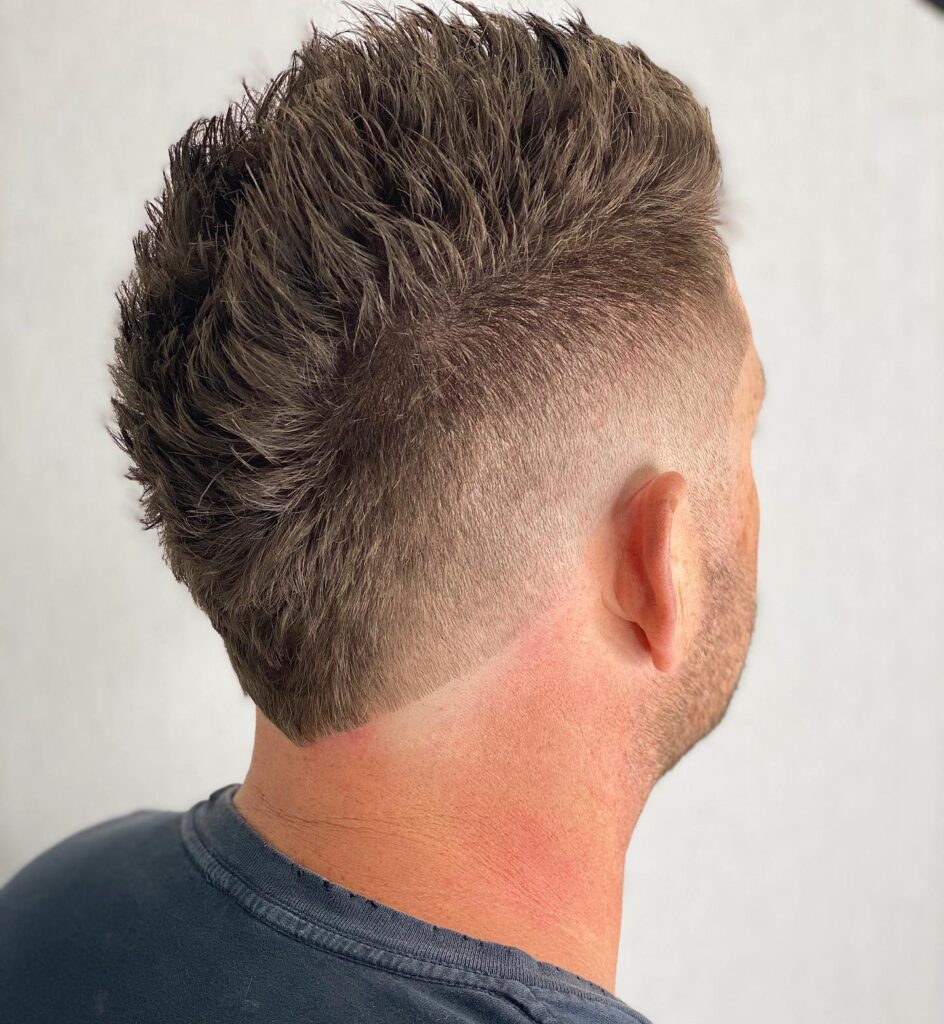
The faux hawk concentrates all the hair’s height and volume in a central strip running front-to-back across the top of the head. The sides are kept short (usually faded), and the central strip is styled upward using gel or wax. For men with widow’s peaks, the faux hawk is fascinating: the central strip of lifted hair sits directly above the widow’s peak, creating a continuation of the V-shape upward into the style itself.
When you look at it this way, the faux hawk doesn’t fight the widow’s peak at all — it extends it. The V of the hairline flows naturally into the V-silhouette of the central hair strip, creating an unusually cohesive overall shape. This is one of those styles where having a widow’s peak actually makes the haircut look better than it would on someone with a straighter hairline. Medium to strong-hold gel or wax applied to damp hair, with the central strip pushed straight up and slightly forward, creates the classic faux hawk shape.
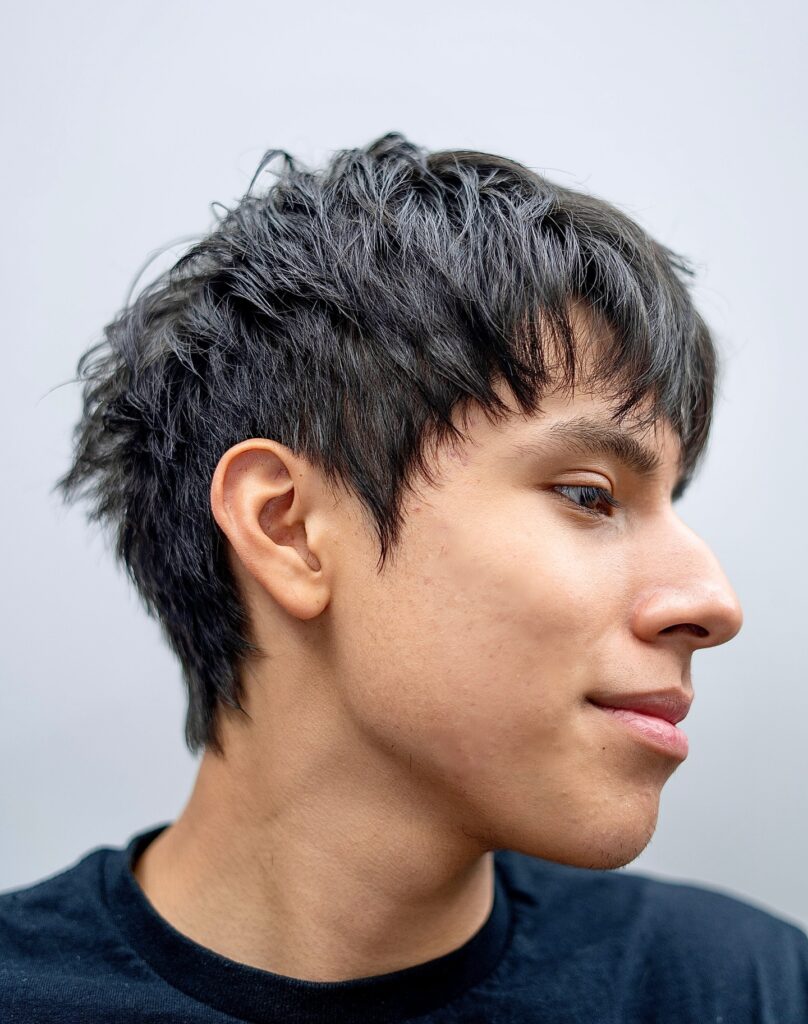
16. The Textured Fringe Haircut Men
Source: @Instagram
This is the most intentionally directional style on the list. The textured fringe is grown out to medium length on top, then styled in a strong asymmetric sweep — usually from right to left or left to right — where one side of the fringe falls low and the other side rises higher, creating a diagonal, off-center movement across the forehead.
This asymmetric quality is the widow’s peak’s best friend: it introduces deliberate visual irregularity to the front of the style, making the irregular V-shape of the hairline look like part of an intentional asymmetric design rather than an accidental quirk. The styling is relatively simple — blow-dry the hair in the intended direction while it’s damp, apply matte paste, and reinforce the sweep with your fingers. It works best on medium-thickness, straight to wavy hair. It’s a modern, creative style with genuine personality — and for men who want something that stands out, it’s one of the most interesting choices on this entire list.
Quick Comparison: 16 Widow’s Peak Hairstyles for Men
Style Guide at a Glance
| Hairstyle | Strategy | Hair Length Needed | Widow’s Peak Effect | Maintenance | Best Face Shape |
|---|---|---|---|---|---|
| Slick Back | Embrace | Medium–Long | Highlights it boldly | Low | Oval, Square |
| Side Part | Minimize | Short–Medium | Deflects attention | Low | All shapes |
| Pompadour | Embrace | Medium | Uses it as base | Medium | Oval, Heart |
| Undercut | Flexible | Medium–Long | Depends on top style | Medium | Most shapes |
| Quiff | Embrace | Medium | Frames it cleanly | Medium | Oval, Square |
| Buzz Cut | Expose | Very Short | Shows fully | Very Low | Oval, Square |
| Textured Crop | Minimize | Short–Medium | Softens with texture | Very Low | Most shapes |
| Middle Part | Embrace | Medium | Makes it the axis | Low | Oval, narrow |
| Caesar Cut | Cover | Short | Covers with fringe | Low | Round, square |
| Flow (Long) | Minimize | Long | Reduces visibility | Low–Medium | Most shapes |
| High Fade + Top | Embrace | Short–Medium | Contextualizes it | Low | Most shapes |
| Swept-Back Loose | Embrace | Medium–Long | Casual, natural | Very Low | Most shapes |
| Side Swept Fringe | Minimize | Medium–Long | Covers partially | Low | Oval, long |
| Ivy League | Minimize | Short–Medium | Deflects via part | Very Low | All shapes |
| Faux Hawk | Extend | Short–Medium | Extends the V | Medium | Oval, square |
| Asymmetric Fringe | Minimize | Medium | Disguises in design | Low–Medium | Most shapes |
Common Mistakes Men with Widow’s Peaks Make
Choosing a blunt straight fringe. A hard-cut, perfectly horizontal fringe exposes the exact shape of the hairline — including the widow’s peak point — with complete clarity. If you want a fringe, always ask for it to be textured or point-cut to soften the edge.
Trying to cut the widow’s peak out. Some men ask barbers to “even out” the hairline by trimming the widow’s peak point down. This never ends well. The hair grows back unevenly, the shaved or trimmed area looks patchy, and the problem becomes worse rather than better. Accept the hairline you have.
Styling everything straight forward. Pulling hair straight forward from the crown and letting it fall directly down over the forehead creates a fringe that’s interrupted right in the middle by the widow’s peak. Any directional styling other than straight-forward — swept to a side, pushed back, textured diagonally — is more flattering.
Choosing a hairstyle without considering the widow’s peak. The most common mistake is simply picking a haircut you like in a photo without thinking about how it’ll translate to your hairline. Always mention your widow’s peak to your barber and ask how the style will work with it before committing.
Over-gelling the hairline area. Heavy gel or wet-look product applied right at the hairline makes every detail of the widow’s peak more visible by flattening the hair against the skin and creating a hard edge. Use product more heavily through the body of the style and lighter (or not at all) right at the hairline.
Similar Variations to Explore
- The Curtain Hair — A middle part with longer hair that falls to both sides of the face; one of the most flattering widow’s peak styles on men with oval or narrow faces.
- The Disconnected Pompadour — A more extreme pompadour where the sides are more dramatically clipped and the top section has more volume and height.
- The Modern Combover — A longer, more relaxed evolution of the side part where the hair sweeps broadly across the head in a flowing, non-rigid way.
- The Taper Fade + Slick Back — A slick back with a taper (rather than skin fade) on the sides for a more classic, less extreme version of the clean slick back look.
- The Wolf Cut — A layered, shaggy style with curtain-style fringe that works well for men with widow’s peaks who want longer, more textured hair.
Hair Care Tips for Men with Widow’s Peak Hairstyles
Keep the hairline clean between cuts. Even if you’re growing a longer style, the area around the hairline and nape can look overgrown and untidy quickly. A touch-up of the edges every 3–4 weeks (even if the main haircut isn’t due) keeps everything looking intentional.
Use the right product for your strategy. If you’re embracing the widow’s peak (slick back, pompadour), a pomade or gel with shine and hold works best. If you’re minimizing it (textured crop, swept fringe), a matte clay or paste gives a softer, less defined edge at the hairline that reduces visibility of the V-shape.
Blow-dry with intention. How you blow-dry your hair determines where it naturally wants to sit. If you consistently blow-dry your hair in the direction of your style — backward for a slick back, to the side for a side part — the hair trains itself over time to sit in that direction with less effort and less product.
Condition regularly. Men often skip conditioner, but it matters — especially for medium and longer styles where dry, damaged hair creates frizz and uneven texture at the hairline that makes the widow’s peak more obvious. Condition 2–3 times per week for straight hair and every wash for wavy or curly hair.
Talk to your barber openly. I cannot stress this enough. Tell your barber you have a widow’s peak before they start cutting. Show them where it sits, how pronounced it is, and ask specifically how the style you’re requesting will interact with it. A good barber will adjust the cutting technique, the fringe length, or the fade level to account for your specific hairline — but only if you give them the information to work with.
Protect from thinning. Widow’s peaks can sometimes become more pronounced as the hair above the temples thins with age. Using a gentle, scalp-stimulating shampoo (look for ingredients like caffeine, saw palmetto, or biotin), avoiding harsh heat, and managing stress all contribute to maintaining hair density around the hairline long-term.
Outro
A widow’s peak is not a hair problem. It’s a hairline characteristic — one shared by some of the most iconic-looking men on earth — and the right hairstyle turns it from something you manage into something you own. Whether you choose to embrace it with a bold slick back or soften it with a textured crop, there’s a style on this list that works for your face, your hair type, and your lifestyle.
The best widow’s peak hairstyles for men are the ones that make you walk out of the barber feeling like you, just sharper. Take this guide, pick your strategy, and give your barber the information they need to execute it. Your widow’s peak might just become your best feature.