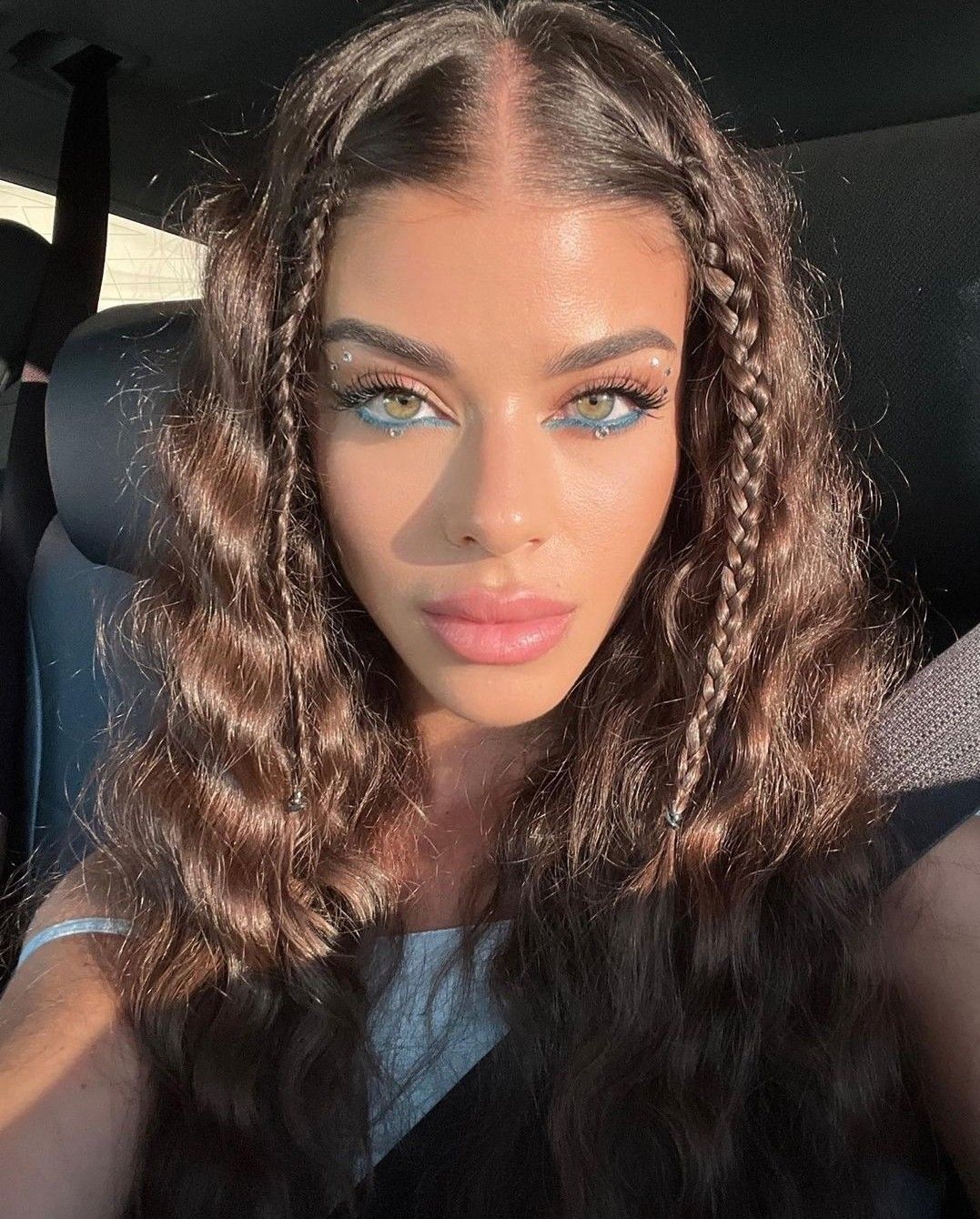
16 Best Hair Colors For Blue Eyes: The Ultimate Guide to Making Those Blues Pop
Ever stood in the hair salon staring at a color swatch wall, completely overwhelmed — wondering which shade will actually do something for your blue eyes? I’ve been there. Choosing the wrong hair color when you have blue eyes can make them look washed out, dull, or lost entirely. But the right shade? It turns those eyes into the first thing everyone notices when you walk into a room.
So, what are the best hair colors for blue eyes? The best hair colors for blue eyes include warm brunettes like chestnut and caramel, golden blondes, rich reds and coppers, ash blondes, and bold dark shades like black and navy. These tones create contrast or warm undertones that amplify the natural blue pigment in the eyes, making them appear more vivid and defined.
In this guide, I’m going to walk you through all 16 of the most flattering hair colors for blue eyes — including shades your competitor guides probably haven’t mentioned. I’ll also cover which skin tones they suit best, common mistakes to avoid, and how to keep your color looking salon-fresh at home.
Why Hair Color Matters So Much for Blue Eyes
Before we get into the list, let’s talk about why this works. Blue eyes — whether they’re icy gray-blue, deep ocean blue, or warm periwinkle — react strongly to contrast and warmth.
Two core principles drive every recommendation below:
- Contrast: Dark hair against light blue eyes creates an optical punch that makes both the eyes and the hair stand out.
- Warmth: Warm-toned hair (golds, coppers, reds) reflects undertones that complement blue’s opposite on the color wheel — orange — creating a visually harmonious look.
Keep this in mind as we go through the list. You’ll start to see the pattern.
The 16 Best Hair Colors for Blue Eyes
1. Golden Blonde — Classic Sunshine Meets the Ocean
Golden blonde is arguably the most iconic pairing with blue eyes, and for good reason. The warm honey and amber tones in golden blonde sit on the opposite end of the color wheel from blue, creating a soft, natural contrast that feels effortless rather than dramatic. This isn’t your flat, straw-colored blonde — think rich, multi-dimensional waves of gold with subtle bronze highlights woven through.
This shade works best for blue-eyed people with warm or neutral skin undertones. If you have peachy or olive skin, golden blonde will bring out the glow in your complexion while making those eyes look almost luminous. For implementation, ask your colorist for a base of level 8–9 blonde with hand-painted highlights in levels 9–10 to create dimension. The result is a sun-kissed finish that photographs beautifully and looks just as stunning in person.
Practical tip: Use a purple/violet toning shampoo once a week to prevent brassiness — which would shift your golden blonde too warm and reduce that crisp contrast with your eyes.
This is the go-to color for anyone wanting to look refreshed and youthful — it’s especially popular in beach and casual aesthetics but translates beautifully into professional settings with the right cut.
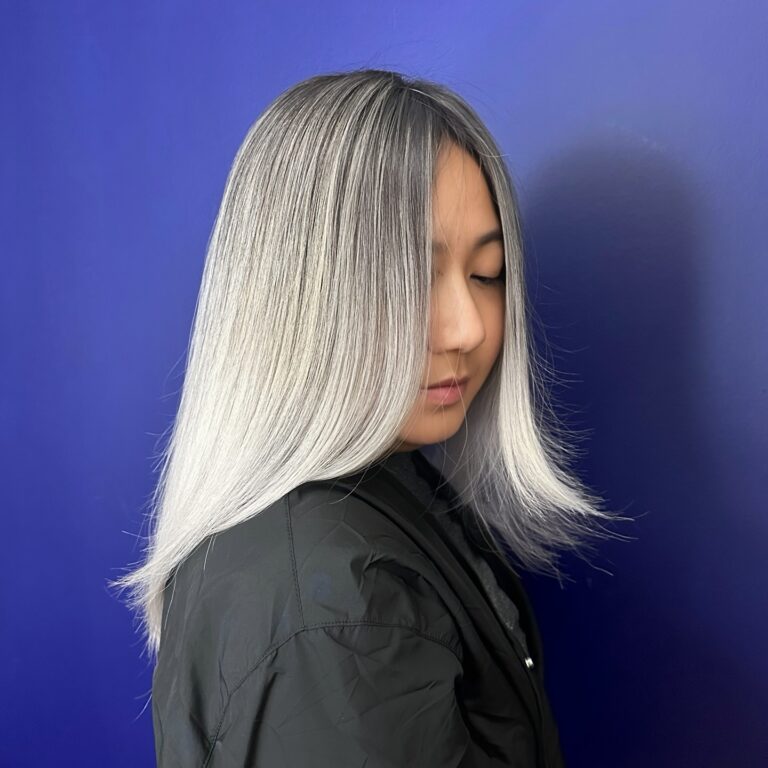
2. Ash Blonde — Cool, Icy, and Unforgettable

Source: @Instagram
If golden blonde is warm sunshine, ash blonde is a crisp winter morning — and blue eyes absolutely thrive in that environment. Ash blonde contains cool, muted undertones (blue, green, gray) that don’t compete with blue eyes. Instead, they mirror them, creating an almost ethereal, high-fashion look.
This color suits blue-eyed individuals with cool or neutral skin undertones best — think fair skin with pink or rosy undertones. On the right person, ash blonde makes blue eyes look almost silver or steel-blue in certain lighting, which is stunning. Ask your colorist for a level 8 or 9 ash blonde base — anything too light moves into platinum territory, while anything too dark risks a muddy, flat finish.
Practical tip: Ash blonde fades fast and can go brassy. Budget for a toner refresh every 6–8 weeks and invest in a bond-protecting treatment like Olaplex to maintain hair health during the lightening process.
This shade slots naturally into minimalist, editorial, or Scandinavian-inspired aesthetics — it’s a very clean, intentional look.
3. Natural Platinum Blonde — Bold, Striking, and High-Contrast

Source: @Instagram
Natural Platinum is for the bold. It’s bright, it’s dramatic, and it creates maximum contrast with deep or medium blue eyes — making them look richer and more saturated by comparison. Think Marilyn Monroe, or any modern fashion editorial featuring impossibly vivid eyes.
Natural Platinum works best with cool skin tones and blue eyes that have a gray or icy quality to them. On warm skin, Natural platinum can look harsh unless carefully toned. This is also the most high-maintenance shade on this list — it requires regular root touch-ups (every 4–6 weeks), toning sessions, and deep conditioning treatments to prevent breakage.
Practical tip: Never attempt to go platinum at home. The process requires bleaching hair multiple times, and an error in timing or developer strength can cause significant breakage. Always see a certified colorist.
Natural Platinum is the color of runways, music videos, and editorial shoots — it’s bold, it’s uncompromising, and it makes blue eyes look absolutely electric.
4. Chestnut Brown — Warmth That Makes Blue Eyes Glow

Source: @Instagram
Chestnut brown is one of the most underrated pairings for blue eyes. This rich, reddish-brown shade brings warm undertones that sit in direct complementary relationship with blue on the color wheel. The result is a contrast that feels deep and sophisticated rather than stark.
This shade is incredibly versatile — it suits blue-eyed individuals with warm, neutral, or even slightly cool skin undertones. It’s a particularly excellent choice if you’re transitioning from a lighter color and want something that feels grounded and natural. For depth and dimension, ask for chestnut as a base (level 4–5) with cinnamon or auburn highlights through the mid-lengths and ends.
Practical tip: Chestnut brown tends to fade slightly warm over time, which is actually a feature here — the gradual fade keeps that golden warmth that complements your eyes. Refresh the color every 8–10 weeks with a gloss treatment.
Chestnut suits a wide range of aesthetics from romantic and boho to professional and polished — it’s genuinely one of the most wearable shades on this entire list.
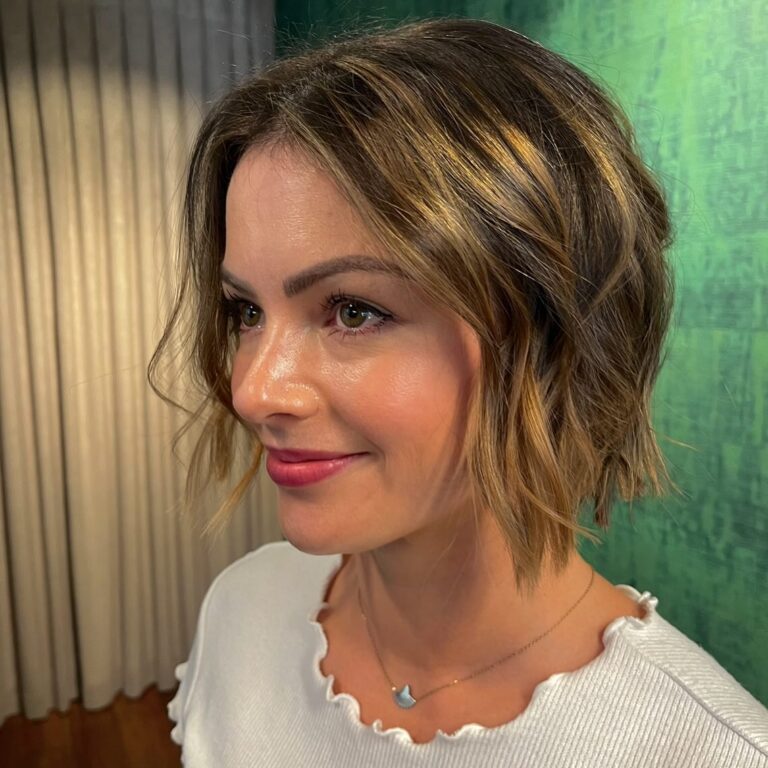
5. Caramel Balayage — Sun-Kissed and Dimensional

Source: @Instagram
Caramel balayage has dominated the hair world for years, and its popularity with blue-eyed people is no accident. The soft, hand-painted caramel and butterscotch tones create a warm, dimensional effect that frames the face beautifully — pulling the eye inward and making blue eyes look both warmer and deeper.
The beauty of balayage is its versatility. It can be subtle (barely-there sun-kissed tones for natural-looking warmth) or bold (bright caramel panels that create real contrast). For blue eyes, I recommend keeping the warmest tones concentrated around the face — specifically at the temples and around the hairline — to maximize the eye-brightening effect.
Caramel balayage works across almost all skin tones, making it one of the most universally flattering options on this list. It grows out gracefully too, requiring only a refresh every 3–4 months.
Practical tip: Ask your colorist for a “money piece” — a bright caramel highlight framing the face — in addition to your balayage. This face-framing element will have the most visible impact on your eyes.
6. Copper Red — The Most Eye-Popping Combination

Source: @Instagram
Copper red and blue eyes? This is, objectively, one of the most visually striking combinations a person can wear. Copper sits almost directly opposite blue on the color wheel, meaning the contrast between copper hair and blue eyes is intense, rich, and immediate. It’s the hair-color equivalent of an electric shock — in the best possible way.
Copper red works beautifully on fair to medium skin tones with blue eyes. It can skew either warm or neutral depending on whether your colorist adds gold (warmer copper) or rose (cooler, more auburn) tones. Both variations amplify blue eyes dramatically.
Practical tip: Red and copper tones are the first to fade because red pigment molecules are the largest in hair dye — they’re rinsed out fastest. Combat this by washing your hair in cool water, using a color-depositing red conditioner weekly, and minimizing sun exposure (UV accelerates red fade significantly).
This is the shade for someone who wants to make an unforgettable impression. Copper red + blue eyes is a combination people will remember.
7. Strawberry Blonde Highlights — Soft, Romantic, and Underrated

Source: @Instagram
Strawberry blonde sits in the sweet spot between blonde and red — it has the warmth of copper without the intensity, and the lightness of blonde without losing dimension. For blue eyes, this creates a soft, romantic look that feels both natural and enchanting.
This shade is especially beautiful on blue-eyed individuals with fair, peachy, or freckled skin — it leans into that ethereal, vintage quality beautifully. It also tends to photograph exceptionally well, which is a bonus. Strawberry blonde can be achieved via dyeing or a gentle balayage technique for a more natural grow-out.
Practical tip: Strawberry blonde can tip into “brassy” territory if not carefully maintained. Use a brass-correcting shampoo (look for violet-tinted formulas) every 2–3 washes and finish with a glossing conditioner to keep that luminous, peach-gold quality intact.
This is a perfect shade for spring and summer — it feels fresh, warm, and effortlessly beautiful paired with blue eyes.
8. Auburn — Deep, Rich, and Timelessly Elegant

Source: @Instagram
Auburn is essentially the sophisticated elder sibling of copper — deeper, more complex, and with a burgundy-meets-brown warmth that adds serious richness to any look. It creates strong contrast with lighter blue eyes and a luxurious, jewel-toned quality against deeper blue eyes.
Auburn sits in the level 4–5 range, making it deep enough to create real contrast while still showing warmth in sunlight. It suits a wide range of skin tones — from fair to deep — making it one of the most accessible warm tones on this list. Blue-eyed individuals with cooler skin undertones might find auburn slightly challenging, but a more burgundy-leaning auburn (sometimes called “cool auburn”) solves this perfectly.
Practical tip: Auburn is relatively forgiving in terms of maintenance. As it fades, it warms rather than goes brassy, which is usually flattering. A semi-permanent gloss in a matching auburn tone applied at home every 6 weeks keeps things vibrant between salon visits.
Auburn carries a timeless, classic quality — it suits everything from traditional to bohemian aesthetics and looks genuinely luxurious in autumn light.
9. Jet Black Hair Color — Maximum Drama, Maximum Impact

Source: @Instagram
Jet black is the ultimate contrast color for blue eyes. The difference between dark, true black hair and vivid blue eyes is so dramatic it’s almost theatrical — in the most spectacular way possible. Think Snow White. Think classic Hollywood glamour. Think “everyone in the room turns to look.”
This shade suits blue-eyed people best when paired with either cool or neutral skin tones — on very fair skin, the effect is especially striking. On warm skin tones, a softer dark brown (see below) might feel more balanced. Jet black is also, fortunately, one of the easier colors to maintain since it doesn’t require regular lightening. Root touch-ups are the main consideration.
Practical tip: True jet black can look flat and one-dimensional on some hair textures. Ask your colorist for a “glossy black” rather than a matte formula — the added shine gives the color depth and prevents that flat, lifeless appearance.
If you’re someone who loves bold, editorial, high-contrast aesthetics, black is your color. Paired with blue eyes, it’s unforgettable.
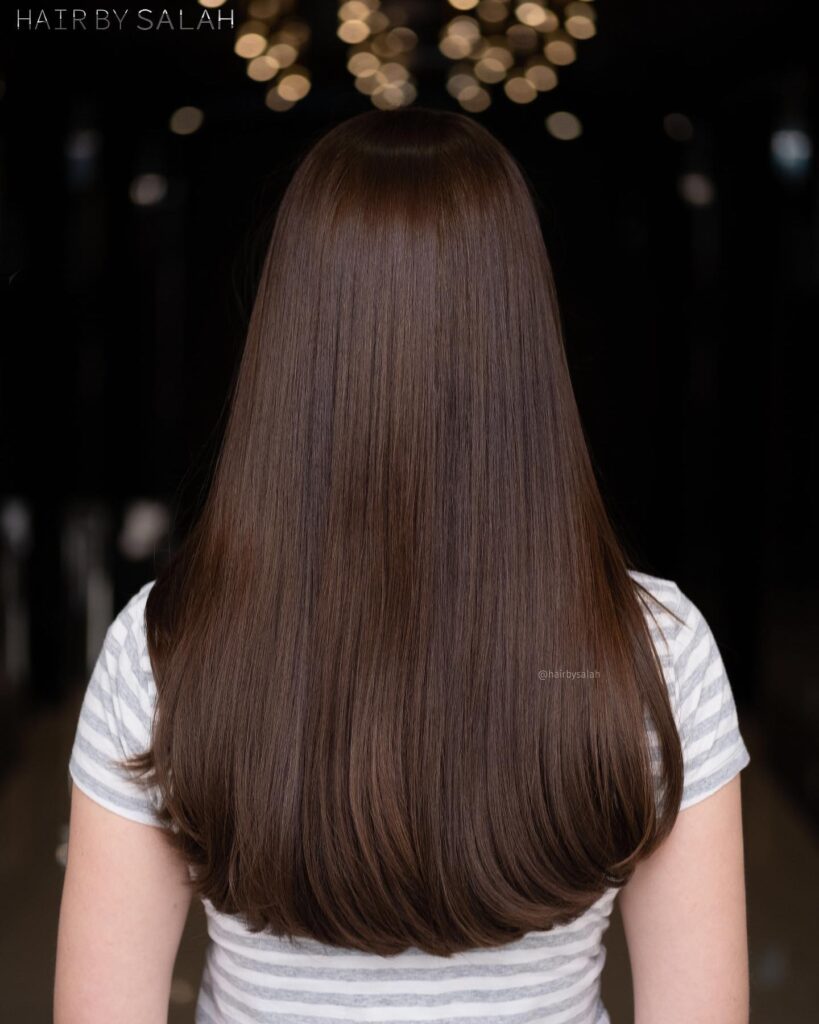
10. Dark Chocolate Brown — Soft Contrast With Hidden Warmth
Source: @Instagram
Not everyone wants the drama of jet black, but still wants the contrast that dark hair provides for blue eyes. Dark chocolate brown is the answer. It sits at a level 3–4, creating strong contrast while carrying hidden warm and cool undertones depending on the formula — making it incredibly wearable across skin tones.
In sunlight, dark chocolate brown reveals subtle red and mahogany tones that complement blue eyes in the same way as auburn or chestnut — just at a quieter volume. It’s sophisticated, low-key, and universally flattering. This is also one of the most “natural” looking dark colors — ideal if you want to go dark without it looking too artificial.
Practical tip: Add a few chocolate or mocha highlights at level 5–6 to prevent the color from looking flat, particularly if your hair has natural warmth that the dark dye might suppress.
Dark chocolate brown suits everything from minimalist office looks to romantic date-night styles — it’s genuinely one of the most versatile options on this entire list.
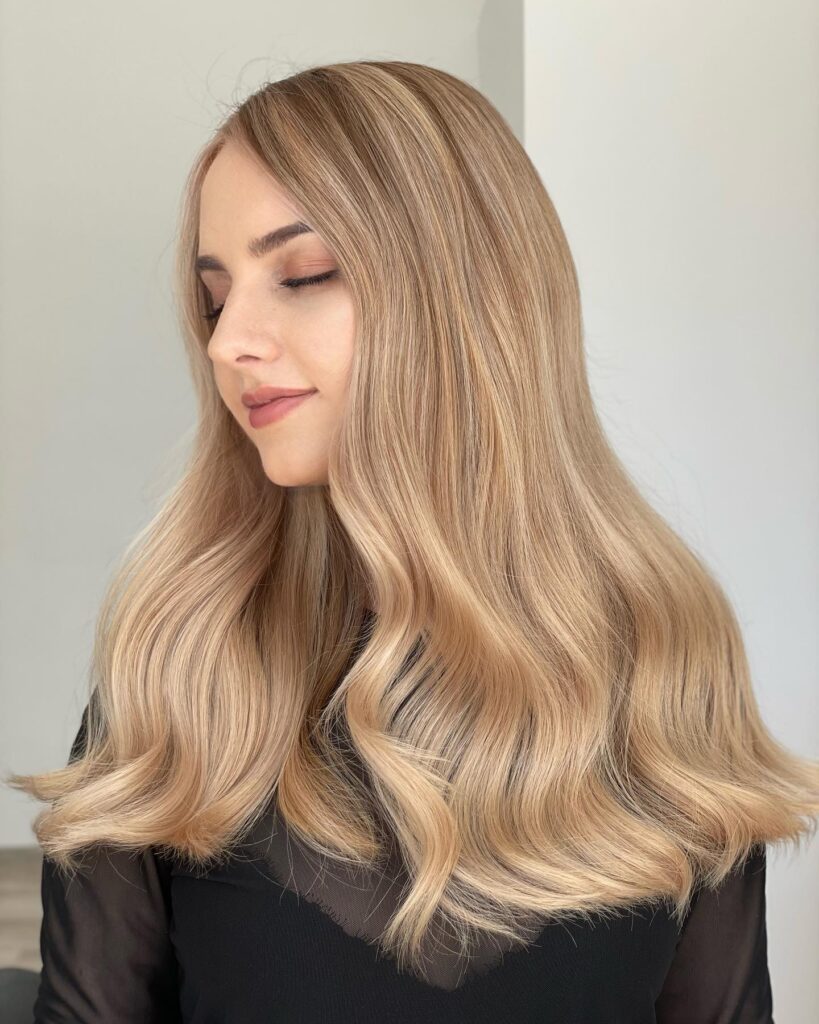
11. Honey Blonde — The Sweet Spot Between Warm and Light
Source: @Instagram
Honey blonde sits between golden blonde and caramel — it has the brightness of a blonde shade with the warmth of a brown. For blue eyes, this means you get the contrast of a lighter shade and the complementary warmth of caramel and gold tones simultaneously. It’s a very generous combination.
This is an especially good choice for blue-eyed individuals with medium to warm skin tones who might find platinum or ash blonde too stark. Honey blonde adds a glow to the complexion while keeping those eyes looking vibrant. It’s also a classic “natural” shade for people with naturally light brown or dark blonde hair.
Practical tip: Honey blonde looks best when it has dimension — request a base of level 6–7 with highlights at levels 8–9 to prevent it from looking flat. A single-process honey blonde can look muddy, but a well-executed multi-tonal version is stunning.
This shade is the hair-color equivalent of a warm cup of tea — comforting, beautiful, and suitable for any season.
12. Sandy Blonde — Natural, Effortless, and Fresh

Source: @Instagram
Sandy blonde is the most natural-looking option on this list — a cool-meets-warm, beige-blonde shade that mimics the color of sun-bleached hair. For blue eyes, it creates a soft, everyday contrast that looks effortless rather than dramatic. Think: a weekend at the beach, every day.
This is an excellent option for blue-eyed people who want their hair color to feel natural — particularly those with naturally mousy or ash blonde hair who want to enhance what they have rather than make a dramatic change. Sandy blonde also tends to be lower maintenance than most shades here, with a gentler grow-out process.
Practical tip: Sandy blonde is easily achieved through babylights — ultra-fine highlights that mimic the dimensional effect of natural sun lightening. This is more expensive than a standard highlight but creates the most realistic, natural-looking result.
Sandy blonde suits casual, natural, Scandinavian, and coastal aesthetics particularly well. It’s a shade that makes you look like you woke up looking this good.
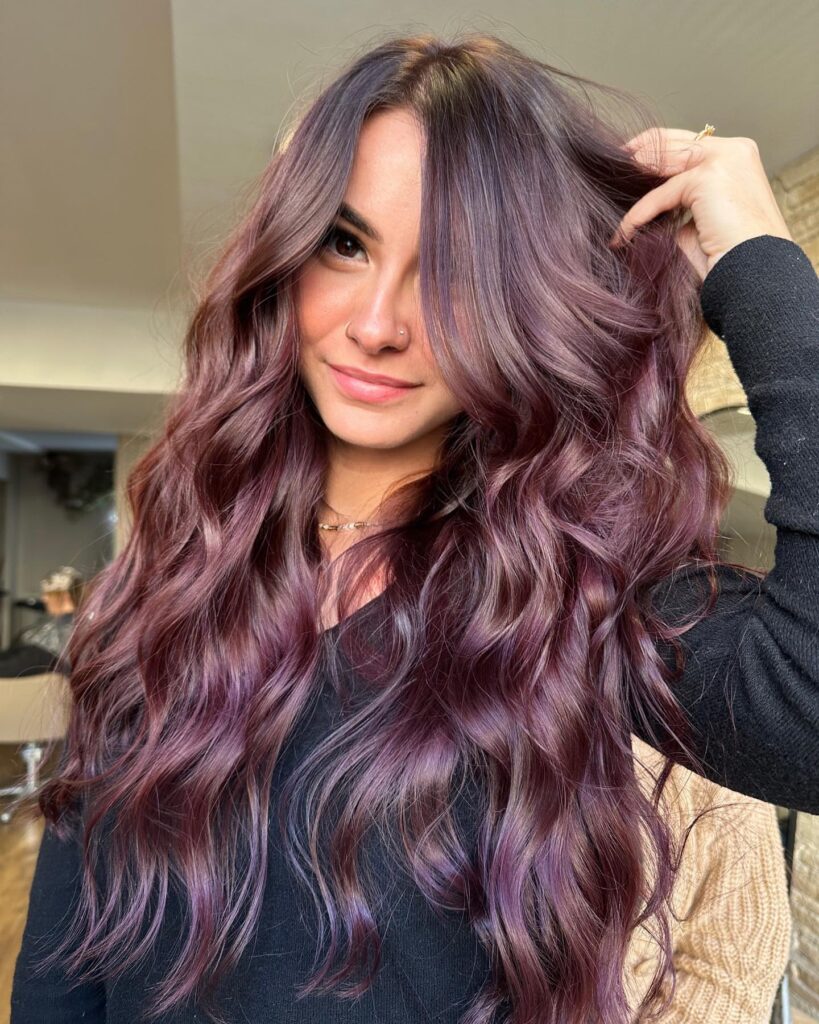
13. Burgundy — Bold Color With Unexpected Depth
Source: @Instagram
Burgundy sits in the cool-red and wine territory — darker and more purple-leaning than auburn or copper, making it a fascinating choice for blue eyes. Where copper creates a warm, bright contrast, burgundy creates a rich, almost jewel-toned contrast that leans into the sophistication of deep blues.
This shade works particularly well with blue eyes that have gray or violet undertones — the burgundy-violet-blue combination looks almost like a piece of art. It suits cooler skin tones well, though a warm burgundy (with a red rather than purple base) can work beautifully on neutral and even warm skin.
Practical tip: Burgundy falls in the red color family, meaning it fades fast. Use a color-depositing shampoo and conditioner in a matching red-violet tone to extend vibrancy between salon visits. Avoid chlorinated water, which bleaches color rapidly.
Burgundy suits edgy, alternative, dark-romantic, and fashion-forward aesthetics. If you want to make a statement that feels artistic and intentional, this is it.
14. Mahogany — The Understated Jewel

Source: @Instagram
Mahogany is one of those colors that doesn’t get nearly enough attention. It’s a deep red-brown — warmer than burgundy, darker than auburn — with a rich, complex quality that catches light beautifully. For blue eyes, it creates a deep, jewel-toned contrast that’s simultaneously sophisticated and striking.
Mahogany suits a wide range of skin tones — from fair to medium and even deeper skin tones — making it one of the most accessible warm-dark shades. It’s also a color that photographs spectacularly, picking up both warm and cool light depending on the environment.
Practical tip: Mahogany can easily become too red or too brown depending on the formula. For blue eyes, aim for a mahogany that leans red rather than neutral — the red undertones are what drive the complementary contrast with blue.
This shade suits romantic, editorial, and classic aesthetics equally well. It’s quietly stunning — the kind of color people notice and can’t quite identify, which makes it endlessly intriguing.
15. Lavender / Pastel Purple — The Unexpected Hero

Source: @Instagram
Here’s one your competitors probably missed. Lavender and soft pastel purple hair with blue eyes is a genuinely magical combination. Why? Because blue and purple are analogous colors (they sit next to each other on the color wheel), which creates a harmonious, soft blending effect where the hair seems to enhance and extend the blue of the eyes rather than contrast with them. The result looks almost fantasy-inspired — in the best way.
This works best for lighter-skinned individuals with blue eyes that have any gray or cool undertones. On warm skin, a warmer lavender (with pink undertones) works better than a cool purple-blue lavender. This is inherently a fashion color, so expect to bleach first and maintain frequently.
Practical tip: Pastel colors require a very light blonde base (level 9–10 minimum) to show up properly. The lighter and more even your starting point, the more vivid and true-to-tone your lavender will be. Pastel colors also fade rapidly — some fading within 2 weeks. Budget for frequent at-home color refreshes using a pastel purple toner.
This is the shade for someone with creative confidence. It’s unusual, beautiful, and genuinely stunning with blue eyes.
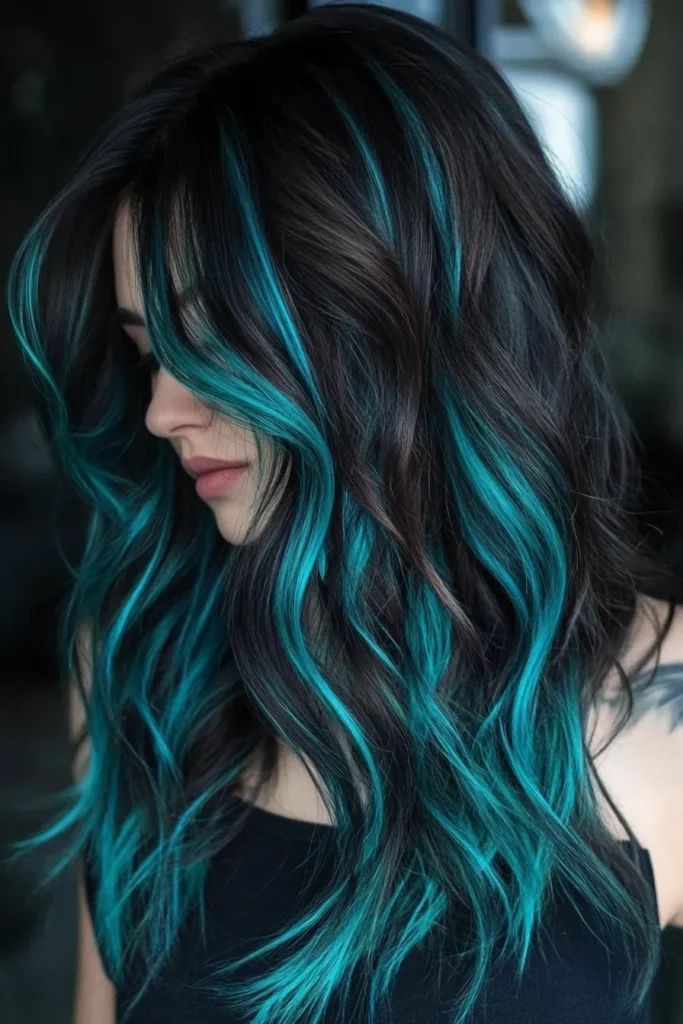
16. Navy Blue / Dark Blue — The Boldest Statement

Source: @Instagram
Last but emphatically not least: navy or dark blue hair with blue eyes. This is arguably the most daring choice on this list, and also one of the most spectacular when done right. Dark blue hair doesn’t contrast with blue eyes — instead, it intensifies them. The eye sees complementary tones and the blue of the eyes appears deeper, richer, and more defined than it does with any other hair color.
This is a full commitment — it requires heavy bleaching, careful application, and consistent maintenance. But the payoff is extraordinary. Navy blue hair with vivid blue eyes is an editorial-level look that turns heads universally.
Practical tip: For a subtler entry point into this world, try a “navy tint” over dark brown hair — the blue is only visible in certain lighting and creates a beautiful, mysterious effect without full bleaching commitment.
If you’re the person who’s never quite satisfied by conventional choices, this is your color. Dark blue hair + blue eyes is a combination that simply cannot be ignored.
Quick Reference Table: Which Hair Color Suits Your Blue Eyes Best?
Hair Color by Skin Tone and Eye Shade
| Hair Color | Best Skin Tone | Best Eye Shade | Maintenance Level | Season |
|---|---|---|---|---|
| Golden Blonde | Warm, Neutral | Any Blue | Medium | Spring/Summer |
| Ash Blonde | Cool, Neutral | Icy, Gray-Blue | High | All Year |
| Natural Platinum Blonde | Cool | Icy Blue | Very High | All Year |
| Chestnut Brown | Warm, Neutral | Deep Blue | Low | Autumn/Winter |
| Caramel Balayage | All Tones | Any Blue | Medium | Spring/Summer |
| Copper Red | Fair–Medium | Any Blue | High | Autumn/Winter |
| Strawberry Blonde Highlights | Fair | Periwinkle, Light Blue | Medium | Spring/Summer |
| Auburn | All Tones | Any Blue | Medium | Autumn/Winter |
| Jet Black | Cool, Neutral | Any Blue | Low–Medium | All Year |
| Dark Chocolate | All Tones | Any Blue | Low | All Year |
| Honey Blonde | Medium, Warm | Warm Blue | Medium | All Year |
| Sandy Blonde | Fair–Medium | Gray-Blue | Low | Spring/Summer |
| Burgundy | Cool, Neutral | Gray-Blue, Violet-Blue | High | Autumn/Winter |
| Mahogany | All Tones | Deep Blue | Medium | Autumn/Winter |
| Lavender | Fair–Medium | Cool Blue | Very High | Spring/Summer |
| Navy Blue | All Tones | Any Blue | Very High | All Year |
Color Wheel Reference: Why These Shades Work With Blue Eyes
| Principle | Hair Colors | Effect on Blue Eyes |
|---|---|---|
| Warm Contrast (complementary) | Copper, Auburn, Caramel, Golden Blonde | Makes blue appear deeper and more vivid |
| Cool Mirror (analogous) | Ash Blonde, Lavender, Navy Blue | Creates harmony; eyes appear richer and more complex |
| Dark Contrast (value difference) | Jet Black, Dark Chocolate, Burgundy | Stark contrast that makes light eyes “pop” dramatically |
| Light Contrast (value difference) | Platinum, Sandy Blonde | Bright frame that draws attention to eye color immediately |
Common Mistakes — And How to Avoid Them
Even with the right color chosen, people make preventable errors all the time. Here are the biggest ones:
1. Going Too Cool With Fair Skin Ash and platinum shades require a balancing act. If you have very fair, cool skin, going with an extremely cool-toned ash blonde can wash you out completely — making both your skin and your eyes look dull. Solution: add a whisper of warmth (ask for a “warm ash” or a slight honey tint in your highlights) to add life back to your complexion.
2. Skipping the Toner Many people get their hair lightened and skip the toning step to save money. This is a mistake. Untoned blonde hair has brassy, orange-yellow undertones that clash directly with blue eyes rather than complementing them. A toner is non-negotiable — it’s what takes you from “yellow” to “blonde.”
3. Ignoring Undertone Compatibility The most common mistake: picking a color you love on someone else without considering your skin undertone. A warm copper that looks incredible on a person with golden, warm-toned skin can look jarring on someone with cool, pink undertones. Always consider your skin’s undertone before choosing your shade.
4. Over-Washing Color-Treated Hair Washing hair every day strips color molecules rapidly. For every single shade on this list, extend your wash schedule to every 2–3 days minimum. Use dry shampoo at the roots between washes. Not only does this preserve color, it also reduces dryness from chemical processing.
5. Using the Wrong Shampoo Regular shampoos contain sulfates that actively strip color. After coloring, switch to a sulfate-free, color-safe shampoo immediately — and don’t look back. For blondes, add a purple/blue shampoo into the rotation. For reds, a color-depositing red shampoo. For brunettes, a brown-tinted shampoo or gloss conditioner.
6. Sun Exposure Without Protection UV radiation fades hair color faster than almost anything else, particularly reds and pastels. Invest in a UV-protective hair spray or leave-in conditioner and apply it before going outside. This is one of the most overlooked steps in color maintenance.
Similar Variations Worth Exploring
If you loved a color on this list but want something slightly different, here are closely related variations worth discussing with your colorist:
- Golden Blonde → Butter Blonde: Slightly warmer, creamier version — more opaque and less glittery than golden.
- Ash Blonde → Pearl Blonde: Slightly more silver-toned, gives an almost metallic finish.
- Copper Red → Ginger: Lighter, more orange-leaning; think natural redhead rather than dyed copper.
- Chestnut → Hazelnut: Slightly lighter, with more golden undertones — sits between chestnut and caramel.
- Burgundy → Plum: Deeper and more purple than burgundy; leans into jewel-tone territory.
- Mahogany → Garnet: Richer, more saturated version with a deeper red-violet base.
- Lavender → Rose Gold: If lavender feels too bold, rose gold offers warm pink tones that still harmonize with blue eyes.
Hair Care Tips for Color-Treated Blue-Eyed Beauties
Getting the color right is only half the battle. Here’s how to keep it looking salon-fresh:
- Deep condition weekly: Chemical coloring opens the hair cuticle and dries out strands. A deep conditioning mask once per week restores moisture and keeps color-treated hair looking healthy and glossy.
- Use cool water to rinse: Hot water opens the cuticle and lets color molecules escape. Always rinse with cool or cold water — it seals the cuticle, traps color, and adds visible shine.
- Apply heat protectant every single time: Heat styling accelerates color fade. Whether you’re blow-drying, curling, or straightening — a heat protectant spray is mandatory.
- Trim every 6–8 weeks: Split ends make colored hair look dull and unkempt. Regular trims keep color-treated hair looking healthy.
- Use a silk or satin pillowcase: Cotton pillowcases cause friction that damages the cuticle and fades color faster. Silk or satin reduces friction, keeps hair smoother, and extends color longevity.
- Gloss treatments between salon visits: Ask your colorist for a take-home gloss or toning treatment you can apply at home. These add vibrancy without depositing a full new color — perfect for refreshing between appointments.
- Avoid chlorine and salt water: Both strip color rapidly. Before swimming, apply a leave-in conditioner or hair oil to coat and protect strands. Rinse hair immediately after swimming.
Conclusion
The best hair colors for blue eyes are the ones that create contrast, add warmth, or harmonize beautifully with those blues — and as you’ve just seen, there are sixteen incredible options to choose from. Whether you gravitate toward the sunlit warmth of golden blonde, the fierce drama of copper red, the sophisticated depth of dark chocolate, or the bold statement of navy blue, there’s a shade here that will make your blue eyes look more vivid, more defined, and more beautiful than ever.
The most important thing? Don’t be afraid to experiment. Hair color grows out, toners fade, and a skilled colorist can always course-correct. Start with the shades that feel most you, consider your skin undertone, and invest in proper color care once you’ve made your choice. The right hair color for blue eyes isn’t just a style decision — it’s the frame that makes your eyes the centerpiece of your entire look.
Looking for your perfect shade? Use the tables above as your starting point, then book a consultation with a colorist who can assess your natural undertones in person. Your blue eyes deserve the right color to make them unforgettable.