
16 Purple And Blue Hair Ideas That Will Make You Stand Out in 2025
Ever scrolled through Instagram and stopped dead at someone’s jaw-dropping purple and blue hair? Yeah — me too. I’ve spent a long time studying color combinations, talking to colorists, and diving deep into what actually works vs. what fades into a muddy mess. If you want the real talk on the most stunning purple and blue hair ideas out there, you’ve landed in exactly the right place.
So what are the best purple and blue hair ideas? Purple and blue hair includes styles like galaxy blends, lavender-to-cobalt ombré, two-tone split dyes, mermaid waves, balayage, and peekaboo highlights. These shades work on dark and light base hair, ranging from pastel to bold. The right technique — ombré, balayage, or all-over color — depends on your natural hair tone and desired intensity.
Read on — because I’m breaking down all 16 ideas in detail, covering which styles suit which hair types, the exact color combinations that pop, common mistakes to dodge, and how to keep your color vivid for weeks longer than average.
What Makes Purple and Blue Hair So Irresistible?
There’s a reason purple and blue hair has exploded in popularity. These two colors sit right next to each other on the color wheel, creating a naturally harmonious pairing that’s both bold and beautifully blended. Whether you go full-on electric or lean into softer, dreamier pastels, the combo radiates personality. And with modern semi-permanent dyes and toning techniques, getting this look — and maintaining it — is more accessible than ever.
1. Galaxy Hair: The Ultimate Cosmic Blend

Source: @Instagram
Why it works: Galaxy hair is the gold standard of purple-blue combinations — it’s dramatic, otherworldly, and endlessly customizable.
Galaxy hair mimics the deep hues of outer space: think midnight blue, rich violet, electric purple, and flashes of silver or teal woven together. The key to nailing this look is seamless blending. A skilled colorist will work each shade into the hair using a foiling or freehand painting technique, ensuring no harsh lines between colors. For the most dimensional result, darker tones (navy, deep violet) are placed at the roots, transitioning to lighter shades (lavender, electric blue) toward the ends.
Best for: Dark natural hair that’s been pre-lightened to at least a medium blonde. Works on all lengths, but truly shines on long, wavy hair where the colors can move and breathe.
Pro tip: Ask your colorist for a “color melt” finish — this technique blurs transitions between shades for a seamless galactic effect rather than striped-looking sections.
2. Lavender to Cobalt Blue Ombré

Source: @Instagram
Why it works: Soft at the top, bold at the bottom — this contrast hits the sweet spot between delicate and daring.
Lavender ombré fading into cobalt blue is one of the most requested color combinations right now. The lavender root area feels feminine and understated, while the bright cobalt punch at the ends gives the whole look an edge. This is a gradient technique, meaning the color transitions gradually — no visible line of demarcation. The secret is a careful mid-section blend using a mix of both shades.
Best for: Medium to long hair, especially layered cuts where the color gradient can be clearly seen. Lighter natural hair takes this color without heavy pre-lightening.
Pro tip: To keep cobalt blue from fading to a dull greenish tone, use a blue-tinted conditioner between salon visits. Rinse with cool water only.
3. Midnight Blue with Purple Highlights

Source: @Instagram
Why it works: Deep, rich, and sophisticated — this is the dark academia version of blue-purple hair.
Rather than going fully light or pastel, this approach keeps the hair predominantly midnight blue with carefully placed violet and amethyst highlights woven through. The highlights catch light subtly, giving depth without screaming for attention. It reads as almost natural in low light, then absolutely stunning in sunlight.
Best for: People who want a more professional or low-key look but still want the color. Works beautifully on naturally dark brown or black hair with lighter highlights painted over it.
Pro tip: Balayage technique for the highlights gives a more natural, sun-kissed look compared to traditional foil highlights. Tell your colorist you want “shadow root” highlights for a grown-out finish.
4. Pastel Purple and Baby Blue

Source: @Instagram
Why it works: Cotton-candy softness that feels whimsical, light, and effortlessly cool.
This is the dreamy, cloud-like version of the purple-blue spectrum. Pastel purple (think lilac or mauve) paired with baby blue creates a look that’s almost ethereal — soft, wispy, and totally on trend for the “that girl” aesthetic. The tones are diluted with a clear conditioner during the coloring process to achieve that faded, washed-out look intentionally.
Best for: Pre-lightened (blonde) hair is absolutely essential here — pastels don’t show on darker hair without significant lifting. Fine to medium hair textures show pastels most vividly.
Pro tip: Pastel colors fade fast. Use a color-depositing shampoo in pastel purple to refresh the tone between appointments.
5. Bold Cobalt Blue with Purple Roots

Source: @Instagram
Why it works: Reverse ombré creates an unexpected, editorial look that flips convention.
Most color jobs go darker at the roots and lighter at the ends. This one does the opposite — deep purple or violet at the roots that transitions into vivid cobalt blue at the mid-lengths and ends. The result is a dramatic, intentional look that stands out immediately. It reads as fashion-forward and high-effort.
Best for: Statement makers. This works on all lengths but is especially striking on a blunt bob or a layered long cut.
Pro tip: Maintain the root color by doing a DIY root touch-up with a purple semi-permanent dye every 4–6 weeks. This prevents the look from fading into one uniform shade.
6. Purple and Blue Balayage

Source: @Instagram
Why it works: Balayage gives the look dimension and movement without requiring a complete re-color.
Balayage — a freehand painting technique — applies purple and blue in sweeping strokes through the hair, concentrating color on the mid-lengths and ends while leaving some natural base visible. This creates a multi-tonal effect that’s flattering and natural-looking. It’s also lower maintenance than full color because the roots don’t show a harsh line of regrowth.
Best for: People making their first foray into vivid color. Great for medium to long hair of any thickness.
Pro tip: Request that your colorist alternate between purple and blue painted sections (rather than blending them fully) for a more defined, multi-dimensional result.
7. Two-Tone Split Dye (Half Purple, Half Blue)

Source: @Pinterest
Why it works: Bold, graphic, and zero ambiguity — this is a statement, full stop.
The split dye look divides the hair perfectly down the center part, with one side dyed purple and the other dyed blue. It’s a technique rooted in alternative fashion and has crossed into mainstream high fashion. The contrast between the two vivid shades on either side of the part creates a striking visual effect, especially when the hair moves.
Best for: Straight or slightly wavy hair where the division between sides is cleanest. Medium-length bobs look especially incredible with this technique.
Pro tip: Use two separate shower caps or foil barriers when washing your hair at home to prevent the colors from bleeding into each other over time.
8. Dusty Purple with Teal Blue Ends

Source: @Instagram
Why it works: This muted, moody combination has a vintage edge that feels artistic and unique.
Rather than vivid or saturated shades, dusty purple paired with teal blue ends leans into a more desaturated, faded-on-purpose aesthetic. Think old photographs, faded denim, retro film filters. The dusty purple is a muted violet-gray, and the teal blue adds a cooler, oceanic finish at the ends.
Best for: People who love color but prefer something more subtle and wearable day-to-day. Also great for those whose hair is naturally resistant to taking vivid color fully.
Pro tip: Mix a small amount of gray or clear toner into your dye to create that intentionally faded, dusty effect.
9. Violet and Indigo Blend

Source: @Instagram
Why it works: Two deep, regal tones that blend into something almost jewel-like.
Violet and indigo are neighbors on the color spectrum — violet being a warm purple, indigo sitting closer to dark blue. Blending them creates an incredibly rich, dimensional shade that shifts between the two depending on the lighting. In sunlight, it glows almost reddish-purple. Indoors, it reads as a deep, moody blue-violet.
Best for: All hair types and lengths. Works on both pre-lightened and naturally dark hair (though on dark hair, the color shows more as a subtle sheen).
Pro tip: For maximum color payoff on dark hair, use a color-depositing treatment rather than a permanent dye — it sits on top of your natural color and creates a brilliant tint.
10. Blue-Violet Mermaid Hair

Source: @Instagram
Why it works: Long, flowing waves in blue and violet create a literal mermaid-out-of-water effect.
Mermaid hair leans into the fantasy: long, undulating waves drenched in a seamless blend of ocean blue, teal, and violet. The color distribution mimics the way water catches light — deeper at the roots (navy or dark violet), lighter and more vivid through the lengths (electric blue, medium violet), with the occasional teal highlight for dimension.
Best for: Long hair, especially when worn in loose waves or beachy texture. This look is made for the beach.
Pro tip: Use a curl-enhancing mousse and diffuse your hair to bring out natural texture — mermaid hair always looks best with movement and waves.
11. Purple Peekaboo Highlights
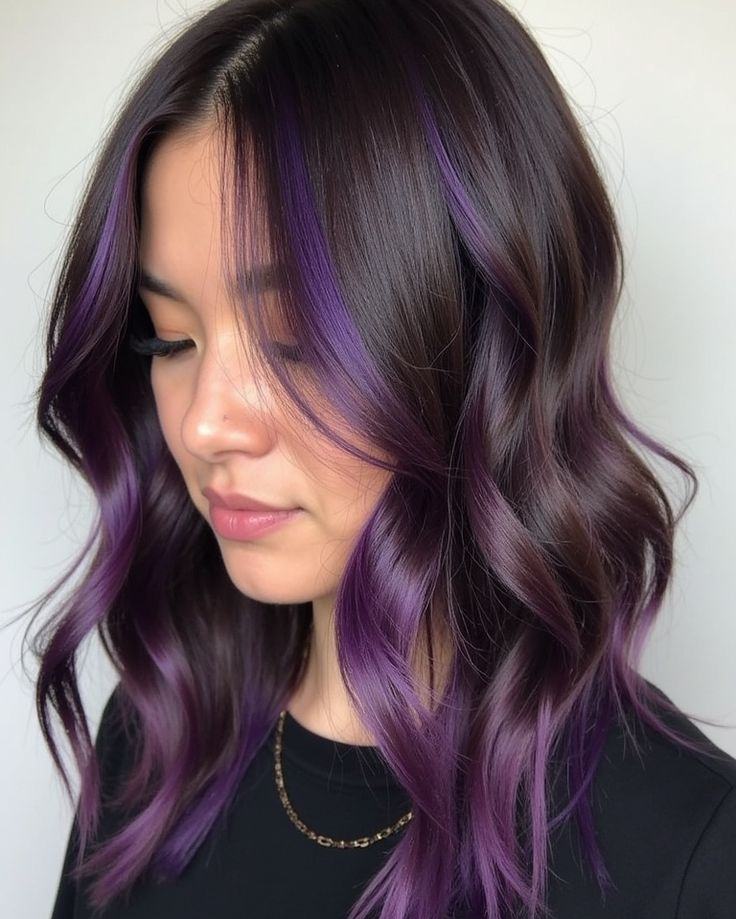
Source: @Instagram
Why it works: Hidden color that surprises — a low-commitment way to try the trend.
Peekaboo highlights are placed on the underlayer of the hair, invisible when the hair is down but visible when pulled up into a ponytail or when the wind catches it. Purple peekaboo highlights give you a secret flash of color without fully committing to a vivid dye.
Best for: People in conservative workplaces who still want to express themselves. Any hair length, though longer hair gives you more canvas.
Pro tip: Ask for your peekaboos to start about 2–3 inches below the hairline so they’re completely hidden when hair is worn down.
12. Dark Purple with Electric Blue Streaks

Source: @Instagram
Why it works: Rich base color punctuated by neon-bright streaks for maximum visual impact.
Start with a deep, dark purple all-over base — think plum or aubergine — then add thin, electric blue streaks throughout. The streaks act like bolts of color cutting through the darkness, instantly energizing the look. It’s dramatic but structured.
Best for: Long hair with layers, where the streaks can be strategically placed to frame the face. Works especially well on those with naturally dark hair.
Pro tip: Face-framing streaks (near the front hairline) have the biggest visual impact with the least amount of dye used.
13. Lilac and Sky Blue Waves

Source: @Instagram
Why it works: Light, airy, and romantic — perfect for soft and feminine aesthetics.
This combination is all about warmth and softness. Lilac (a warm, pink-toned purple) paired with sky blue (a light, almost cloud-like blue) creates a pastel palette that feels fresh and springy. The key is keeping both shades at a similar light value so they blend harmoniously rather than competing.
Best for: Pre-lightened hair in a light blonde to platinum range. Curly and wavy textures make this look especially dreamy.
Pro tip: Apply sky blue to the areas of the hair that catch the most light (top sections) and lilac to the underlayers for a subtle, dimensional blend.
14. Navy Blue with Purple Shimmer

Source: @Instagram
Why it works: Dark, polished, and surprisingly office-appropriate for a vivid color look.
Navy blue is deep enough to read as almost natural in dim lighting, but the shimmer of purple gloss running through it catches attention in brighter settings. This look uses a navy base with a violet gloss or toner applied over it to create a subtle two-tone sheen.
Best for: Dark brown or black base hair. Works brilliantly on anyone who wants vivid color without it being too “in your face.”
Pro tip: A violet gloss treatment can be done over your existing dark color without any bleaching, making this one of the most damage-free options on this list.
15. Purple and Blue Money Piece

Source: @Instagram
Why it works: A face-framing color technique that delivers maximum impact with minimal dye.
The “money piece” refers to highlighted sections of hair that frame the face — typically the front two sections on either side of the part. Dyeing these sections alternating purple and blue while keeping the rest of the hair natural or dark creates a bold, face-flattering statement.
Best for: All hair lengths. Especially popular with curtain bangs, which interact beautifully with a contrasting money piece.
Pro tip: Ask your colorist to slightly overlap the money piece color into the rest of your hair for a more blended, intentional look rather than a stark block of color.
16. Smoky Purple with Fade

Source: @Instagram
Why it works: Moody, blurred, and quietly magnetic — smoky purple with a fade doesn’t scream for attention. It earns it.
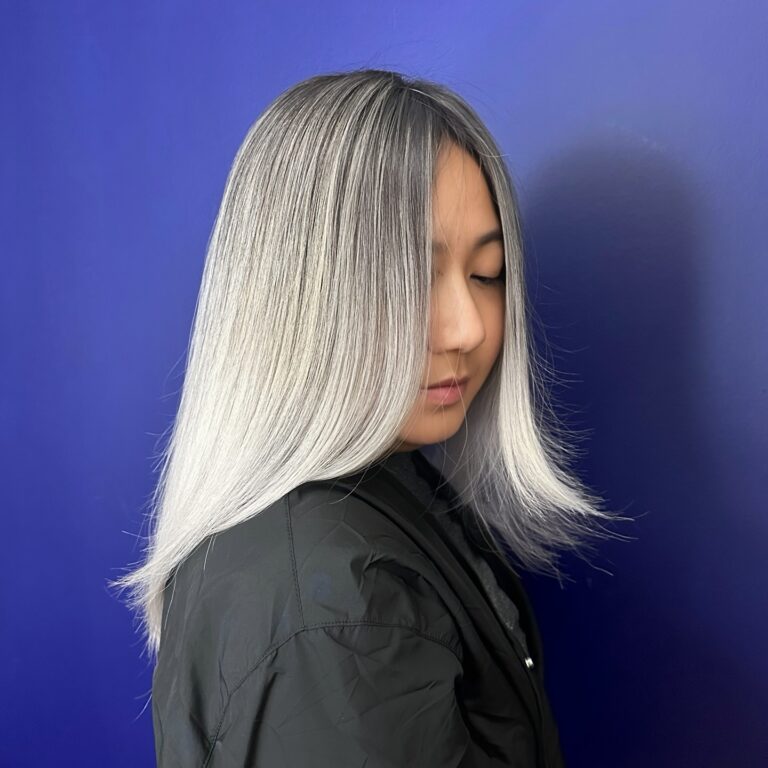
This technique layers deep violet at the roots into a cool, desaturated gray-purple mid-shaft, then melts completely into a near-transparent ash or silver at the ends. The fade isn’t sharp or structured — it’s intentionally hazy, like a photograph slightly out of focus. The gray acts as a neutralizer, pulling the warmth out of the purple and leaving behind something that reads more like a shadow than a color. It’s vivid hair for people who actually hate looking like they tried too hard.
Best for: Those drawn to an editorial, almost melancholic aesthetic — think dark academia, avant-garde fashion, or anyone whose wardrobe runs on charcoal and slate. Exceptionally stunning on fine to medium hair where the fade reads delicate rather than heavy. The wolf cut, the shaggy bob, and the grown-out pixie all carry this color with particular brilliance because the choppy layers catch the gradient at different angles, making the smoke effect shift and move with every turn of the head.
Pro tip: Ask your colorist for a “desaturated violet root melt” fading into a “cool gray-lavender toner” at the mid-shaft and a “clear or silver gloss” at the ends. Avoid any warm or violet-pink toners in the fading zones — the magic is in keeping everything cool-toned and slightly muted from root to tip. At home, maintain the smoky quality with a blue-violet toning shampoo used once a week — it prevents the gray zones from pulling yellow and keeps the whole palette looking intentionally dim rather than accidentally faded.
Purple and Blue Hair: Quick Reference Guide
| Style | Best Hair Length | Pre-Lightening Needed? | Maintenance Level | Best Skin Tones |
|---|---|---|---|---|
| Galaxy Hair | Long | Yes (to level 7+) | High | All tones |
| Lavender to Cobalt Ombré | Medium–Long | Yes (to level 8+) | Medium | Cool/neutral |
| Midnight Blue + Purple Highlights | All lengths | Partial | Low–Medium | All tones |
| Pastel Purple & Baby Blue | All lengths | Yes (to level 9–10) | High | Fair–medium |
| Cobalt Blue + Purple Roots | All lengths | Yes (to level 7+) | Medium | Cool/neutral |
| Purple & Blue Balayage | Medium–Long | Partial | Low–Medium | All tones |
| Split Dye | Short–Medium | Yes (to level 7+) | Medium | All tones |
| Dusty Purple + Teal Ends | Medium–Long | Partial | Low | Warm/olive |
| Violet & Indigo Blend | All lengths | Optional | Low–Medium | All tones |
| Mermaid Hair | Long | Yes (to level 7+) | High | Cool/neutral |
| Peekaboo Highlights | Medium–Long | Yes (underlayer) | Low | All tones |
| Dark Purple + Electric Blue Streaks | Long | Partial | Medium | All tones |
| Lilac & Sky Blue Waves | All lengths | Yes (to level 9+) | High | Fair–medium |
| Navy Blue + Purple Shimmer | All lengths | No | Low | All tones |
| Purple & Blue Money Piece | All lengths | Yes (front sections) | Low–Medium | All tones |
| Smoky Purple-Blue Fade | Short–Medium | Partial | Medium | Cool/neutral |
Common Mistakes When Dyeing Purple and Blue Hair (And How to Avoid Them)
1. Skipping the strand test
Always — always — do a strand test before committing to a full application. Purple and blue dyes react differently on pre-lightened vs. natural hair, and you want to check the shade result and processing time before it’s on your entire head.
2. Not pre-lightening enough
Blue and purple are semi-transparent dyes. On hair that’s too dark, they simply won’t show up. For vivid results, most shades require your hair to be lifted to at least a level 7 (medium yellow-blonde). Pastels need level 9 or higher.
3. Mixing warm and cool tones without intention
Not all purples are cool-toned — some lean red or warm. If you pair a warm purple with a cool blue, you can end up with a muddy, unintentional result. Always check the undertone of each dye you’re using.
4. Using hot water to rinse
Hot water opens the hair cuticle and causes color to bleed out rapidly. Always rinse vivid colors in cool or cold water.
5. Over-washing
Vivid colors like blue and purple fade with every wash. Washing hair daily strips the pigment fast. Aim for 2–3 washes per week maximum, and use dry shampoo between washes.
6. Skipping protein treatments post-bleach
If your hair needed bleaching first, follow up with a bond-building treatment (like Olaplex No. 3 or similar) before applying color. Applying dye to overly damaged, porous hair leads to uneven absorption and rapid fading.
Similar Variations to Explore
If you love the purple-blue aesthetic, here are related directions worth considering:
- Teal and Purple — Adds a green undertone for a jewel-toned, oceanic feel
- Pink and Blue — Softer, more bubblegum-inspired take on the fantasy color palette
- Black and Blue — Ultra-dark, brooding version with just hints of deep blue
- Blue and Silver — Icy, futuristic, especially striking on platinum bases
- Purple, Blue, and Green — A full mermaid/galaxy spectrum for the truly adventurous
- Rose Gold and Lavender — A warmer, softer alternative for those who want purple tones without the cool blue
Hair Care Tips for Purple and Blue Hair
Taking care of vivid color requires a different approach than regular hair maintenance. Here’s what actually works:
- Use sulfate-free shampoo. Sulfates strip color aggressively. Switch immediately.
- Invest in a color-depositing conditioner. Purple and blue depositing conditioners refresh tone between appointments and extend the vibrancy of your color by weeks.
- Wash in cool water. Hot water is your color’s enemy. Cold water seals the cuticle and locks pigment in.
- Limit heat styling. Every time you use a flat iron or curling wand, you accelerate color fading. When you must heat style, use a heat protectant spray every single time.
- Deep condition weekly. Pre-lightened hair is more porous and needs consistent moisture. Use a deep conditioning mask or treatment at least once a week.
- Protect from the sun. UV rays break down vivid dye pigments fast. Wear a hat or use a UV-protectant hair product when spending extended time outdoors.
- Refresh with toners. Between full color appointments, a DIY toning gloss or color rinse can bring faded shades back to life without re-bleaching.
- Book color appointments every 6–10 weeks. Vivid color doesn’t last as long as natural dye. Factor regular appointments into your budget and schedule.
Conclusion
Purple and blue hair ideas span such a wide range — from whisper-soft pastels to galactic explosions of color — that there really is a version of this look for everyone. Whether you go bold with a galaxy melt or subtle with a navy shimmer, the blue-purple palette is one of the most flattering and versatile in the vivid color world. The key is understanding your hair’s base, choosing the right technique, and committing to a solid aftercare routine.
Start with whichever of these 16 purple and blue hair ideas speaks to your personality most, consult with a trusted colorist, and get ready to turn heads. Once you go purple-blue, it’s very hard to go back.