
15 Viking Inspired Hair: Bold, Rugged & Historically-Rooted Styles for Every Hair Type
Ever look in the mirror and think — I want my hair to tell a story? Not just look good, but actually carry some weight to it? That’s exactly what Viking inspired hair does. I’ve spent a lot of time digging into Norse history, studying what real Viking warriors, explorers, and chieftains actually wore on their heads — and mixing that with what works in the modern world. The result? This guide. And I’m confident it’s the most thorough, historically-grounded, and practically useful Viking hair resource you’re going to find.
So what are Viking inspired hairstyles? Viking inspired hairstyles include braided warrior styles, shaved sides with long tops, half-up knots, Norse-style plaits, and rugged textured looks drawn from Scandinavian culture between 793–1066 AD. These styles feature bold structure, natural textures, and functional construction suited for both men and women seeking an ancient Nordic aesthetic.
Read on and I’ll walk you through all 15 styles in detail — including the real historical roots behind each look, how to recreate them at home, what products to use, and the common mistakes people make when attempting Viking hair for the first time.
The Truth About Viking Hair (What History Actually Tells Us)
Before we get into the styles, let me clear something up. Most people assume Vikings were disheveled, unwashed, and didn’t care about their appearance. The historical record tells a completely different story.
Archaeological evidence, Norse sagas, and Arab traveler Ibn Fadlan’s accounts from the 10th century all point to the same conclusion: Vikings were surprisingly meticulous about grooming. Combs made from antler bone are among the most commonly found items at Viking archaeological sites. They braided their hair, used natural oils, and even lightened their hair with lye soap. Cleanliness and a strong appearance were deeply tied to Norse identity and social standing.
That means Viking inspired hair isn’t just about looking fierce — it’s about honoring a culture that genuinely cared about how they presented themselves. Keep that in mind as we go through these 15 styles.
1. Warrior Braid

Source: @Pinterest
If there’s one style that defines Viking hair in the modern imagination, it’s the warrior braid — and it earns that reputation.
The warrior braid is a thick, single braid running down the center back of the head, often starting from a high or mid point at the crown. In historical Norse culture, braiding was both functional — keeping hair out of the face during combat — and symbolic, with different braid patterns carrying social meaning within the community.
To recreate this: gather all hair into a center section at the crown, divide into three equal parts, and braid tightly all the way to the end. Secure with a leather cord or a dark wax-coated elastic for an authentic feel. For added texture, gently tug each braid section outward after braiding to create a thicker, more dimensional look.
- Best for: Long hair, medium-thick to thick texture
- Time: 8–12 minutes
- Authentic detail: Use a leather cord or wooden bead to tie the end instead of a standard elastic
- Key products: Texturizing paste, light-hold pomade
This is the foundation style of Viking hair — everything else builds on or branches from this idea.
2. Long Braids With Shaved Sides
Source: @Pinterest
Forget what you think you know about the undercut — the Norse version carries centuries of cultural weight.
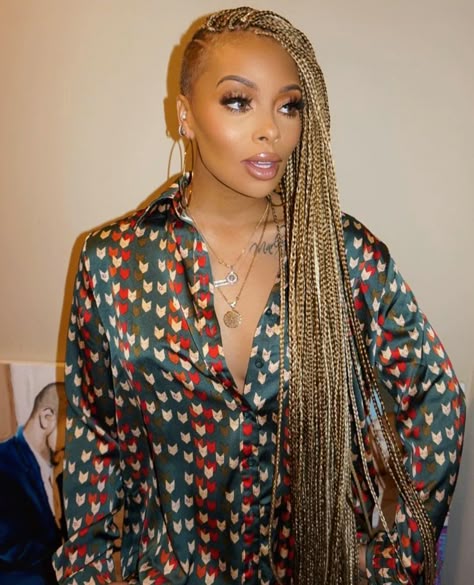
The Norse undercut features close-cropped or shaved sides with all the length kept on top, which is then braided back or gathered into a knot. This style is supported by historical evidence — Norse warriors often shaved the sides and back of their heads, both for practicality in battle and to display status and strength.
For the modern version: ask your barber for a disconnected undercut with a longer top section (at least 4–6 inches). Style the top hair into a thick braid running from the forehead to the crown, then secure it with a leather tie at the nape. Leave the ends loose for a rugged, lived-in effect.
- Best for: Men with medium to long top hair, any texture
- Time: 3–5 minutes (once the cut is done)
- Historical note: Often called the “Viking fade” in modern barbershops
- Key products: Matte clay for the top, nothing on the sides
3. Viking Half Up Half Down Hair

Source: @Pinterest
The Viking half up half down is the most wearable Viking style for everyday life — and it looks effortlessly cool.
Take the top half of your hair, gather it at the crown, twist it several times, loop it over and under itself to form a knot, and secure with a pin or cord. Leave the rest of the hair loose or in natural waves down the back. This was a common functional style in Norse culture — warriors and sailors needed hair off the face without committing to a full updo.
For modern styling, use a small amount of texturizing wax on the loose hair before gathering the knot. This gives the style that characteristically rough, organic feel associated with Viking aesthetics rather than looking too polished or contemporary.
- Best for: Medium to long hair, men and women
- Time: 3–5 minutes
- Key products: Matte texturizing wax, sea salt spray
4. Vikings Battle Braids (Multiple Thin Braids)

Source: @Pinterest
The vikings battle braid look — multiple thin braids throughout the hair — is where historical accuracy and modern styling collide beautifully.
Rather than a single thick braid, this style features several thin braids interspersed throughout the hair, some gathered back and some left to fall freely. Norse warriors and shield maidens in the sagas are described wearing their hair in complex, multi-braid arrangements that signified warrior status.
Start by parting out 3–5 thin sections throughout the hair — particularly at the temples and crown. Braid each section tightly to the end and secure with a tiny elastic or bead. Leave the remaining hair loose or gather it loosely at the back. The contrast between the structured braids and the loose hair creates that signature Viking warrior silhouette.
- Best for: Long hair, men and women
- Time: 20–30 minutes
- Authentic detail: Add wooden or bronze Viking-style hair beads to the braid ends
- Key products: Sea salt spray, texturizing paste
5. Viking Ponytail
Source: @Pinterest
Simple, strong, and unmistakably Norse — the Viking ponytail is the style that requires the least setup but communicates the most attitude.
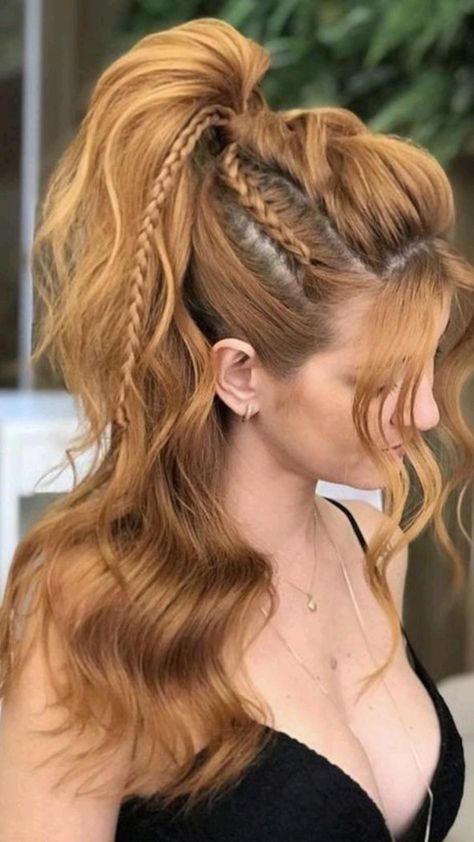
Gather all hair back into a low or mid ponytail and secure with a thick leather cord or braided tie instead of a regular elastic. The key differentiator from a standard ponytail is the texture: don’t brush the hair smooth. Apply a matte paste or sea salt spray and scrunch the hair before gathering it back, so the ponytail has natural, slightly rough texture rather than a polished, modern finish.
For extra authenticity, add a few small thin braids around the face before pulling everything back — this creates the layered, multi-texture look seen in contemporary Viking-inspired media like the TV series Vikings and The Last Kingdom.
- Best for: Medium to long hair, all textures
- Time: 3–5 minutes
- Key products: Sea salt spray, leather cord or braided hair tie
6. Shield Maiden Braided Crown

Source: @Pinterest
The shield maiden look is having a full cultural moment — and the braided crown is its signature style.
The braided crown is created by French-braiding two sections of hair from the temples around the perimeter of the head and meeting at the back, forming a crown-like structure. This style appears in depictions of Norse women throughout art and literature, and it served the dual purpose of being decorative and keeping hair completely controlled during physical activity.
To enhance the Viking quality, leave the texture slightly rough before braiding — don’t use smoothing products. Apply a light texturizing spray and let the natural texture work in your favor. Add a few braided accent pieces falling loose from the back for a more dramatic, saga-worthy effect.
- Best for: Women with medium to long hair, all textures
- Time: 15–20 minutes
- Authentic detail: Weave a thin strip of leather cord through the braid instead of ribbon
- Key products: Texturizing spray, bobby pins, leather cord
7. Rugged Long Hair (The Berserker Look)

Source: @Pinterest
Not every Viking style involves intricate braiding — and the deliberately rugged, loose long hair look has just as much historical legitimacy.
Norse Berserkers — the most feared warriors in Viking culture — were known for wild, untamed appearances. Their loose, heavily textured long hair was both a tactical choice (intimidation) and a reflection of their role outside normal social conventions. For modern styling, this translates to long hair with pronounced natural texture, minimal styling, and a deliberately unfinished appearance.
Apply a sea salt spray to damp hair and let it air dry. Once dry, scrunch in a small amount of matte paste and tousle with your fingers. The goal is controlled wildness — textured, full, and slightly rough but not frizzy or unkempt.
- Best for: Long hair, naturally wavy or curly textures
- Time: 2–3 minutes (plus air-drying time)
- Key products: Sea salt spray, matte texturizing paste
8. Viking Man Bun

Source: @Pinterest
The man bun got a Viking makeover — and it’s dramatically better for it.
Rather than the sleek, overly polished man bun that dominated the mid-2010s, the Viking man bun is deliberately rougher. Pull hair into a mid-to-high bun and secure it loosely with a leather cord or thick elastic. Let a few strands fall loose around the face and at the neck. Apply texturizing paste before pulling the hair up so the bun has visible texture rather than looking smooth.
For extra Norse character, add a thin braid on one or both sides before gathering the bun, or include a small section of warrior braids pulled back into the bun from the temples.
- Best for: Men with medium to long hair, any texture
- Time: 5–8 minutes
- Key products: Matte texturizing paste, thick elastic or leather cord
9. Braided Beard Integration (for Men)
Source: @Pinterest
Here’s the style most Viking hair guides don’t talk about at all — and it’s one of the most historically accurate: the braided beard integrated with the hair.
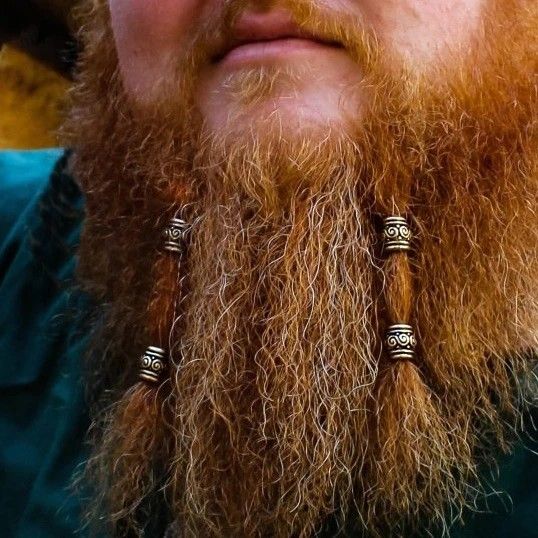
Viking men were known for wearing braids in both their hair and their beards. In fact, some Norse men would braid their beard and hair simultaneously, threading them together for a fully cohesive Norse warrior aesthetic. For the modern version, grow the beard to at least 4 inches, then create two thin braids in the beard (typically from the chin area) and secure with small bronze or wooden beads. Match these beard braids to similar thin braids pulled forward from the temples of the hair.
The overall effect is one of the most striking and unmistakably Viking looks you can achieve.
- Best for: Men with long hair and full beards
- Time: 15–20 minutes (hair and beard together)
- Authentic detail: Use Viking-style bronze beard beads to finish both the hair and beard braids
- Key products: Beard balm, texturizing paste, small Norse-style beads
10. Vikings Lagertha Hairstyles
Source: @Pinterest
Inspired by one of the most iconic characters in Viking pop culture, this style proves that complex and functional aren’t mutually exclusive.
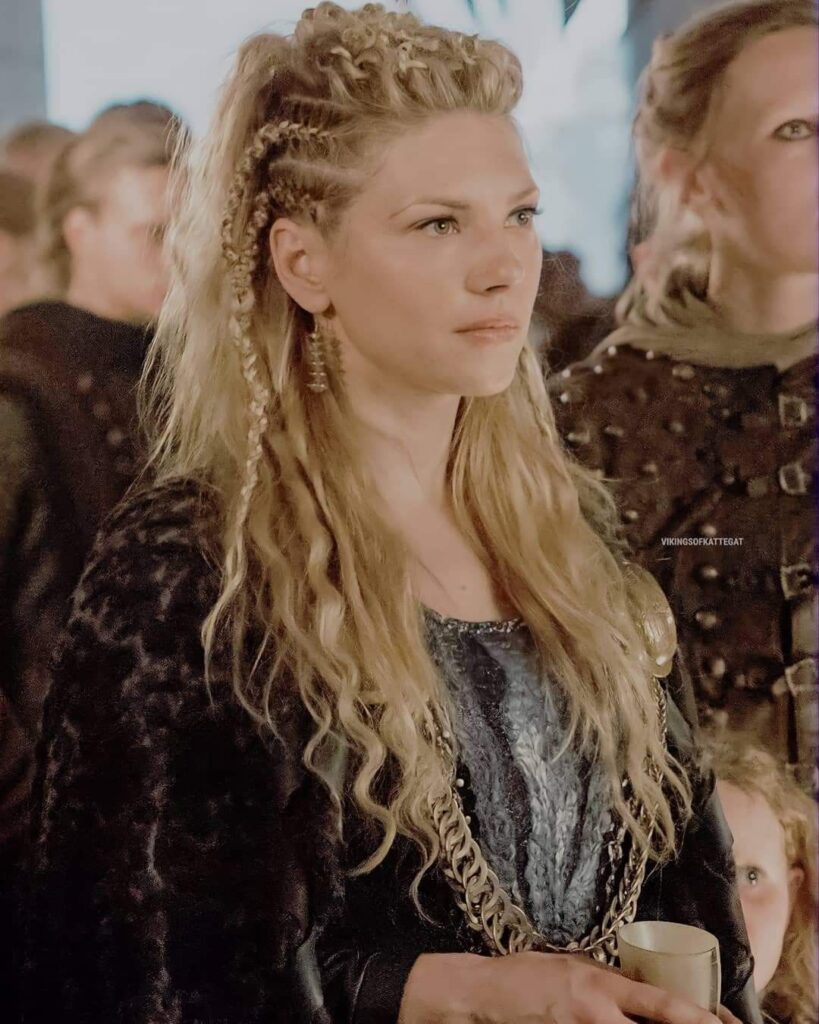
The Lagertha-style updo — made famous by the TV series Vikings — features multiple braids gathered into a complex updo at the back of the head, with some loose pieces falling forward. While fictional, the style is rooted in realistic Norse braiding techniques. It works beautifully for cosplay, themed events, or anyone who simply wants a dramatic and visually stunning take on Viking hair.
To recreate: create 3–4 braids starting from different sections of the head, gather them all into a loose knot or updo at the back, and pin strategically. Leave 2–3 face-framing braids loose at the front.
- Best for: Women with long hair, any texture
- Time: 25–35 minutes
- Key products: Texturizing spray, U-pins, leather cord, decorative beads
11. Side Viking Braid

Source: @Pinterest
The side braid reframes Viking hair as modern-wearable — something you can actually pull off at work or a dinner, not just a costume party.
Instead of braiding straight back, take all the hair to one side and create a thick French or Dutch braid that begins at the temple, sweeps across the forehead, and falls over one shoulder. Secure the end with a leather cord or decorative bead. This asymmetrical style has roots in Norse women’s braiding traditions and translates effortlessly into modern everyday wear.
The side angle also works beautifully for drawing attention to facial features, making it one of the most flattering Viking styles on this list.
- Best for: Women with medium to long hair, straight to wavy textures
- Time: 12–18 minutes
- Key products: Texturizing spray, decorative beads, leather cord
12. Shaved Head with Viking Beard

Source: @Pinterest
The most radical Viking look — and the most historically arguable — is a closely cropped or fully shaved head paired with a full braided beard.
Some Norse warriors shaved their heads entirely, particularly those who saw themselves as outside normal societal roles (similar to the Berserkers). The shaved head with a long, braided beard creates a powerful contrast — total minimalism on top, maximum statement below. This style requires commitment but delivers an unmistakably Viking warrior aesthetic.
Maintain the shaved head with a quality electric razor every 2–3 days. Focus grooming energy on the beard: condition it daily with beard oil, use a beard balm for hold, and braid the lower sections with small beads for authenticity.
- Best for: Men comfortable with a shaved or closely cropped head and full beard
- Time: 5 minutes daily maintenance
- Key products: Beard oil, beard balm, Viking-style bronze beads
13. Two-Strand Rope Braid with Beads

Source: @Pinterest
The rope braid with Norse hair beads is the easiest way to add an authentic Viking detail to almost any base hairstyle.
Divide a section of hair into two strands, twist each one clockwise, then wrap them around each other counterclockwise. The result is a tight, rope-like braid that sits distinctly differently from a standard three-strand braid. Thread Viking-style beads — typically bronze, copper, or wooden — along the length of the rope braid for a strongly Norse aesthetic.
This technique works as a standalone style on shorter sections of hair, or as an accent braid woven into a larger look. It’s a quick, accessible entry point into Viking styling for beginners.
- Best for: All hair lengths, men and women
- Time: 5–10 minutes
- Authentic detail: Use bronze or copper Viking beads available from Norse/Celtic jewelry suppliers
- Key products: Texturizing paste, small beads with large enough holes for hair
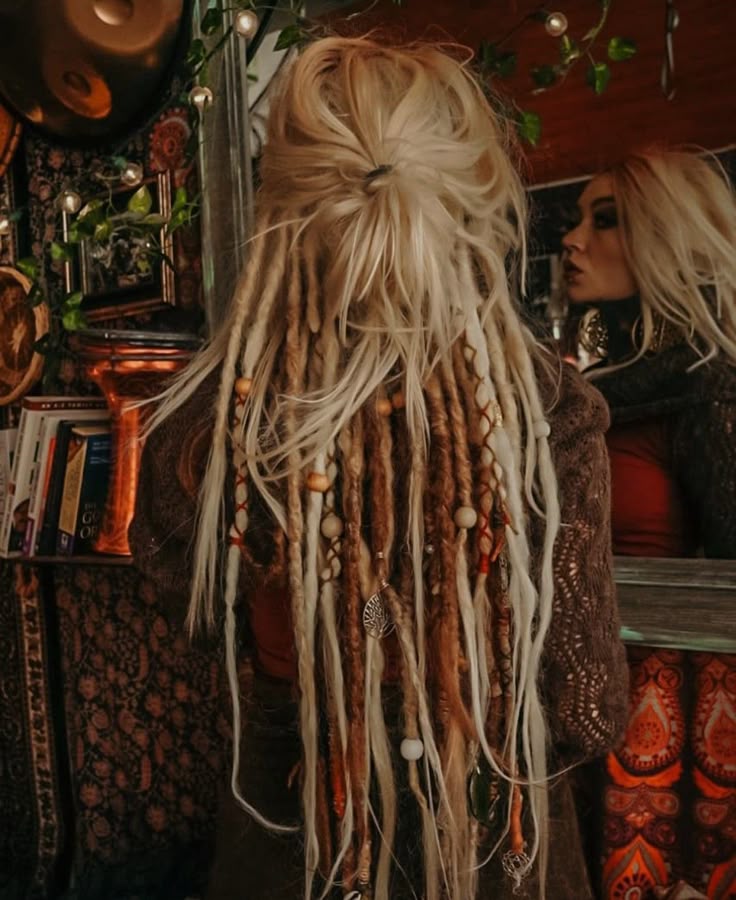
14. Dreadlock Viking (The Jarl Style)
Source: @Pinterest
Norse history records that some Viking leaders — Jarls — wore their hair in thick, matted, rope-like sections that resemble what we now call dreadlocks.
This style carries legitimate historical roots: before modern hair tools, thick rope-like hair formations occurred naturally in Norse culture. The modern interpretation involves cultivating dreadlocks, locs, or faux locs and styling them in classically Viking ways — pulled back with a leather cord, adorned with bronze beads, or gathered into a half-up knot.
This style particularly resonates with people of African descent who already wear locs naturally — the Viking aesthetic maps beautifully onto loc styles with just the right accessories.
- Best for: People with existing locs or dreadlocks, any texture
- Time: 5–10 minutes to style existing locs
- Authentic detail: Bronze or antler-style beads threaded onto the locs
- Key products: Loc oil, leather cord or bronze cuff
15. Viking hairstyles shaved sides

Source: @Pinterest
Who says Viking hair requires length? This modern interpretation proves the Viking spirit fits short hair just as fiercely.
A Viking-inspired pixie features a close-cropped sides (either faded or shaved with a subtle design) and a longer top styled with matte texture. Add a thin braid or two at the temple section — even 2-inch hair can be braided into a tiny face-framing plait. Finish with a matte clay or paste for the rough, intentional texture that defines Viking aesthetics.
This style works beautifully for women who want the bold energy of Viking hair without committing to long hair, and it’s just as striking as any of the longer styles on this list.
- Best for: Women and men with short to medium hair
- Time: 5–8 minutes
- Key products: Matte clay, edge detailer for the shaved sides
Complete Style Comparison Table: All 15 Viking Inspired Hair Looks
| # | Style | Skill Level | Time | Best For | Hair Length Needed | Key Accessory | Historical Basis |
|---|---|---|---|---|---|---|---|
| 1 | Warrior Braid | Beginner | 8–12 min | Men & Women | Long | Leather cord | High — functional combat braid |
| 2 | Long Braids With Shaved Sides | Beginner (post-cut) | 3–5 min | Men | Medium–Long top | None | High — archaeological evidence |
| 3 | Viking Half Up Half Down Hair | Beginner | 3–5 min | Men & Women | Medium–Long | Pin/cord | Medium — functional Norse style |
| 4 | Vikings Battle Braids (Multiple Thin Braids) | Intermediate | 20–30 min | Men & Women | Long | Viking beads | High — saga descriptions |
| 5 | Viking Ponytail | Beginner | 3–5 min | Men & Women | Medium–Long | Leather cord | Medium — adapted historical |
| 6 | Shield Maiden Braided Crown | Intermediate | 15–20 min | Women | Medium–Long | Leather cord | High — Norse women’s braiding |
| 7 | Rugged Long Hair (The Berserker Look) | Beginner | 2–3 min | Men & Women | Long | None | High — documented warrior look |
| 8 | Viking Man Bun | Beginner | 5–8 min | Men | Medium–Long | Thick elastic/cord | Medium — adapted historical |
| 9 | Braided Beard Integration | Intermediate | 15–20 min | Men | Long hair + beard | Bronze beard beads | Very High — historical accounts |
| 10 | Vikings Lagertha Hairstyles | Advanced | 25–35 min | Women | Long | U-pins, beads | Medium — inspired by sagas |
| 11 | Side Viking Braid | Intermediate | 12–18 min | Women | Medium–Long | Beads, cord | Medium — Norse women’s tradition |
| 12 | Shaved Head with Viking Beard | Beginner | 5 min/day | Men | Shaved + long beard | Bronze beads | Medium — Berserker tradition |
| 13 | Two-Strand Rope Braid with Beads | Beginner | 5–10 min | Men & Women | Any | Bronze/copper beads | High — Norse bead-wearing tradition |
| 14 | Dreadlock Viking (Jarl) | Beginner (to style) | 5–10 min | Men & Women with locs | Locs/dreads | Bronze cuffs, beads | Medium — historical matted styles |
| 15 | Viking hairstyles shaved sides | Intermediate | 5–8 min | Men & Women | Short | None needed | Low — modern interpretation |
Viking Hair Accessories Guide: What to Use and Where to Find It
| Accessory | Material | How It’s Used | Historical Accuracy | Where to Find |
|---|---|---|---|---|
| Viking hair beads | Bronze, copper, wood | Thread onto braids to secure and decorate | Very High | Norse/Celtic jewelry shops, Etsy |
| Leather cord | Natural leather | Tie braid ends, wrap knots | Very High | Craft stores, Viking shops |
| Bone or antler comb | Antler replica | Detangle and style textured hair | Very High | Historical replica shops |
| Bronze hair cuffs | Bronze or brass | Slide onto braids or locs as accent | High | Etsy, Norse-themed retailers |
| Wooden beads | Oak, walnut | Thread onto rope braids or battle braids | High | Craft stores, Norse shops |
| Raven feather pin | Feather, bone pin | Pin into updos for ceremonial looks | Medium | Specialty costume/Viking shops |
| Braided leather wrap | Multi-strand leather | Wrap around bun or ponytail base | High | Craft stores, leather suppliers |
Common Mistakes and How to Avoid Them
Viking hair has a way of going very wrong when approached without the right information. Here’s what I see most often — and how to fix it:
Making it too clean and polished. This is the most common mistake. Viking hair should have texture, weight, and roughness. If your braid is perfectly smooth and shiny, it reads as modern — not Norse. Use matte products and avoid shine serums or glossing sprays entirely.
Using the wrong accessories. Bright fabric bows, plastic elastics, or metallic elastics in silver or gold immediately undermine the Norse aesthetic. Stick to leather cords, bronze or copper beads, and natural wood. These details make an enormous difference in the authenticity of the final look.
Going too theatrical. There’s a fine line between Viking-inspired and Halloween costume. Styles like the Lagertha updo or the Norse battle braids work beautifully in real life when executed with restraint. Overloading the hair with too many braids, too many beads, and too much feathering can tip the look into costume territory. Aim for one or two strong Viking elements rather than all of them at once.
Ignoring hair health. Tight braids and leather cord ties can cause breakage at the tie points if left in too long. Never sleep in braids tied with leather cord — the cord doesn’t give the way an elastic does, and it can cause significant tension damage overnight.
Skipping texturizing product. The biggest styling mistake for Viking hair is starting with smooth, freshly washed, conditioned hair and expecting braids to look rustic. A light texturizing spray or paste applied before braiding gives the style the grip and visual roughness it needs.
Confusing historical accuracy with authenticity of feeling. Not every Viking style needs to be 100% historically documented to feel Norse. The aesthetic is about bold structure, natural textures, and rugged functionality. Trust the feeling of the style as much as the historical record.
Similar Variations Worth Exploring
- Celtic-inspired braids: Closely related to Viking hair aesthetically — Celtic knotwork braids and elaborate plaiting techniques share significant overlap with Norse traditions and are worth exploring alongside Viking styles.
- Norse-inspired for locs: As covered in Style #14, Viking accessories translate beautifully onto locs and dreadlocks. Bronze cuffs, leather ties, and wooden beads create a striking combination with natural loc texture.
- Medieval knight hairstyles: For those who love the Viking aesthetic but prefer a slightly more polished, courtly version — think rounded chignons with metal pins and simple plaits.
- Ragnar Lothbrok-style shaved sides: The character Ragnar from Vikings popularized the heavily shaved sides with long top — a dramatically masculine interpretation that has become a major trend in modern barbershops.
Hair Care Tips for Viking Inspired Hair
Viking hair relies heavily on texture, braiding, and repeated use of strong-hold products — all of which can stress the hair if not managed carefully. Here’s how to keep your hair healthy while embracing the Norse aesthetic:
Use a clarifying shampoo once a week. Matte clays and texturizing pastes are heavy products that build up on the scalp and hair shaft quickly. A weekly clarifying wash removes all buildup and keeps the scalp clean and healthy.
Deep condition after every clarifying wash. Clarifying shampoos strip natural oils along with the buildup. Always follow up with a deep conditioning mask to restore moisture and keep the hair elastic enough to withstand daily braiding and manipulation.
Oil your scalp between washes. Viking-style braids and tight configurations can dry out the scalp, especially if you’re going days between washes. A few drops of jojoba or argan oil massaged into the scalp between washes keeps skin healthy and reduces itching.
Be careful with leather cords. Leather doesn’t stretch. If you tie a leather cord too tightly around a braid or ponytail, it can cut into the hair shaft over time. Always leave a little give when tying leather, and never sleep with leather cord in your hair.
Clean your Viking hair beads regularly. Metal beads can collect product buildup, dead skin cells, and bacteria where they contact the hair. Remove beads weekly, clean them with a soft cloth, and inspect the hair where they sit for any signs of breakage or irritation.
Protect your hair at night. If you’re maintaining braids or partial braids between style days, sleep with a silk or satin pillowcase, or wrap the braided sections loosely in a silk scarf. This dramatically reduces friction-related breakage and keeps the style looking fresh longer.
Give your hair “rest days.” Even Vikings needed downtime. Alternate between tightly structured Viking styles and simple loose textures to give your hairline and scalp recovery time from the tension of braids and knots.
Outro
There’s something genuinely powerful about wearing a style that connects you to one of history’s most formidable cultures. Viking hair isn’t just about aesthetics — it’s about carrying a spirit of boldness, self-expression, and fierce identity in the way you present yourself every single day.
From the beginner-friendly half-up Viking knot to the elaborate Lagertha warrior updo, these Viking inspired hair styles offer something for every hair type, length, and comfort level. Pick your style, grab your leather cord and bronze beads, and step out looking like you just stepped off a longship. Skål.