
17 Twists Black Men Hair Styles That Actually Look Incredible
Ever feel like you’re stuck in a hair rut — same fade every few weeks, same shape-up, same everything? I get it. But if you’re a Black man with natural hair and you haven’t fully explored the world of twists, you’re leaving some seriously impressive style options on the table. I’ve dug deep into this topic so you don’t have to guess — and what I found will change how you think about your hair.
So what are the best twists hairstyles for Black men? Twists hairstyles for Black men include two-strand twists, Senegalese twists, flat twists, mini twists, twist-outs, high-top twists, loc’d twists, and freeform styles. These work on type 3 and type 4 natural hair, can last 2–6 weeks, and suit casual, professional, and formal settings.
Stick around — because I’m covering all 17 styles with real implementation details, the care routine that keeps twists looking fresh for weeks, the mistakes that destroy them early, and some lesser-known variations most articles completely overlook.
Why Twists for Black Men Are Having Such a Major Moment
Let’s be honest — the cultural conversation around Black men’s natural hair has shifted dramatically. Protective styles like twists are no longer seen as unconventional or “unprofessional” (even if outdated workplace policies haven’t all caught up yet). They’re celebrated. Everywhere from the NBA court to the boardroom to the red carpet, Black men are rocking twists with unapologetic confidence.
And there’s a practical reason twists are so popular beyond aesthetics. They protect natural hair from daily manipulation, reduce breakage, help retain length, and give coily and kinky textures the structure they need to thrive. Whether you’re growing out your natural hair, transitioning from a relaxer, or just want something different — twists are one of the most rewarding paths forward.
Here are 17 styles worth knowing.
1. Two-Strand Twists

Source: @Instagram
The foundation of almost every twist style in existence.
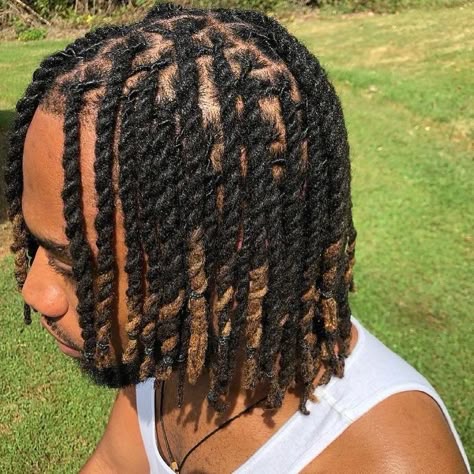
Two-strand twists are exactly what they sound like — two sections of hair twisted around each other from root to tip. Simple to understand, endlessly versatile in execution. You can do them big (4–6 chunky twists across the head), medium (10–20 twists for a full, defined look), or small (30+ micro twists for incredible detail and longevity).
What makes two-strand twists so powerful for Black men is how well they showcase natural coil pattern. As the twists set — especially if you let them air dry or sit overnight — the coils lock into the shape and the definition becomes sharper. They work on 4a, 4b, and 4c hair and suit literally any face shape. Start with a moisturizing leave-in conditioner before twisting for the best hold and shine.
The larger the twist, the more casual the look. Smaller twists read as more groomed and deliberate.
2. Senegalese Twists
Sleek, rope-like, and undeniably sharp.
Senegalese twists — also known as rope twists — are done with a distinct technique that creates a tighter, smoother, rope-like appearance compared to traditional two-strand twists. They’re typically installed with extensions (Kanekalon or Marley hair) for length and uniformity, making them a go-to for men who want longer twists without waiting years for their hair to grow.
The finished look is clean, defined, and polished. Senegalese twists can be worn down, pulled into a high puff, or styled with a headband. They photograph extremely well and hold their shape for 4–6 weeks with proper care. This is one of the best styles for men who want to make a strong style statement without crossing into experimental territory.
3. Flat Twists

Source: @Instagram
Cornrows’ cooler, softer cousin.
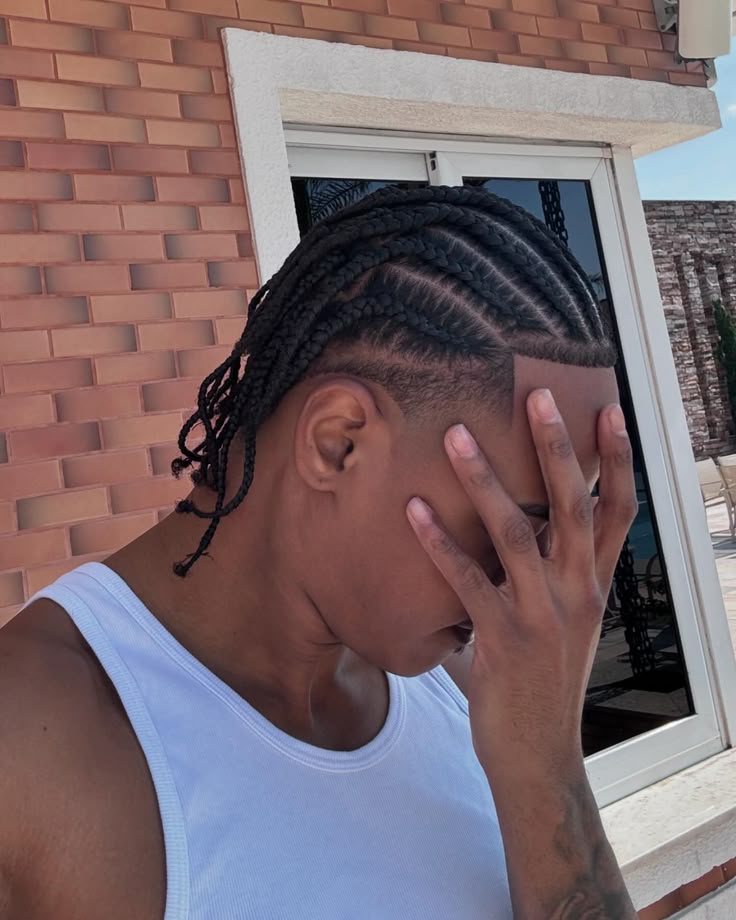
Flat twists lie flat against the scalp, similar to cornrows, but use the two-strand twisting technique rather than the three-strand braiding method. The result has a softer, rounder look compared to the angular geometry of braids. Flat twists can run straight back, curve around the head, or form creative patterns.
For Black men with shorter natural hair, flat twists are a fantastic option because they work on hair that’s too short for Senegalese twists but long enough to grip. They also sit beautifully under du-rags and wave caps, making them a solid protective style for men who are simultaneously working on their wave pattern.
A practical move: combine flat twists at the sides and back with a natural puff or individual twists at the top for a standout contrast look.
4. Mini Twists
Small in size. Big in impact.
Mini twists are tiny two-strand twists created from small sections of hair across the entire head. They require patience during installation but reward you with weeks of low-maintenance style. Because each twist is so small, they hold their shape longer, frizz less quickly, and allow for more styling versatility once installed.
Mini twists are the style of choice for men who want their natural texture to look intentional and defined every single day. They also serve as an excellent base for a twist-out (letting them out and separating them creates an incredible textured afro effect). Work in sections, use a moisturizing styler, and twist toward the end of the hair to keep them from unraveling.
5. Twist-Out
Not technically twists anymore — but they start there.
Here’s the thing: a twist-out is what you get when you take down two-strand twists after they’ve fully dried and gently separate them. The result is a defined, voluminous, textured style that looks like a carefully cultivated afro with gorgeous coil definition throughout.
For Black men, twist-outs are one of the most universally flattering natural styles available. The definition and volume work together to create a full silhouette that complements virtually every face shape. The key is patience — unraveling the twists too early (while still damp) leads to frizz. Wait until fully dry, oil your fingers, and separate slowly from the ends upward.
Twist-outs are also a perfect transition style when your twists are aging and starting to look worn.
6. High-Top Twists
Height. Drama. Presence.
High-top twists take all the length of your twists and direct them upward, creating a tall, statement silhouette at the crown. This is a bold look — one that requires confidence to pull off and earns respect for it. Think of it as the modern evolution of the high-top fade, but natural and unprocessed.
High-top twists work best on men with medium-to-long natural hair (at least 4–6 inches at the top). They pair powerfully with a fade or taper on the sides, creating a clean contrast between the structured fade and the free-standing twisted volume above. It’s a style that photographs dramatically well and commands attention in any room.
7. Loc’d Twists (Starter Locs)
The beginning of a lifelong journey.
For men who want to eventually grow dreadlocks, two-strand twists are the most popular starting method. These are called starter locs or baby locs, and they represent the beginning of the locking process. Over time — typically 6–18 months depending on hair texture — the twists mature and lock into permanent locs.
Even before they fully lock, starter locs look intentional and styled. The early phase has a soft, defined appearance that many men actually prefer to keep rather than letting them fully loc. If you’re serious about starting locs, consult a loctician who can advise on the right starting size for your hair type and desired mature-loc thickness.
8. Passion Twists
The style with serious personality.
Passion twists use a unique curly/wavy extension hair that creates a soft, bohemian quality at the end of each twist. Unlike the sleek finish of Senegalese twists or the tight coil of two-strand twists, passion twists end in a springy, textured curl that gives the style a romantic, natural feel.
They’re increasingly popular with Black men who want to blur the line between structured and free-flowing. Passion twists look especially incredible at medium length — long enough to swing and move, short enough to keep a defined silhouette. This is a style that genuinely turns heads.
9. Taper Twists with Fade
The perfect marriage of barbershop clean and natural freedom.
One of the most practical and broadly wearable twist styles for Black men is the tapered twist — natural twists on top paired with a clean fade or taper on the sides and back. The barber work provides sharp structure while the twists on top add personality and celebrate natural texture.
This is arguably the most office-friendly twist style on this list. The fade reads as groomed and intentional; the twists signal cultural pride and style awareness. You get the best of both worlds. Request a high skin fade for maximum contrast, or a low taper for a softer, more traditional look.
10. Frohawk Fade Men
All the attitude of a mohawk. All the authenticity of natural hair.
The twist frohawk channels the energy of a mohawk using natural twisted sections. The sides are either faded, braided down, or flat-twisted flat against the head, while the center section is built up with individual twists that stand upward or fan into a dramatic ridge from front to back.
It’s bold. It’s creative. And it works surprisingly well in both casual and fashion-forward formal settings (think creative industries, music, media). If you want a hairstyle that makes a statement about who you are before you say a word — the twist frohawk delivers.
11. Medium Twists

Source: @Instagram
The Goldilocks of twist styles.
Not too short to lose definition. Not too long to feel heavy or high-maintenance. Medium twists — roughly chin length when stretched — hit a sweet spot that most men find incredibly wearable. They move naturally, can be tied back when needed, and look equally good loose or pinned up.
Medium twists are also the easiest to install yourself at home with practice. The sections are large enough to work with quickly but small enough to create definition. For men just entering the world of protective styling, this is where I’d suggest starting.
12. Freeform Twists
Unapologetically natural. Unapologetically bold.
Freeform twists are done without precise sectioning or uniform sizing. The goal isn’t perfect rows or matching twist sizes — it’s authentic, organic expression. As freeform twists age, they take on their own character, with some beginning to loc naturally, others maintaining their twist pattern.
This is a deeply personal style. It communicates a relationship with natural hair that goes beyond aesthetics — it’s about acceptance and freedom. Long freeform twists, worn loose, have an almost spiritual quality. They’re the style equivalent of saying: “I’m not trying to control my hair. I’m letting it be.”
13. Twisted High Bun
Functional meets sophisticated.
Take your twists — any length from medium to long — gather them at the crown, and you’ve got one of the most versatile styled looks in the game. The twisted high bun keeps hair off the face and neck while showcasing the richness of the natural texture. It’s clean enough for formal environments, casual enough for weekends.
Use a simple hair tie or elastic band that won’t damage the twists. For a more refined look, pull the bun tight and smooth the edges with a light gel or edge control. For a more relaxed vibe, leave the bun slightly loose and let a few twists fall around the face intentionally.
14. Twisted Ponytail
Simple. Effective. Perpetually cool.
The twisted ponytail is exactly what it sounds like — your twists gathered and secured at the nape of the neck or higher on the head. It’s a quick style that works for any occasion and requires zero extra effort once your twists are installed.
What makes the twisted ponytail special for Black men is the texture play. The gathered twists at the back create a visually interesting cluster of coiled pattern that a regular ponytail simply can’t match. Pair with a clean lineup at the hairline for a polished finish.
15. Two-Tone Colored Twists
Color without commitment to permanent dye.
One of the underused advantages of twist styles with extensions is the ability to incorporate colored hair into the installation without chemically processing your natural hair. Two-tone twists — for example, natural black at the root transitioning into caramel, burgundy, or blonde at the ends — are visually striking and increasingly popular.
This is a zero-damage way to experiment with color. When you take out the twists, your natural hair is untouched. Request this from your stylist by choosing a pre-colored extension hair or asking them to blend tones during installation.
16. Twisted Temple Fade
Precision meets natural texture.
The twisted temple fade is a variation where the twist coverage begins higher on the head — typically from the temples upward — while the area around the ears and lower scalp is faded down to skin or very close. The contrast between the crisp fade line and where the twists begin is the focal point of the style.
It’s an incredibly modern, barbershop-forward look that works for men who want natural-hair energy without letting go of the sharp, structured finish that barber culture provides. Get this done at a shop where the barber and natural hair stylist can collaborate — or find someone who does both well.
17. Retwisted Crown with Natural Sides
A creative hybrid for the adventurous.
This style features deliberate, retwisted coils at the crown and top of the head — styled upward or fanned out — while the sides are left in their natural untwisted state. The contrast between the structured twist pattern at the crown and the free-growing natural sides creates a silhouette that’s unlike anything else on this list.
It’s a style that rewards experimentation and works best on men who are comfortable with a less conventional look. Artists, creatives, and individuals in culture-forward industries pull this off brilliantly.
17 Twists Styles for Black Men: Full Comparison Table
| # | Style Name | Hair Length Needed | Install Time | Lasts | Best Occasion | Skill Level |
|---|---|---|---|---|---|---|
| 1 | Two-Strand Twists | 2″+ | 1–3 hrs | 3–5 wks | Everyday/ Casual | Beginner |
| 2 | Senegalese Twists | Any (with extensions) | 2–4 hrs | 4–6 wks | All occasions | Intermediate |
| 3 | Flat Twists | 1–2″+ | 1–2 hrs | 2–4 wks | Casual/ Everyday | Beginner |
| 4 | Mini Twists | 3″+ | 3–5 hrs | 4–6 wks | All occasions | Intermediate |
| 5 | Twist-Out | 2″+ | 1–2 hrs (after twists) | 1–3 days | Casual/ Events | Beginner |
| 6 | High-Top Twists | 4″+ at crown | 1–2 hrs | 3–5 wks | Fashion/ Casual | Intermediate |
| 7 | Loc’d Twists (Starter Locs) | 2″+ | 2–4 hrs | Permanent | All occasions | Expert |
| 8 | Passion Twists | Any (with extensions) | 3–5 hrs | 4–6 wks | Casual/ Events | Intermediate |
| 9 | Tapered Twists with Fade | 2″+ at top | 1–3 hrs | 3–4 wks | All occasions | Intermediate |
| 10 | Twist Frohawk | 3″+ center | 1–2 hrs | 3–4 wks | Fashion/ Events | Intermediate |
| 11 | Medium-Length Twists | 4–6″ | 2–3 hrs | 4–5 wks | All occasions | Beginner |
| 12 | Long Freeform Twists | 6″+ | Ongoing | Permanent | Casual/ Artistic | Beginner |
| 13 | Twisted High Bun | 5″+ | 10–15 mins | Day style | Formal/ Casual | Beginner |
| 14 | Twisted Ponytail | 4″+ | 5–10 mins | Day style | All occasions | Beginner |
| 15 | Two-Tone Colored Twists | Any (with extensions) | 3–5 hrs | 4–6 wks | Fashion/ Events | Intermediate |
| 16 | Twisted Temple Fade | 2″+ at crown | 2–3 hrs | 3–4 wks | Professional/All | Advanced |
| 17 | Retwisted Crown/Natural Sides | 3″+ at crown | 1–2 hrs | 2–3 wks | Artistic/ Creative | Intermediate |
Hair Type & Twist Style Compatibility Guide
| Hair Type | Best Suited Styles | Key Consideration | Product Recommendation |
|---|---|---|---|
| 4a (loose coils) | Two-strand, Senegalese, Twist-out | Great natural definition | Light hold cream |
| 4b (z-pattern) | Mini twists, Flat twists, Passion twists | Needs moisture before twisting | Moisturizing leave-in + sealant |
| 4c (tightest coils) | All styles; especially flat twists | May need stretching first | Shea butter-based styler |
| Low density | Senegalese (extensions), Passion twists | Extensions add fullness | Lightweight mousse |
| High density | All styles | Manages bulk well | Heavier holding cream |
| Short (1–2″) | Flat twists, starter locs, fade styles | Limited individual twist options | Edge control + light oil |
| Medium (3–5″) | Most styles on this list | Ideal range for versatility | Curl cream + sealant |
| Long (6″+) | All styles, freeform, bun/ponytail | Weight management important | Oil-based moisturizer |
Common Mistakes and How to Avoid Them
I’ve seen too many men ruin a good twist install with avoidable errors. Here are the biggest ones:
1. Twisting on dry hair Dry hair is stiff, prone to breakage, and doesn’t hold twists well. Always work with freshly washed hair that’s been conditioned and is still slightly damp, or generously apply a water-based moisturizer before you start sectioning. Moisture = flexibility = better twists.
2. Twisting too tightly at the root Tight twists at the scalp cause tension, headaches, and over time, traction alopecia — the same edge-thinning issue that plagues overtight braids. The twist should feel secure, not painful. If your scalp hurts after installation, something needs to be loosened.
3. Not sealing with oil Water-based products moisturize. Oil seals that moisture in. Skip the oil step and your twists will dry out fast, become brittle at the ends, and unravel sooner. After your moisturizer, seal with a light natural oil — jojoba, grapeseed, or sweet almond oil work perfectly without leaving a greasy residue.
4. Sleeping without protection One night without a satin cap or bonnet can frizz and loosen a week’s worth of work. Cotton pillowcases create friction. Friction = frizz + unraveling. A satin or silk pillowcase, or a du-rag pulled on before bed, is the single easiest way to extend your twist life.
5. Waiting too long to re-moisturize A lot of men install twists and then forget about them for three weeks. Your scalp still produces oil, but not enough to keep the length of your twists moisturized — especially the ends. Spritz with a water-based moisturizer every 3–4 days and seal with oil. Your twists will last noticeably longer.
6. Leaving twists in past their lifespan Twists left in beyond 6–8 weeks begin to mat and tangle at the root. Removal becomes painful and causes breakage. Set a reminder. Take them down before they start locking up involuntarily (unless starter locs is the goal).
7. Rough removal Don’t yank. Don’t rush. Unravel each twist slowly from the tip upward, applying a detangling spray or conditioner as you go. Rough removal causes more damage than almost any other mistake on this list.
Similar Variations Worth Exploring
If you’ve gone through the 17 styles and want to keep discovering:
- Coil twists — using a styling tool to create uniform coils rather than manually twisting; popular for shorter natural hair
- Havana twists — a chunkier, fuller alternative to Senegalese twists using Havana Marley hair
- Marley twists — similar to Havana twists but with a slightly different texture; more natural-looking ends
- Interlocking twists — a technique used as an alternative to palm-rolling for maintaining locs
- Twist and curl — twist the hair halfway down, then release the ends to form a free curl; blends structure with volume
- Butterfly locs — a distressed loc style created with a wrap technique; related to twists but results in a rough, natural-textured look
- Crochet twists — pre-twisted extension hair crocheted into cornrow base for a faster install with the same visual result
Hair Care Tips for Twists Black Men Hair
Twists are protective. But they only protect if you treat them — and your scalp — with consistent attention.
Clarify before you install. Start every twist install with a clean scalp. Product buildup left under twists for weeks creates an environment for dandruff, irritation, and follicle clogging. Use a clarifying or sulfate-free shampoo, rinse thoroughly, and follow with a deep conditioner before your install.
Use the LOC or LCO method. The LOC method (Liquid → Oil → Cream) is the gold standard for moisturizing natural hair before and during protective styling. Apply your water-based leave-in first, then oil to seal, then a cream styler to hold. Some hair types prefer LCO (cream before oil). Experiment to see which layering order your hair responds to best.
Protect your edges deliberately. The hairline is the most vulnerable part of any twist install. Apply edge control or a light gel to lay them smooth — but don’t apply products so heavily that they cause buildup or tension. Use a soft brush, never tug.
Don’t skip scalp care during the install period. Every 4–5 days, use a nozzle applicator bottle to apply diluted tea tree oil or peppermint oil (mixed with a carrier oil) directly to your scalp along your part lines. These oils stimulate circulation and reduce dryness without saturating the twists themselves.
Exercise with your twists on — just manage the sweat. Twists don’t mean skipping the gym. After working out, lightly dry the scalp with a microfiber towel and re-apply a small amount of moisturizer if needed. Letting sweat sit on the scalp and dry without any care leads to dryness, itching, and potential buildup.
Do a protein treatment between installs. Color-treated or frequently manipulated natural hair loses protein over time. Once every 4–6 weeks — ideally during the break between installs — do a light protein treatment to strengthen the hair shaft before your next set of twists. Follow immediately with a deep moisturizing conditioner.
Conclusion
Twists for Black men are more than just a hairstyle — they’re a decision to embrace natural texture on your own terms. Whether you go with a clean tapered twist with a fresh fade, a bold frohawk, a set of long Senegalese twists, or the quiet confidence of freeform locs in progress, the style you choose says something real about who you are.
The variety within this category is genuinely remarkable. There is a twist style here for every hair length, every face shape, every lifestyle, and every level of styling comfort — from the complete beginner doing their first two-strand twists at home to the man who’s been working with a loctician for years. The key is choosing a style that suits your hair, committing to the right care routine, and wearing it with the confidence it deserves.
Twists Black men hair styles have never looked better — and now you have 17 reasons to prove it.