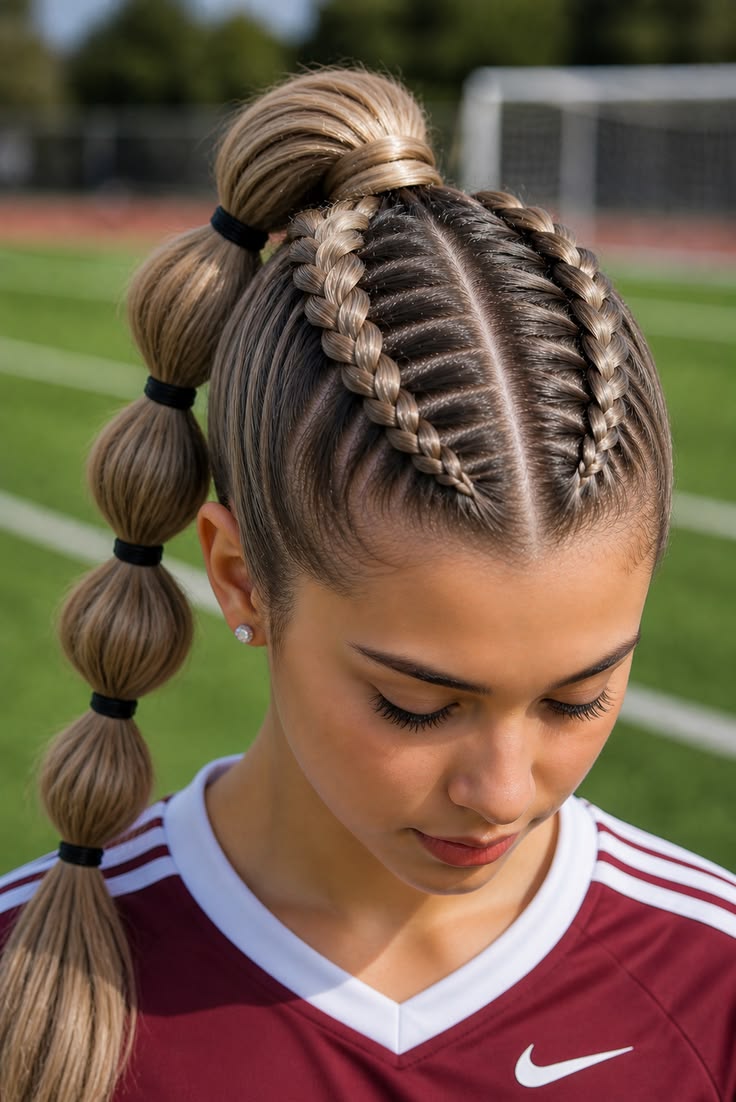
16 Hair Ideas for Volleyball: Game Ready Styles That Stay Put All Match Long
Ever shown up to a volleyball match with your hair perfectly styled, only to spend the whole game pushing flyaways out of your eyes? I’ve been there — and it’s frustrating. After years of watching athletes struggle with their hair mid-serve or mid-dive, I’ve put together the most practical, stylish, and secure hair ideas for volleyball players at every level.
So, what are the best hair ideas for volleyball? The best volleyball hairstyles keep hair completely off the face and neck, stay secure through jumping, diving, and intense lateral movement, and cause minimal scalp tension over long matches. Options range from sleek high ponytails and Dutch braids to space buns and knotted low buns — all designed to stay put through full sets.
Read on and I’ll walk you through all 16 styles in detail, including which works best for your hair type, what products to use, common mistakes players make, and how to care for your hair after tough training sessions. Whether you play beach volleyball or indoor, there’s a perfect look in here for you.
Why Your Volleyball Hairstyle Actually Matters
Let’s be real — your hairstyle can directly affect your game performance. A loose strand landing on your face right as you’re setting a ball can throw off your timing. Tight braids that pull on your scalp can cause headaches by the second set. And hair that unravels mid-match is just plain distracting.
Great volleyball hair checks three boxes: it stays secure, keeps hair off your face, and is comfortable enough to wear for hours. Let’s get into the best options.
16 Hair Ideas for Volleyball
1. The Classic High Ponytail

Source: @Instagram
Nothing beats the high ponytail for sheer practicality on the court. Pull all your hair up to the crown of your head and secure it tightly with a thick hair tie — not those thin ones that snap under pressure. The key is to get that base tight so the tail doesn’t droop mid-match.
Add a second elastic halfway down the tail to prevent the swinging motion from loosening the root. This style works best on medium to long straight or wavy hair. For extra hold, smooth a pea-sized amount of edge control or pomade around the hairline before you tie it up. It’s quick to do, easy to tighten between sets, and looks sharp in team photos. A high ponytail is honestly the gold standard for indoor volleyball players — clean, fast, and reliable.
2. Dutch Braid (Inverted French Braid)

Source: @Instagram
The Dutch braid is the most secure braided style you can wear on a volleyball court. Unlike a regular French braid where the strands cross under, the Dutch braid crosses over, creating a raised, rope-like structure that grips the scalp firmly.
Start at the top of your head and work down toward the nape of your neck, pulling each section snug as you go. Finish with a small elastic. No flyaways, no unraveling, no mid-game panic. This style is excellent for players with thick or curly hair that tends to escape from ponytails. It also looks incredibly athletic and polished — one of those volleyball hairstyles that works just as well for beach competitions as for gym matches.
3. Double Dutch Braids (Two-Strand Dutch)

Source: @Instagram
Take the Dutch braid concept and split your hair down the middle into two sections. Braid each side separately, finishing each at the nape of the neck or continuing them into two low pigtail braids. This is the hairstyle you see constantly on beach volleyball professionals and collegiate athletes.
The double Dutch braid distributes tension more evenly across your scalp, which means less headache on long match days. It also gives you double the security — two anchor points instead of one. For players with thick or voluminous hair, this is often a better option than a single braid. Tuck the ends under and pin them for an even cleaner look.
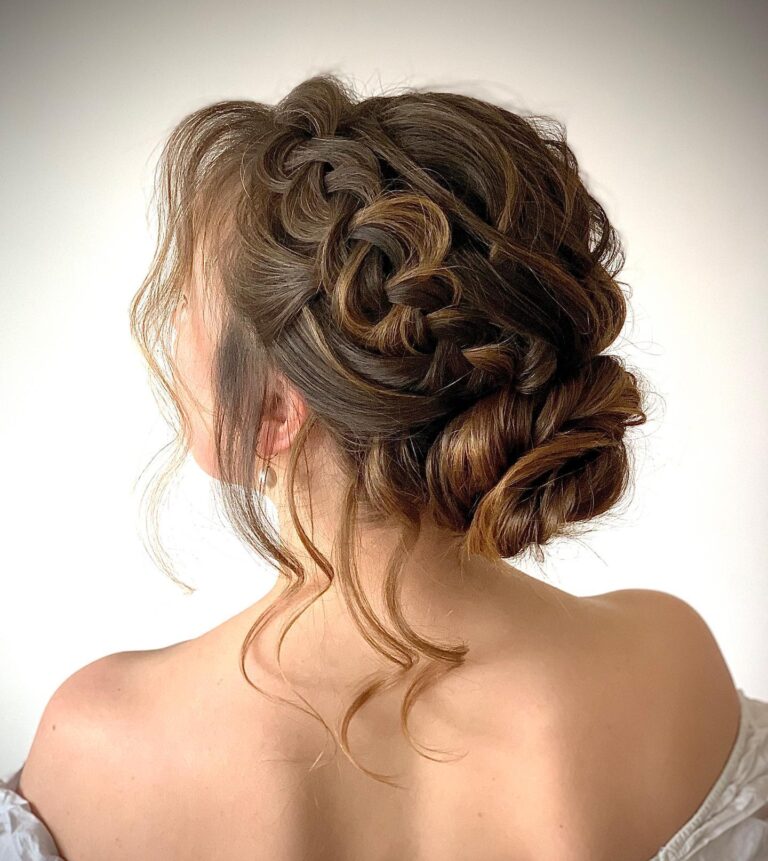
4. Sleek Low Bun

Source: @Instagram
The low bun sits at the nape of the neck and tucks all your hair away neatly. It’s lower-profile than a high ponytail or space buns, making it great for liberos and defensive players who do a lot of floor work — no bun digging into the back of your head when you dive.
Gather your hair into a low ponytail first, twist or fold it, then wrap and pin. Use bobby pins in an X formation for a grip that won’t give. Secure the base with a strong elastic and finish with light-hold hairspray. This style works beautifully on all hair lengths from chin-grazing bobs to long locks. Elegant, secure, and completely out of the way.
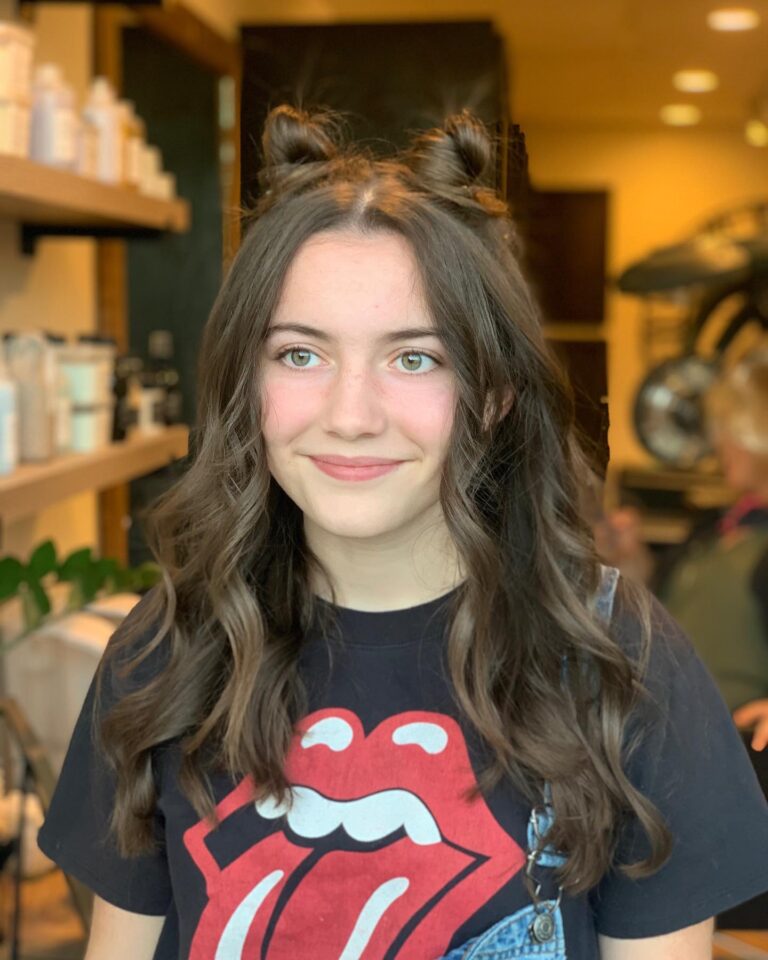
5. Space Buns

Source: @Instagram
Space buns are having a serious moment in athletic circles — and for good reason. You get all the security of buns, but the placement on top of the head keeps everything away from the neck and out of your face.
Part your hair down the middle, create two high ponytails, then twist each into a round bun and secure with hair ties and pins. They look playful and energetic but perform like a workhorse style. Space buns also stay put surprisingly well during aggressive lateral movements and dives. Bonus: they look amazing with a headband threaded underneath for added flyaway control.
6. Braided Ponytail Combo
Source: @Instagram
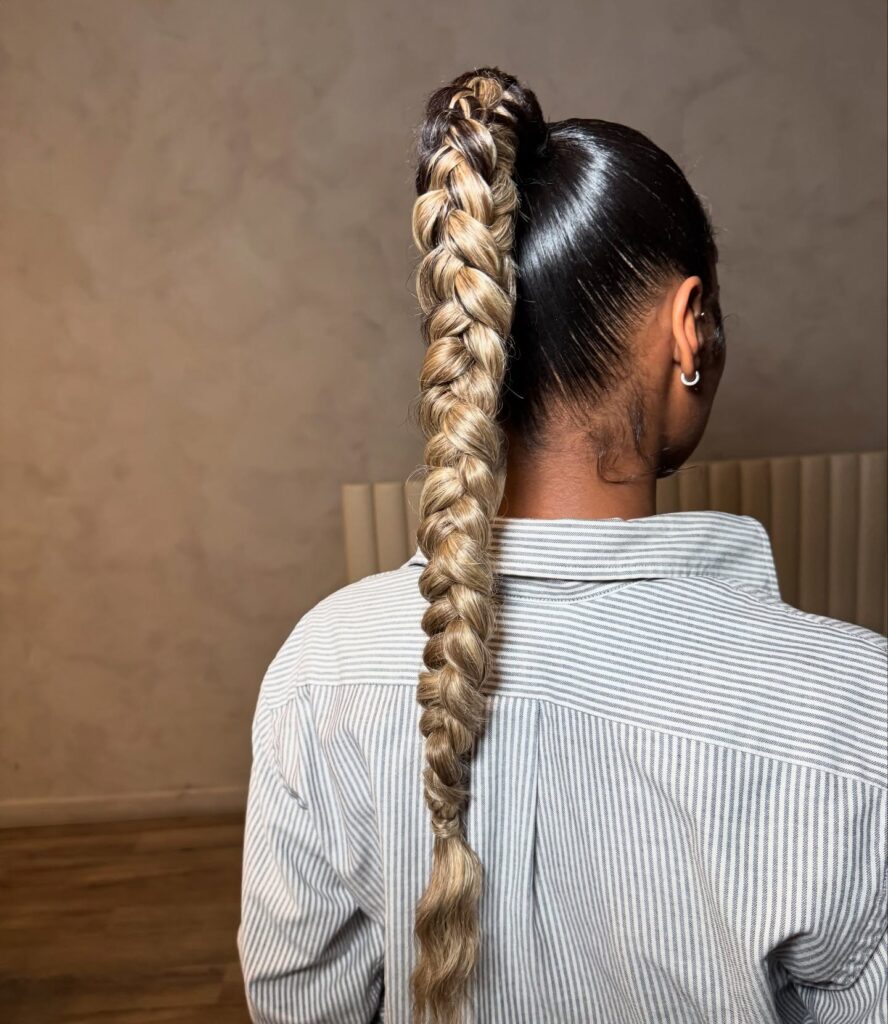
Can’t choose between a braid and a ponytail? You don’t have to. A braided ponytail starts with a traditional braid at the crown that feeds into a high ponytail. This gives you two layers of security — the braid keeps the roots and crown locked down, while the elastic keeps the tail in place.
To do this, start a Dutch or French braid from your hairline and braid back about 3–4 inches before gathering the remaining hair into a ponytail and securing everything together. It looks much more intentional and stylized than a plain ponytail and holds up better on the court. A great choice for tournament days when you want to look put-together across multiple matches.
7. Knotted Low Ponytail

Source: @Instagram
The knotted low ponytail is deceptively simple. Gather your hair into a low ponytail, then tie it into an overhand knot rather than a standard ponytail. Secure the knot with an elastic. The knot structure creates a natural anchor that resists the tugging and bouncing of play.
This style is particularly helpful for players with fine or slippery hair that always seems to slide out of regular ponytails. It keeps hair flat and compressed against the head, making it great for players who wear protective headgear or need a minimal profile. Quick to do, quick to adjust, and surprisingly elegant-looking for something this practical.
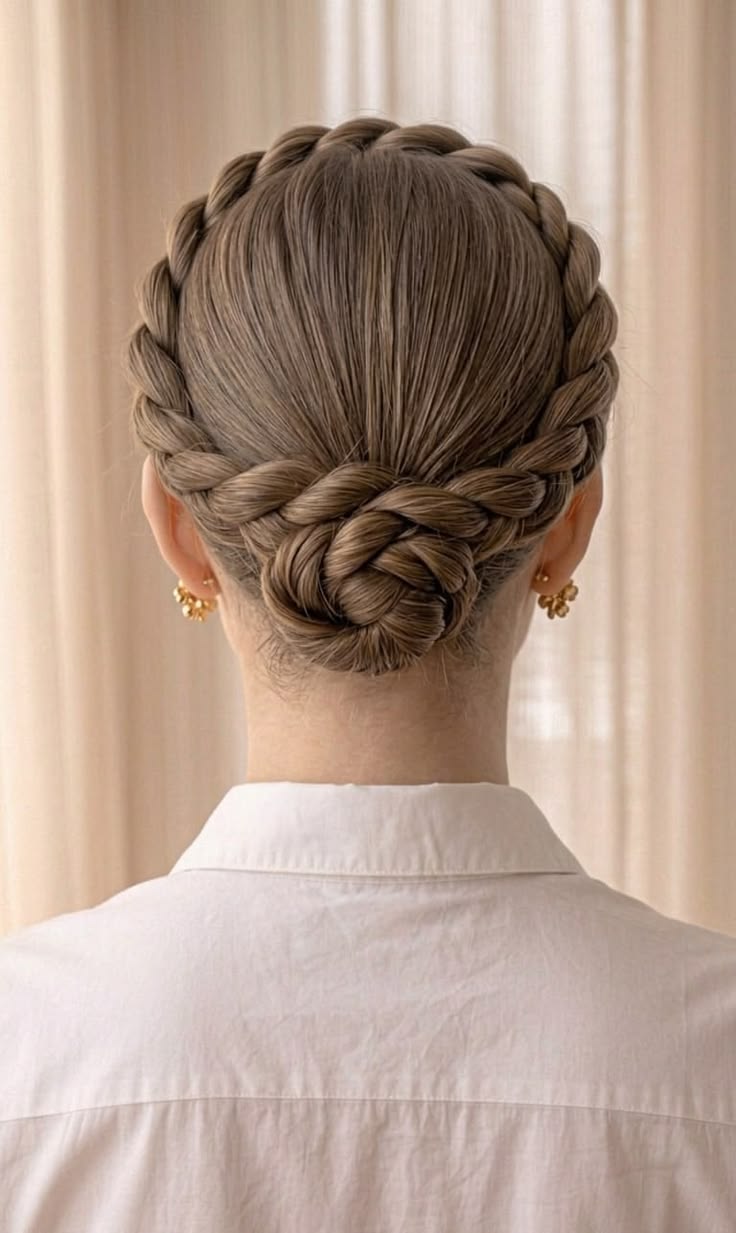
8. French Braid Into Bun

Source: @Instagram
This is the ultimate combination style. Start a French braid at your hairline and work backward, then instead of finishing the braid at the nape, gather it into a bun and pin it securely. The result is a style that’s locked down from every angle — the braid secures the top, and the bun handles the bottom.
It takes a few minutes more than simpler styles, but the payoff is a hairstyle that will genuinely last through a full tournament. Ideal for players with layered cuts or shorter strands around the face that tend to escape other styles. Add a tight-fitting headband over the braid to keep the very edges of your hairline smooth.
9. Cornrows

Source: @Instagram
Cornrows are the go-to for athletes who want zero maintenance during play. Braided tightly against the scalp in straight lines, cornrows eliminate all movement and don’t require any adjusting mid-match. They last days (sometimes weeks with proper care), making them ideal during tournament weekends or training camps.
You can style cornrows straight back, in curved patterns, or combined into a single ponytail at the back. Because they sit flat against the head, they work perfectly under headbands and are comfortable during floor play. If you’re someone who hates fussing with your hair before early morning matches, cornrows are one of the smartest investments you can make.
10. Tight Topknot

Source: @Instagram
The tight topknot is a high bun parked directly on top of your head. Unlike a messy bun (which might look cute but falls apart fast), the topknot is wrapped tight and pinned until it’s essentially a helmet.
Pull your hair into the highest point possible, then wrap, tuck, and pin with at least 4–6 bobby pins. This style is particularly good for indoor players because the bun won’t interfere with your neck or collar. It keeps body heat lower around the neck — a small but meaningful comfort during intense rallies. Players with thick hair should divide the bun into two sections before wrapping to prevent it from getting too bulky.
11. Headband Braid (Athletic Headband Hairstyle)

Source: @Instagram
The headband braid isn’t technically a headband — it’s a thin braid made from your own hair that runs across your forehead like one. Take a small section from one temple, braid it tightly, pull it across your hairline, and pin it at the other temple. Then pull the rest of your hair into whatever style you choose.
This is brilliant for players with bangs or shorter layers that constantly fall forward. It solves the flyaway problem at the source — keeping those face-framing pieces locked behind the “braid headband.” Combine it with a ponytail or bun and you’ve got one of the most secure and practical styles on this entire list.
12. Side Braid Into Low Bun

Source: @Instagram
Braid your hair to one side — either a simple three-strand braid or a fishtail — then coil the braid into a low side bun at the nape of your neck. Pin it flat and secure with a strong elastic at the base.
This is a great option for players who want a style that’s a little different from the standard center-back designs. The side placement also keeps the bun from pressing against the back of your head during dives and floor movements. Works best on medium to long hair and adds a slightly more styled, elegant look without sacrificing function. Perfect for players who also compete in beach volleyball where the aesthetic element matters more.
13. Half Up Space Buns

Source: @Instagram
Half up space buns give you the security of space buns on the top portion of your hair while leaving the bottom half down — or braided. Take the top half of your hair, split it down the middle, and create two mini buns on either side. Let the rest hang in a low ponytail or braid.
This is a fantastic style for players with medium length hair that isn’t quite long enough for a full bun. It keeps the hair around your face locked away while managing volume at the crown. Secure each mini bun with two elastics and a few pins, and this style will hold through the toughest sets.
14. Tight Fishtail Braid

Source: @Instagram
The fishtail braid looks intricate but is actually just a two-strand twist repeated all the way down. The result is a thin, tightly woven braid that stays put beautifully. Pull it snug throughout the braiding process — loose fishtails loosen further with movement.
Finish at the base with a strong elastic and mist with light hairspray. For shorter hair, the fishtail doesn’t need to reach the ends — just braid what you can and secure what’s left into a small knot. Fishtail braids are slightly more textured and voluminous than Dutch braids, which makes them popular for beach volleyball players who want a style that photographs well while still being competition-ready.
15. Pinned Back Layers With Clips
Source: @Instagram
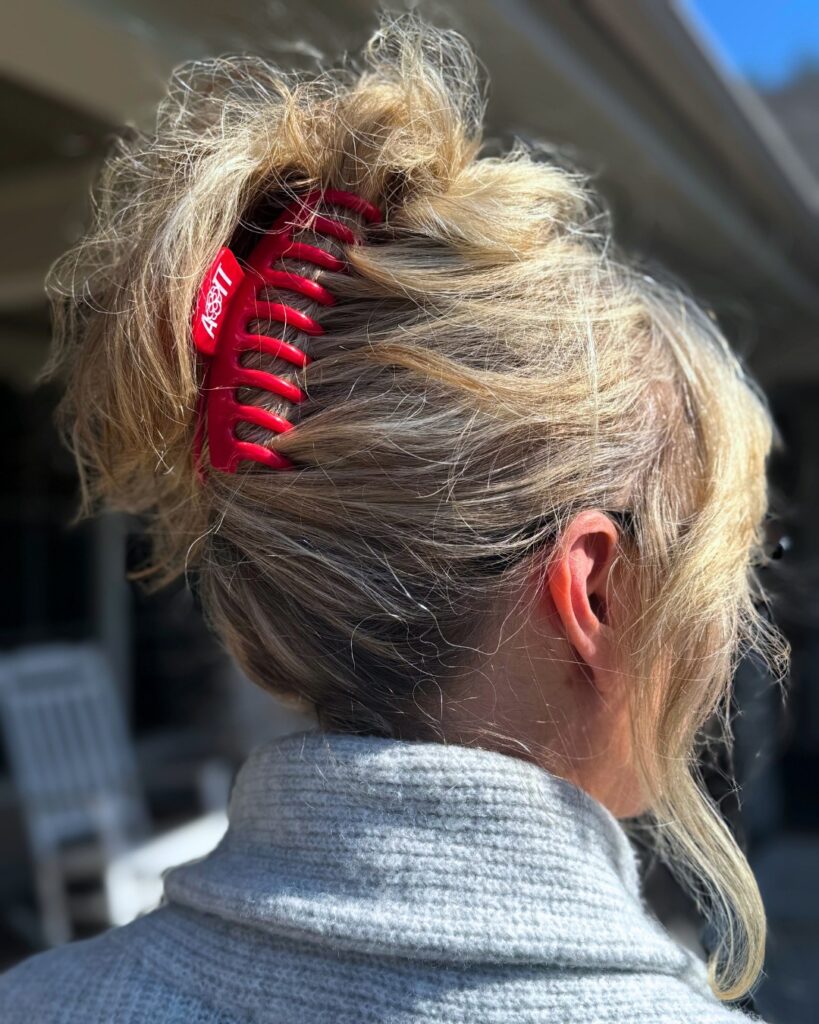
For players with shorter hair or pixie-adjacent cuts, this is your solution. Use flat back sport clips (not decorative — strong, flat spring clips) to pin all your layers back and away from your face. Work from the front hairline backward, securing layers section by section.
Use clips at the temples and behind the ears for the best results. This style requires a bit more preparation than throwing up a ponytail, but it’s one of the most effective solutions for short haired players who struggle with their hair falling forward. Pair with a sport headband for maximum control.
16. Rope Twist Ponytail

Source: @Instagram
Divide your hair into two sections before pulling it into a ponytail. Twist each section in the same direction, then wrap the two sections around each other in the opposite direction and secure with an elastic. This rope-twist technique creates a natural tension that prevents the style from slipping.
It looks like you spent time on it, but once you’ve practiced it a couple of times, it takes under two minutes. The twist structure also adds grip — the two coiled sections lock against each other and resist the centrifugal force of jumping and head movement. Great for all hair types and especially effective for silky or fine hair that slides out of standard ponytails.
Quick Comparison Table: Which Style Is Right For You?
Hair Ideas for Volleyball by Hair Type and Match Type
| Style | Best Hair Type | Match Type | Time to Do |
|---|---|---|---|
| High Ponytail | All types | Indoor | 2 min |
| Dutch Braid | Thick/Curly | Indoor & Beach | 8 min |
| Double Dutch Braids | Thick/Voluminous | Beach/Tournament | 12 min |
| Low Bun | All types | Indoor (Libero) | 4 min |
| Space Buns | Medium/Long | Beach/Indoor | 5 min |
| Cornrows | All textures | Tournament/Camp | 45–90 min (professional) |
| Braided Ponytail | Long/Layered | Tournament | 10 min |
| Tight Topknot | Thick/Long | Indoor | 5 min |
| Headband Braid | All (with bangs/layers) | All | 6 min |
| Rope Twist Ponytail | Fine/Silky | All | 3 min |
| Knotted Low Ponytail | Fine/Slippery | All | 2 min |
| Fishtail Braid | Medium/Long | Beach | 8 min |
Common Mistakes and How to Avoid Them
Mistake 1: Using Thin Elastics
Thin hair ties snap or stretch under the tension of active play, letting ponytails droop by the second game. Fix: Use thick, seamless sport elastics — look for ones marketed specifically for athletic use. Brands like Goody Sport or Invisibobble Active hold up far better.
Mistake 2: Skipping Product Entirely
Clean, product-free hair is actually more slippery and harder to control. A small amount of pomade, mousse, or light gel applied before styling gives your hair something to grip. Fix: Work a light styling product through damp hair before styling to add texture and hold.
Mistake 3: Making Buns Too Loose for “Comfort”
A bun that feels comfortable at home will feel sloppy and droopy after one set of jumping. Fix: Make it slightly tighter than comfortable at first — hair settles after a few minutes of movement and the tension becomes negligible.
Mistake 4: Ignoring the Hairline
Flyaways at the hairline are the most distracting during play. Fix: Use an edge brush or toothbrush with a tiny bit of gel to smooth the perimeter before you leave for the court. A sport headband can also solve this entirely.
Mistake 5: Choosing the Wrong Style for Your Position
Liberos and defensive specialists spend a lot of time on the floor — high buns can press painfully against the skull. Setters and middle blockers jump constantly, so loosely wrapped buns may unravel. Fix: Match your hairstyle to your position (see the table above).
Mistake 6: Styling Dry, Unwashed Hair Wrong
Hair that’s been sitting in dry shampoo all day actually holds some styles better — but not braids. Dry shampoo makes hair too textured to braid smoothly. Fix: If you’re braiding, wash first. For ponytails and buns, dry shampoo is your friend.
Similar Variations to Explore
If you love the styles in this list, here are some related looks worth trying:
- Three-Strand French Braid – a simpler alternative to Dutch braids with a still-secure hold
- Low Twisted Bun – a quicker alternative to the French braid into bun
- Knotted Braid – a rope-twist variant that adds even more grip
- Pin Curl Updo – for very short hair where clips don’t work well
- Ribbon Braid – a Dutch braid with athletic ribbon woven in for team spirit
Hair Care Tips for Volleyball Players
Your hair takes a beating during volleyball season — sweat, sun (if you play beach), chlorine from pools, and the tension of daily tight styling can all cause damage. Here’s how to protect it:
Hydration is non-negotiable. Sweat pulls moisture from your hair, especially during outdoor play. Use a deep conditioning treatment at least once a week. Look for masks with shea butter, coconut oil, or argan oil as primary ingredients.
Don’t sleep in tight styles. After a match, release your hair before bed. Sleeping in a tight braid or ponytail puts continuous tension on the same follicles and can cause traction alopecia over time.
Use protective styles on heavy training weeks. Cornrows or two-strand twists are excellent protective styles that let your hair recover from daily manipulation during intense training periods.
Be careful with heat. If you’re using a flat iron or curling wand to create waves before a beach match, use a heat protectant spray. But honestly — braids and natural textures photograph better on the beach anyway.
Invest in a good sport shampoo. Clarifying shampoos designed for athletes remove mineral buildup from sweat and sunscreen without stripping your hair of natural oils. Use one once a week during heavy training season.
Scalp care matters too. Constant ponytail tension can irritate the scalp at the hairline. Gently massage your scalp after releasing your hair post-match to stimulate circulation and relieve tension.
Outro
Hair ideas for volleyball don’t have to be complicated — the best styles are the ones that stay put, feel comfortable, and let you focus entirely on your game. Whether you go with a tight Dutch braid for maximum hold or a quick rope twist ponytail between warm-up and first serve, the right style can genuinely improve your court confidence. Experiment during practice before locking in your tournament go-to. Your hair should be the last thing on your mind when you’re lining up a spike — these 16 hair ideas for volleyball will make sure it stays that way.