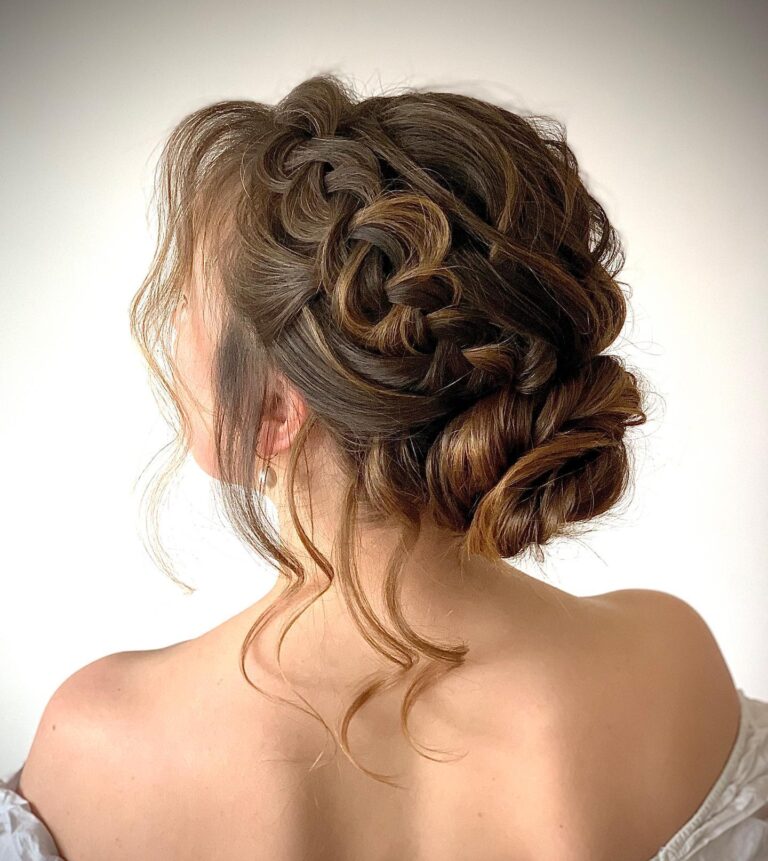
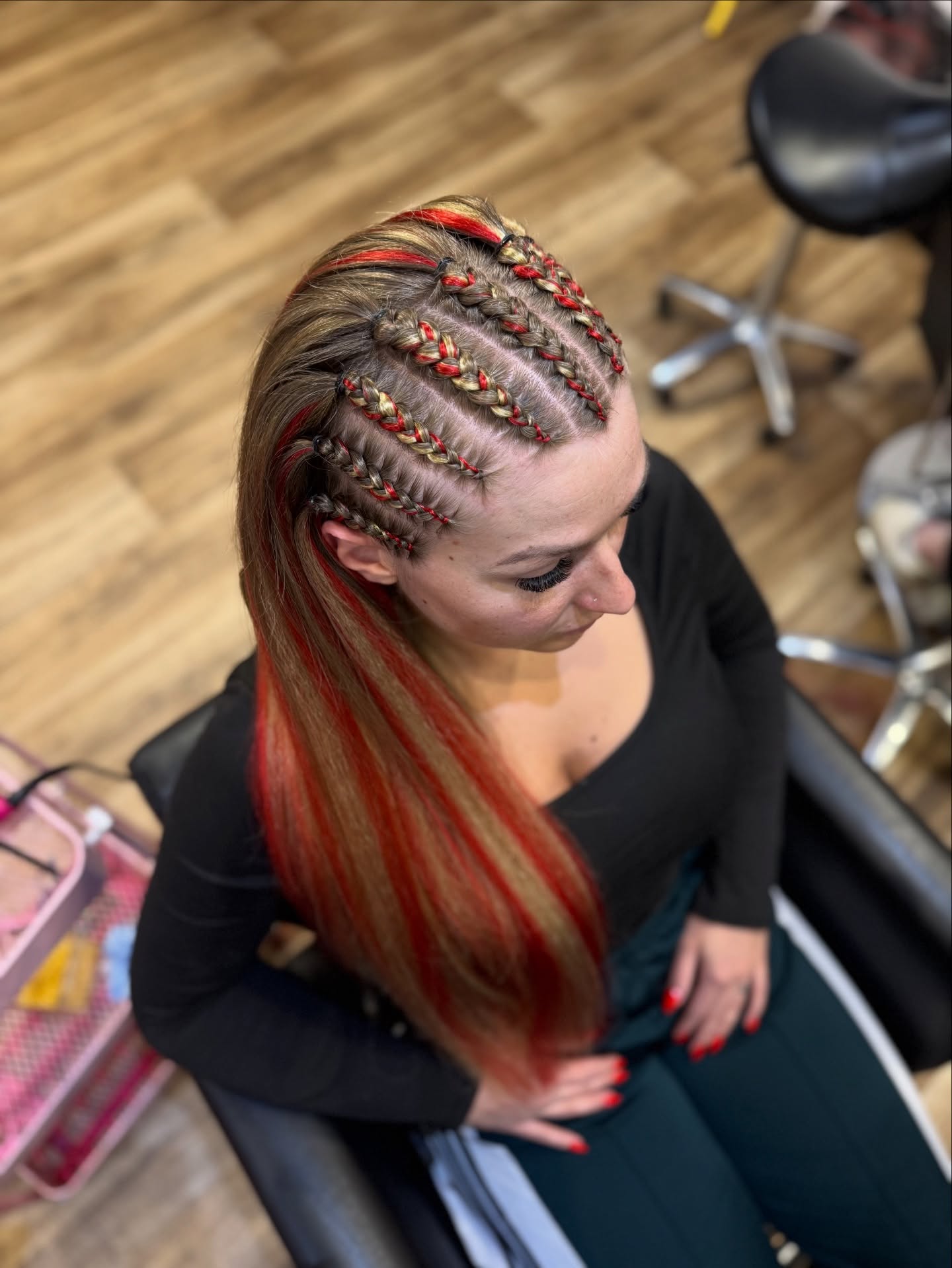
15 Wrestling Hairstyles That Stay Put Through Every Match, Every Move, Every Win
Ever stepped onto the mat only to have your hair in your eyes thirty seconds into the match? I’ve talked to enough wrestlers — from middle school competitors to college athletes — to know that hair management is a real, practical problem that affects performance, and yet almost nobody writes about it seriously. Wrestling hairstyles aren’t just about looking good. They’re about staying safe, staying legal, and staying focused when every second counts.
So what are the best wrestling hairstyles? Wrestling hairstyles must keep hair completely out of the face and away from the opponent’s reach. Approved styles include tight braids, cornrows, flat French braids, low buns, high buns, and short cuts. Under NCAA and NFHS rules, hair must be contained so it does not provide a grip advantage or distract from competition. Hair covers (hair guards) may be worn if hair cannot be safely contained by style alone.
Keep reading — because below you’ll find all 15 styles broken down by hair length, gender, competition level, and ruleset. I’ve also included common mistakes, a face shape and performance table, and targeted hair care tips for athletes who style under pressure, literally.
Wrestling Hairstyles: Why They Matter More Than You Think
Here’s something coaches don’t always explain clearly enough: your hairstyle is a competition decision, not just a grooming one.
Under NFHS (National Federation of State High School Associations) and NCAA rules, hair that can be grabbed — even accidentally — creates a safety hazard. Hair that falls across the face can break your focus during a scramble. And hair that isn’t properly contained can disqualify you from a match before it even starts if the referee deems it a risk. I’ve seen wrestlers penalized or delayed at weigh-in simply because their hair wasn’t compliant.
The good news? A properly chosen and executed wrestling hairstyle solves all of these problems at once. Let’s go through every option — for short hair, medium hair, long hair, male wrestlers, female wrestlers, and everyone in between.
15 Wrestling Hairstyles That Actually Work on the Mat
1. The Dutch Braid (Two Strand)

Source @Instagram
Two Dutch braids running parallel down the back of the head are, in my opinion, the single most effective wrestling hairstyle for female athletes with long hair. They distribute weight evenly, stay flat against the scalp, have no loose pieces to grab, and they’re symmetrical — which matters for balance and comfort during ground work.
Dutch braids (also called inverted braids) sit on top of the hair rather than beneath it, creating a raised, rope-like texture that grips itself better than a standard French braid. This means they hold longer without re-securing, even through sweating and physical contact. Start each braid at the crown, incorporate hair tightly as you go, and secure at the nape with a strong spiral hair tie.
For wrestlers with very thick or long hair, crossing the two braids over each other at the nape and pinning flat before tucking into a hair cover adds an extra layer of security.
Hair length needed: Medium to long | Compliance: Fully legal under NFHS and NCAA | Hold time: 3–4+ hours of activity
2. The Flat French Braid (Single Center)
Source @Instagram
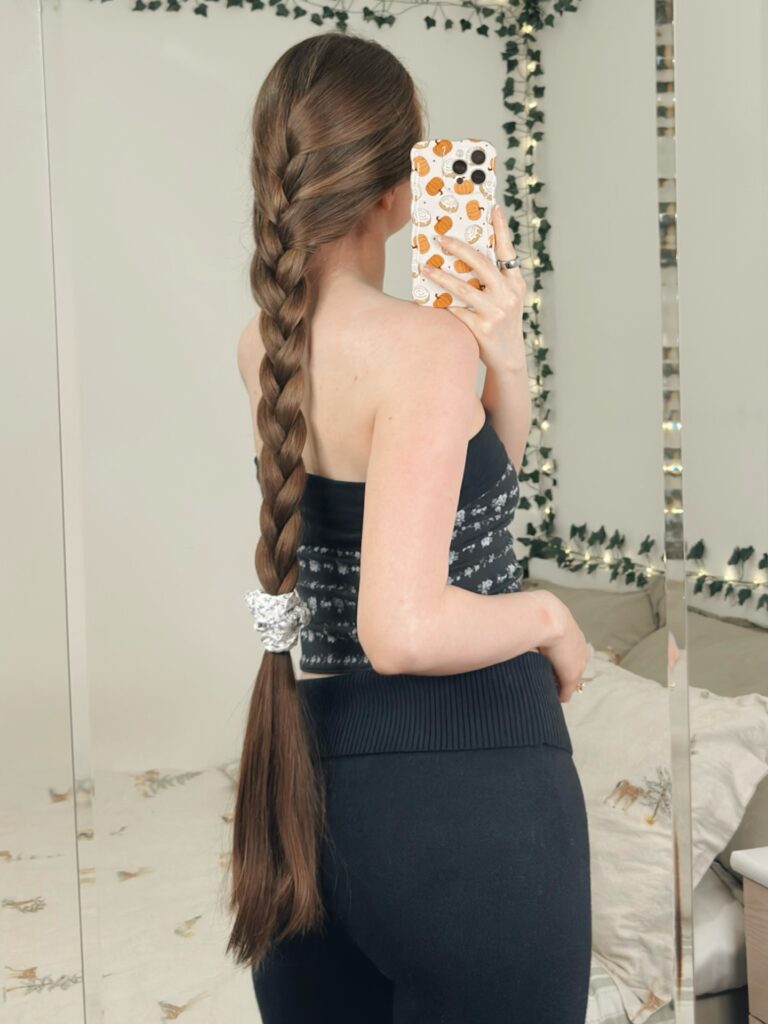
A single flat French braid running straight down the center back is the classic choice — and it’s been the go-to wrestling hairstyle for female athletes for decades. It’s simple, symmetrical, and when done tightly, lies completely flat against the skull with no protrusion that could catch or snag.
The key distinction between a casual French braid and a competition-ready one is tension. A loose, decorative French braid will shift and loosen under wrestling conditions within minutes. A tight, section-by-section French braid pulled firmly against the scalp and secured with two or three strong elastics (at the base, midway, and end) will hold through a full tournament.
For compliance, ensure no sections are loose and there’s no flyaway hair at the temples or nape. Use a small amount of gel along the hairline before braiding to keep short pieces flat.
Hair length needed: Medium to long | Compliance: Fully legal | Hold time: 3–5 hours with proper elastics
3. The Low Flat Bun (Bun at Nape)

Source @Instagram
For wrestlers who find braids uncomfortable during ground wrestling or who have hair that doesn’t braid easily, the low flat bun at the nape is the most secure updo option available. The key word is flat — a round, protruding bun creates a pressure point during takedowns and sprawls that can be genuinely uncomfortable. A flat, pancaked bun pinned tightly against the nape is far more practical.
Gather all hair into a low ponytail at the nape. Twist the length tightly and wrap flat against the head in a tight coil. Pin in multiple directions with strong bobby pins — not a standard elastic bun wrap, which bounces back into a round shape. Finish with a shot of maximum-hold spray and, if required, a hair cover.
This style is ideal for wrestlers with natural hair, coily textures, or hair that doesn’t braid smoothly. It works for any hair type and is equally effective for male wrestlers with longer hair.
Hair length needed: Medium to long | Compliance: Legal when fully contained | Hold time: 2–3 hours, may need a half-time refresh for long tournaments
4. The Cornrows
Source @Instagram
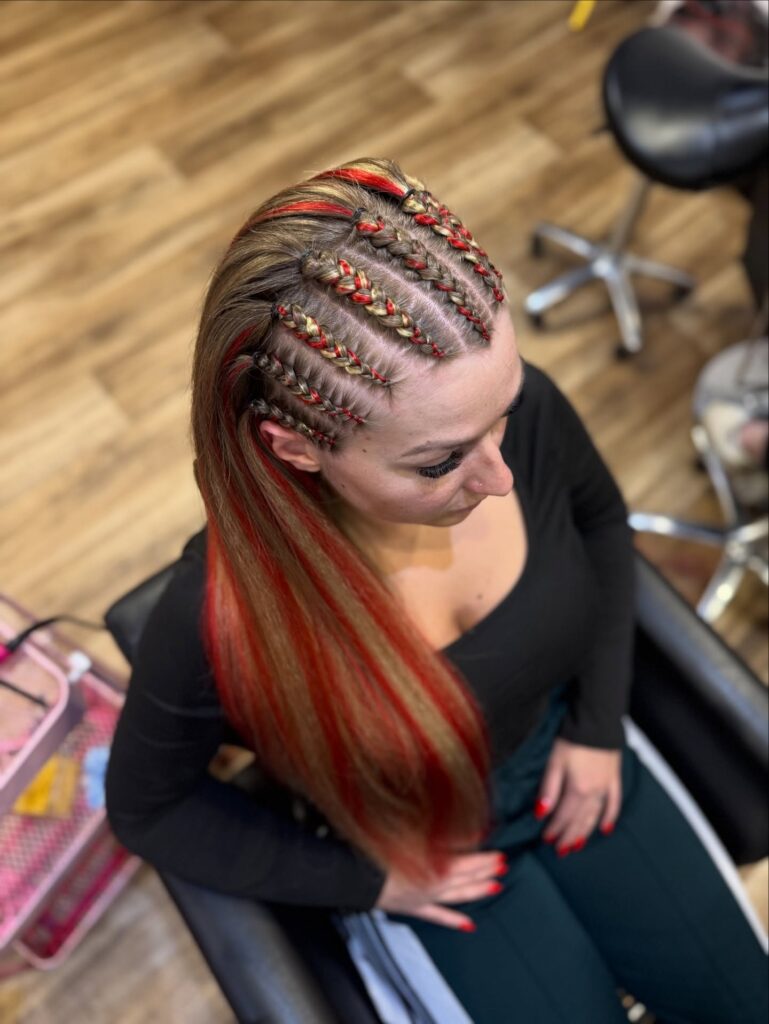
Cornrows are one of the best wrestling hairstyles available for athletes with natural, coily, or tightly textured hair — and they’re significantly underrepresented in most discussions of competition hairstyles, which I think is a real gap. Cornrows lie completely flat to the scalp, have no loose sections, no protrusions, and can hold for multiple days without re-styling. For a weekend tournament, that’s a huge practical advantage.
Cornrows can be styled in various patterns — straight back, curved, or in diagonal rows — but for wrestling purposes, straight-back cornrows running parallel from the front hairline to the nape are the most functional. They create zero protrusions and minimal hairline pressure. Secure the ends with small, tight elastics.
If cornrows end near the nape with any tail length, either braid that tail into the last row or secure with a spiral tie and tuck into a hair cover to ensure full compliance.
Hair length needed: 3+ inches of natural hair | Compliance: Fully legal | Hold time: Multi-day — excellent for tournaments
5. The High Tight Bun

Source @Instagram
For female wrestlers who prefer an updo to braids, the high tight bun at the crown is a solid option — particularly for folk style and freestyle wrestling where ground work is less extended. The height of the bun keeps it away from the nape and collar area, reducing contact during certain positions.
Gather all hair straight up to the crown of the head. Twist tightly and coil into the smallest, flattest bun possible, securing with bobby pins in a star pattern and covering with a snag-free hair net if available. Avoid using scrunchies or velvet ties for competition — they can shift and loosen. Use strong spiral elastics and pins only.
The high tight bun is one of the more challenging styles to maintain at competition length because it requires the most consistent tension to stay secure. For very long or very heavy hair, this style may shift during extended matches — the flat low bun is more reliable for long tournaments.
Hair length needed: Medium to long | Compliance: Legal when contained | Hold time: 2–3 hours
6. The Short Buzz Cut or Fade

Source @Instagram
For male wrestlers, the short buzz cut or fade eliminates the hair problem entirely. This is the most performance-optimal solution from a purely practical standpoint — there is nothing to grab, nothing to fall in the eyes, and zero styling time before competition.
A number 2 or number 3 buzz cut with a clean fade requires zero product, zero preparation, and zero compliance concerns. It’s the most popular choice among male wrestlers at the high school and collegiate level for good reason. If you’re serious about eliminating hair as a variable in your performance, this is the answer.
For wrestlers who want some personal expression in their cut, a fade with a design or a clean line-up at the hairline adds style without compromising function. Just ensure any designs don’t involve raised sections or attachments.
Hair length needed: Any length (cut to short) | Compliance: Zero concerns | Maintenance: Regular trimming every 2–3 weeks to maintain the fade
7. The Caesar Cut

Source @Instagram
The Caesar cut — a short, horizontally cut fringe with an overall short length — is a classic men’s wrestling hairstyle that offers slightly more coverage and style than a full buzz while still maintaining full compliance. At 1–2 inches of length across the top with short sides, there’s nothing long enough to grab or restrict vision.
Styling a Caesar for competition requires only a small amount of firm gel or cream pressed flat — no products that could transfer to an opponent or the mat. It’s a style that’s equally at home in the locker room, in class, and on the mat, which makes it a practical everyday choice for wrestlers who want one consistent look.
Hair length needed: Short (1–2 inches on top) | Compliance: No concerns | Maintenance: Regular barber visits every 3–4 weeks
8. The Man Bun (Secured Flat)

Source @Instagram
Male wrestlers with longer hair who don’t want to cut it face the most compliance challenges. The man bun is the most common solution — but it needs to be done correctly for competition. A casual, loosely tied man bun is not acceptable for wrestling. A flat, tightly pinned man bun can work.
Gather all hair into a ponytail at the crown or nape. Twist the entire length tightly and coil flat against the head, pinning in multiple directions with strong bobby pins. Add a snag-free elastic over the entire bun for additional security. The entire arrangement should not protrude more than approximately one inch from the skull. Many referees will require a hair cover over any man bun arrangement to ensure compliance.
Check your specific state or association’s rules before competition — some require a hair cover for any male wrestler with hair long enough to be gathered. Coming prepared with a legal hair cover is always the safest choice.
Hair length needed: Long (enough to gather) | Compliance: Legal with hair cover in most rulesets | Hold time: 2–3 hours
9. The Slicked Back Short Style

Source @Instagram
For male wrestlers with medium-short hair — long enough to style but short enough that it sits close to the head — the slicked-back look using a firm pomade or gel is a clean, simple option. All hair is combed straight back from the hairline, lying flat against the head without any volume or wave.
Apply a pea-sized amount of strong-hold water-based gel or pomade to slightly damp hair. Comb all hair straight back from the hairline and smooth flat. Once dry, add a light spray to lock it in place. This style holds well for shorter matches but may begin to loosen over an extended tournament as sweat affects the product’s hold.
Water-based products are strongly preferred over oil-based ones — they don’t transfer as readily to opponents’ skin or the mat surface, and they wash out easily after the match.
Hair length needed: Medium-short (2–4 inches) | Compliance: No concerns | Hold time: 1–2 hours before touch-up needed
10. The Tight Pigtail Braids

Source @Instagram
Two tight, small pigtail braids — gathered low at the nape on each side and braided into compact tails — are a functional and compliance-friendly option for wrestlers with medium-length hair who find a single center braid uncomfortable. The low, lateral placement keeps the braids away from the spine and out of contact areas during ground wrestling.
Divide hair evenly and create two tight three-strand braids starting at each temple, gathering hair flat along the sides of the head. Secure firmly at the ear or nape level. The braids should be compact enough that they don’t swing or bounce during movement. If the tails are long, fold them back up toward the base and secure with a second elastic.
This style works well for wrestlers with medium-length hair that’s too short for a single long braid but long enough to require management.
Hair length needed: Medium | Compliance: Legal when secured | Hold time: 3–4 hours
11. The Headband and Slick Back Combo (Short Hair)

Source @Instagram
For female wrestlers with short or medium hair that’s too short to braid but long enough to fall in the eyes, the combination of a silicone-grip sports headband and a slicked-back style is a practical and legal solution.
Apply a strong-hold gel or edge control from the hairline back, combing or brushing everything away from the face. Place a silicone-grip athletic headband (not a cloth headband, which slips) firmly at the hairline. The silicone grip grips the hair, the scalp, and the headband fabric, creating a combination that holds through sweating and physical contact better than either element alone.
This is one of the best solutions for female wrestlers with bobs, natural TWAs (teeny weeny afros), or growing-out short cuts who need reliable face-clearance without the option of braiding.
Hair length needed: Short to medium | Compliance: Headband must be smooth-surfaced per NFHS rules | Hold time: 2–3 hours
12. The Box Braids with Hair Cover
Source @Instagram
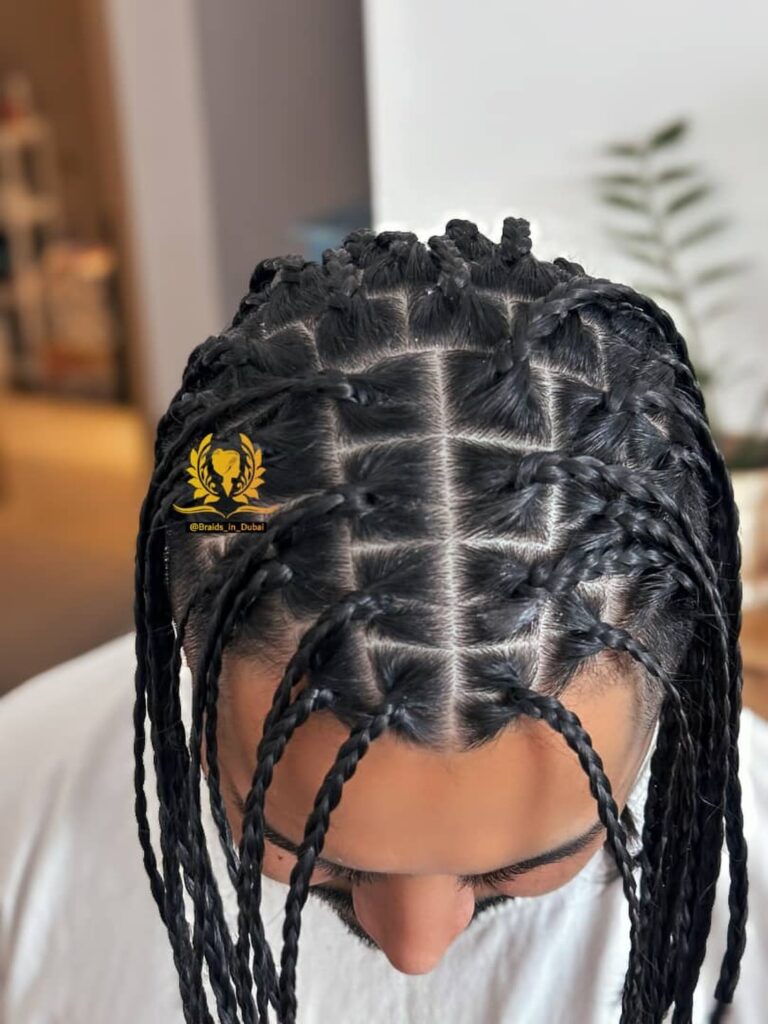
Box braids — pre-installed extensions braided into sections from the scalp — are a protective style that works exceptionally well for wrestling when combined with a hair cover. The braids themselves are flat to the scalp, structured, and completely non-grabbable. With a legal hair cover securing any loose ends or braid tails, this is one of the most complete solutions for natural hair athletes.
Box braids also offer the significant advantage of a multi-week installation — a wrestler can get their box braids installed once and compete across an entire season without worrying about daily re-styling. This is a genuine time and energy saver for athletes with intensive training schedules.
Ensure braid tails are contained inside a legal hair cover during competition, and that the hair cover is smooth, non-abrasive, and securely attached. Check with your referee in advance.
Hair length needed: Any (extensions used) | Compliance: Legal with hair cover | Hold time: Multi-week installation
13. The Knotless Braids or Flat Twists

Source @Instagram
Knotless braids and flat twists are lower-tension alternatives to traditional cornrows and box braids that work well for wrestlers with sensitive scalps or those prone to tension headaches from tight styles. Flat twists, in particular, lie very close to the scalp and create a smooth, flat surface with no protrusions.
For wrestling purposes, flat twists styled straight back from the hairline to the nape with ends tucked under or secured with small elastics are an excellent option. They have the same functional benefits as cornrows — flat profile, secure, long-wearing — with less tension at the root, which is beneficial for athletes who wear their hair confined for extended periods.
Hair length needed: Medium to long natural hair | Compliance: Fully legal | Hold time: 3–7 days
14. The Taper and Shape Up (Men’s)

Source: @Instagram
The taper with a clean shape-up is the most popular styled men’s wrestling hairstyle — it’s above zero length, which allows for some personal expression, while staying short enough to never cause compliance issues. The shape-up (clean geometric lines at the hairline) gives this cut a crisp, intentional appearance.
A taper gradually reduces hair length from the crown down to the skin at the neckline and around the ears. The shape-up defines the hairline with a straight horizontal line across the forehead and curved or straight lines at the temples. Combined, this creates a polished look that requires zero styling for competition — the cut itself is the style.
This is particularly popular at the high school level, where personal presentation matters and wrestlers want a look that carries from the mat to the classroom.
Hair length needed: Short | Compliance: No concerns | Maintenance: Barber every 2–3 weeks
15. The Wrapped and Pinned Crown Braid

Source @Instagram
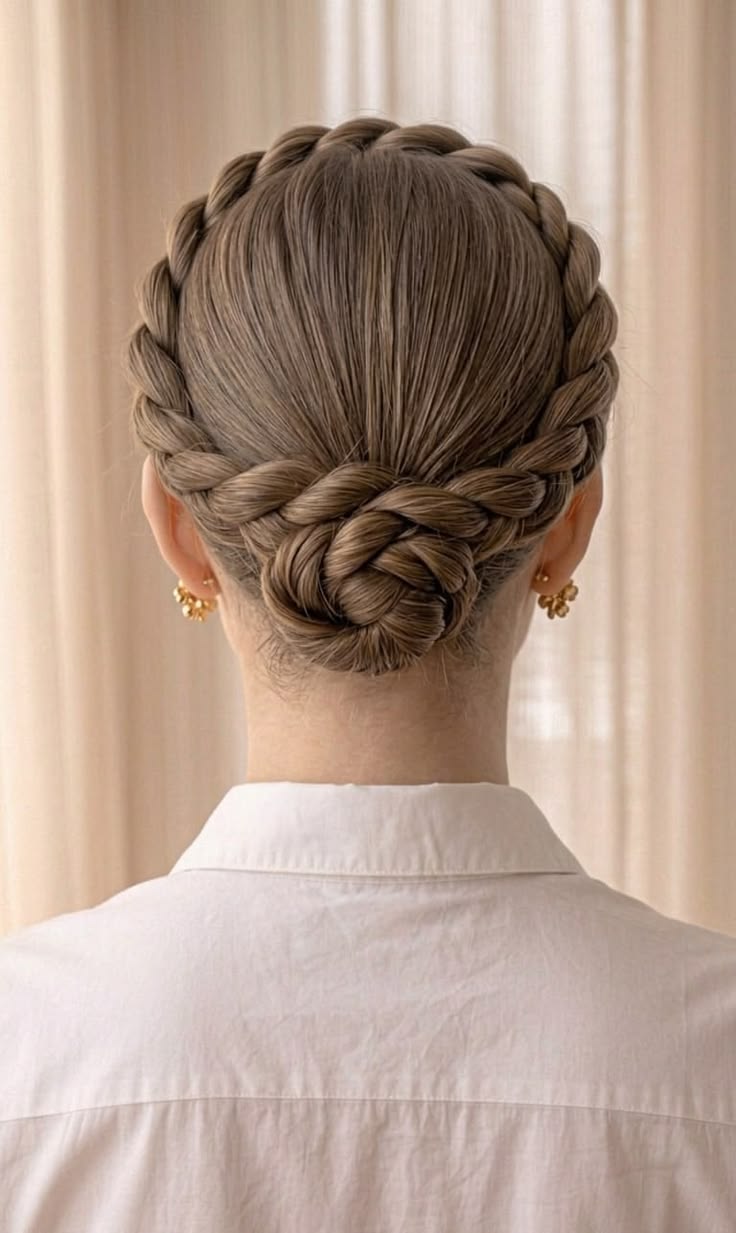
For female wrestlers with very long or very thick hair that resists other containment methods, the wrapped crown braid is the most secure option available short of wearing a hair cover. A braid that wraps entirely around the circumference of the head and is pinned multiple times creates a flat, contained arrangement with no tail, no protrusion, and no loose end that can be grabbed or shift during a match.
Create a single French or Dutch braid starting at one temple and continuing around the entire hairline until it meets the start point. Pin the tail end under the braid where it began. Add additional pins along the crown to flatten the braid against the head. The result is an arrangement completely contained within the skull’s circumference with zero protrusion.
This style requires practice — doing it quickly before a match takes skill — but once mastered it’s the most functional long-hair wrestling style available.
Hair length needed: Long | Compliance: Fully legal | Hold time: 3–5 hours
Quick Reference Tables
By Hair Length and Style Type
| Hair Length | Best Styles | Key Products | Compliance Notes |
|---|---|---|---|
| Very Short / Buzz | Buzz cut, fade, taper | None needed | Zero concerns |
| Short (1–3 inches) | Caesar, slicked-back, headband + slick | Strong-hold gel, edge control | Verify no protrusions |
| Medium (3–6 inches) | Tight pigtails, flat French braid, headband combo | Gel, spiral elastics | Ensure no loose pieces |
| Long (6+ inches) | Dutch braids, cornrows, flat bun, crown braid | Strong elastics, bobby pins, gel | Hair cover recommended |
| Natural / Coily | Cornrows, flat twists, box braids, high bun | Edge control, lightweight oil | Hair cover for tails |
By Ruleset and Competition Level
| Competition Level | Governing Body | Hair Cover Required? | Key Rules |
|---|---|---|---|
| High School (USA) | NFHS | Required if hair can’t be safely contained | Style must not provide grip advantage |
| Collegiate (USA) | NCAA | Required if hair not naturally contained | Clean, dry hair required; no adornments |
| International / Olympic | UWW (United World Wrestling) | Permitted but not always required | Hair must not interfere with match |
| Youth / Middle School | State-specific | Usually same as NFHS | Check local athletic association rules |
| Professional / WWE | No sport commission | No official rules | Style is part of character/persona |
By Hair Type and Hold Durability
| Hair Type | Recommended Styles | Avoid | Hold Tips |
|---|---|---|---|
| Straight / Fine | Flat French braid, low bun | Loose high bun (slips easily) | Strong spiral elastics + gel at hairline |
| Wavy / Medium | Dutch braids, flat bun, pigtail braids | Loose styles without gel | Sea salt spray for grip before braiding |
| Curly / Coily | Cornrows, flat twists, box braids, high bun | Anything that stretches wet curls | Style on stretched/blow-dried hair for braids |
| Thick / Dense | Crown braid, cornrows, flat low bun | High buns (too heavy to hold) | Multiple pins in star pattern |
| Short (male) | Buzz, fade, taper, Caesar | Slick-back without hold product | Water-based gel for longevity |
Common Mistakes and How to Avoid Them
Mistake 1: Using Elastics with Metal Clasps
Metal clasps on hair ties are a safety hazard in wrestling — they can scratch opponents. Always use seamless, metal-free spiral elastics or flat fabric ties. This is specifically addressed in NFHS rules.
Mistake 2: Styling Hair When Wet Before Competition
Wet hair seems easier to braid, but it dries tighter and can cause significant scalp tension and headaches during extended competition. Style hair when dry or slightly damp, not soaking wet.
Mistake 3: Not Practicing the Competition Hairstyle Before the Meet
If you’re trying a new braiding technique or updo for a tournament, practice it at training first. Discovering that you can’t replicate the style yourself — or that it loosens after twenty minutes of activity — at 6am on tournament day is a stressful experience that’s entirely avoidable.
Mistake 4: Relying on a Single Elastic
One elastic securing a high bun or ponytail will fail. For competition, always use two to three elastics, bobby pins in multiple directions, and a finishing spray. Think of each element as a backup for the one before it.
Mistake 5: Using Oil-Based Hair Products Before a Match
Heavy oils — coconut oil, castor oil, hair grease — can transfer to an opponent’s skin and create an inadvertent slipping hazard. Use water-based products only on competition day. Save oil treatments for post-match recovery.
Mistake 6: Forgetting the Hair Cover at Weigh-In
If your style requires a hair cover for compliance, bring it to weigh-in — not just to the match. Referees check at weigh-in. Arriving without your hair cover after traveling to a tournament is an entirely avoidable disruption.
Mistake 7: Ignoring Hairline Tension Over a Long Season
Repeated tight braiding, high buns, and cornrows create constant tension at the hairline. Over an entire wrestling season, this can lead to traction alopecia — hairline recession, particularly at the temples. Rotate your style placement, use leave-in conditioner and scalp oil on non-competition days, and give your hairline rest days.
Similar Variations Worth Exploring
If you’ve found a style that works and want to expand your options for different competition days or practice sessions, these related styles are worth considering:
- Feed-in braids: A gentler version of cornrows where extension hair is gradually added — less tension than full cornrows but the same flat, competition-legal profile.
- Braided ponytail: The ponytail itself is braided into a single three-strand or fishtail braid rather than left loose — prevents the tail from swinging and being grabbed.
- Undercut + slick back: For male wrestlers who want longer hair on top but zero compliance concerns at the sides — the undercut keeps the sides very short while allowing slightly longer top styling.
- Rope twist updo: Two sections twisted around each other and coiled flat — similar hold to a braid updo but gentler on naturally textured hair.
- Stocking cap method flat style: For natural hair wrestlers, applying a stocking cap over a stretched, flat-set style provides an additional layer of containment under a hair cover.
- Protective headband + gel edges: For transitioning or growing-out styles where braid length isn’t available yet — a sports headband plus gel-laid edges is the bridge solution.
Hair Care Tips for Wrestling Hairstyles
Wrestling puts your hair through serious stress — constant friction, sweat, tight styling, and mat contact. Without proper care, you’ll deal with breakage, dryness, and hairline damage before the season is halfway through.
Clarify Weekly During Season. Sweat, product buildup, and mat contact accumulate fast on a wrestler’s scalp. Use a clarifying shampoo once a week to remove residue that dulls hair, weakens follicles, and causes scalp irritation. Follow immediately with a moisturizing conditioner.
Deep Condition Every 7–10 Days. Tight braiding and constant tension dehydrate hair faster than almost any other styling habit. A protein-moisture balance deep conditioning treatment once per week or every ten days maintains elasticity — which is what prevents breakage at stress points.
Apply Scalp Oil on Rest Days. On days you’re not competing or training, apply a lightweight scalp oil (jojoba, almond, or a scalp serum) to the hairline and parts. This feeds the follicles at the points of highest tension and counteracts the hairline thinning risk that comes from constant tight styles.
Remove Tight Styles Within 48–72 Hours When Possible. Extended wearing of tight cornrows, box braids, and high buns beyond 72 hours increases tension fatigue. When your schedule allows, alternate between competition-tight styles and looser, more relaxed styles to give your follicles and scalp recovery time.
Never Skip Heat Protectant. If you’re blow-drying natural hair before braiding, or straightening hair to style it differently, always use a heat protectant. Sports seasons are long — cumulative heat damage without protection shows up as breakage mid-season, exactly when you need your hair to be its most manageable.
Post-Match Recovery Rinse. After a match or practice, rinse your scalp with cool water and apply a lightweight leave-in conditioner before restyling. Sweat left on the scalp for hours can irritate follicles and contribute to buildup that weakens hair roots over time.
Outro
Wrestling hairstyles are a performance tool, not just a personal preference. From the flat French braid that’s been standard for female athletes for decades to the cornrow arrangements that offer multi-day security for natural hair, and from the buzz cut that removes all variables to the wrapped crown braid that contains even the longest, heaviest hair — every style in this list was chosen for one primary reason: it works when you need it most.
Get your hair right before you step on the mat. Try your chosen style at practice first, pack a hair cover for tournaments, use the right products for your hair type, and take care of your scalp and edges through the long season. Your wrestling hairstyle should be the last thing on your mind when the referee blows the whistle — because you handled it before you ever got there.