
17 Low Tension Natural Hairstyles That Actually Protect Your Hair
I’ve spent years experimenting with natural hairstyles — and if there’s one thing I’ve learned the hard way, it’s that tension is the silent killer of healthy hair. Whether you’re dealing with thinning edges, breakage around the hairline, or scalp soreness after a style, low tension natural hairstyles might just be the game-changer you’ve been searching for.
So what exactly are low tension natural hairstyles? Low tension natural hairstyles are protective styles worn without tight pulling, braiding, or manipulation at the root. They minimize mechanical stress on the scalp and hair follicles, reduce traction alopecia risk, and promote length retention by keeping hair in a resting state. These styles work especially well for Type 3 and Type 4 natural hair and are recommended by trichologists for those experiencing scalp tenderness or edge thinning.
In this guide, I’ll walk you through 17 gorgeous low tension styles — from bantu knots to loose twist-outs — plus a data-rich comparison table, common mistakes to dodge, and the exact hair care routine that keeps these styles thriving. Let’s get into it.
What Makes a Hairstyle “Low Tension”?
Before we dive in, let me clarify something the competition often skips: not all “protective” styles are low tension. Box braids, for example, are protective in theory but can cause serious damage when installed too tight. A low tension style specifically refers to how the style is applied, not just what it looks like when it’s done.
Low tension styles share three key traits: minimal pulling at the root, gentle styling tools (wide-tooth combs, fingers, or paddle brushes), and lightweight products that don’t weigh down the hair shaft. Keep these principles in mind for every style below.
17 Low Tension Natural Hairstyles
1. The Loose Twist Out

Source: @Instagram
The loose twist out is probably the most beloved low tension style in the natural hair community — and for excellent reason. Instead of tightly coiling two strands from root to tip, you gently twist the hair with loose tension, then unravel after 24–48 hours for a defined, fluffy result.
The key is in the prep. Apply a moisturizing cream or butter on damp hair before twisting, and always smooth the roots gently rather than pulling them flat. Once unraveled, use your fingers (never a comb) to separate the sections. This style works beautifully on Type 3c through 4c hair and can last 5–7 days with a satin bonnet at night. The loose twist out is forgiving for beginners and absolutely stunning on all curl patterns.
Practical tip: Twist in sections no smaller than an inch wide to keep tension at a minimum and maximize volume when you unravel.
2. Bantu Knot

Source: @Instagram
Bantu knots are rooted in Southern African hair culture and have been worn for centuries — they’re not just a trend. The knot-out variation (where you wear the knots briefly, then unravel) gives you gorgeous spiral curls without a drop of heat or tight pulling.
Section hair into equal parts, apply a light moisturizing cream, and coil each section around itself from roots to ends. The secret to keeping tension low: don’t wrap tightly at the base. Let the knot sit loosely — it’ll still hold and unravel into a beautiful curl. This style is perfect for Type 4 hair that lacks definition with other methods.
Practical tip: Do bantu knots on hair that’s at least 70% dry to reduce frizz and improve hold without needing extra product.
3. Flat Twist Updo

Source: @Instagram
A flat twist updo is one of the most elegant low tension styles for medium to longer natural hair. Unlike cornrows — which are braided tightly to the scalp — flat twists sit on the scalp with significantly less tension on each strand.
Create a simple geometric pattern (think: two flat twists swept back, pinned into a puff at the nape), and you’ve got a style that looks intentional and polished without stressing the hairline. This style is especially great for work environments or events where you want your hair pulled back but don’t want to risk edge damage.
Practical tip: Moisturize thoroughly before flat twisting. Dry hair + flat twisting = breakage, no matter how loose your technique.
4. Finger Coils

Source: @Instagram
Finger coils are one of the most low manipulation styles that exist. You’re literally just using your fingertip to coil small sections of wet, product saturated hair around itself. No tension. No tools. Just patience and a good curl cream.
This style works best on shorter to medium length Type 4 hair and creates beautiful uniform coils that can last up to two weeks. The styling process is time-intensive but the result — tight, springy, defined coils — is absolutely worth it. Finger coils also make an excellent base for later styles like twist-outs or puffs.
Practical tip: Use a gel over your curl cream to lock in the coil shape and prevent them from separating as hair dries.
5. Wash and Go Puff

Source: @Instagram
The wash and go puff is beauty in simplicity. You cleanse, condition, add defining product, and let your hair air dry into its natural shape. Once dry, gather into a loose puff using a soft scrunchie or a satin lined hair tie (never a rubber band).
The magic here is zero styling tension — your hair dries in its most natural state, and the puff is created with minimal gathering. This is the ultimate everyday style for curl patterns that have strong natural definition. Type 3a–4a curl types tend to get the best results here. Use a widetooth comb only on soaking wet, conditioner-saturated hair to prevent breakage.
Practical tip: Pineapple your puff at night (loose, high ponytail) and cover with a satin bonnet to extend the style 3–5 days.
6. Loose Box Braids (Medium to Large)

Source: @Instagram
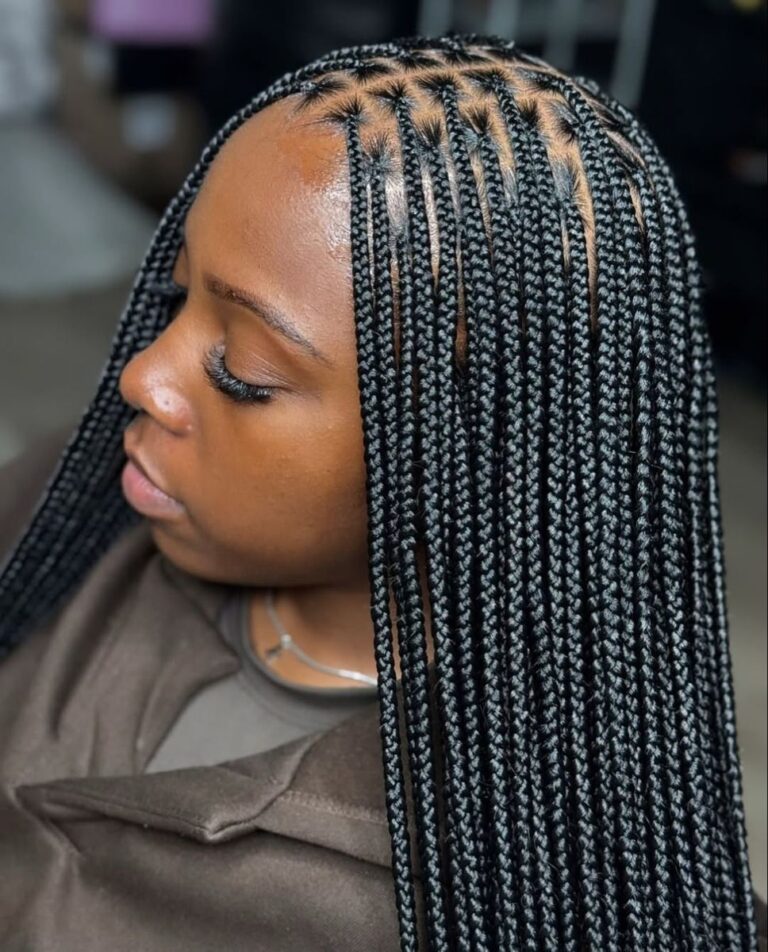
Let me be clear: tight box braids are NOT low tension. But loosely installed, medium-to-large box braids absolutely can be. The difference is the size of the section at the root and how firmly the extension is attached.
Ask your braider specifically for “large sections, no tension at the roots.” If your scalp hurts during or after installation, that’s too tight. A well installed loose box braid should feel weightless at the scalp and never pull the hairline. Size matters — larger braids mean less stress per follicle.
Practical tip: Never sleep with freshly installed braids without a satin scarf. The first 48 hours are when edge tension is highest.
7. Marley Twists (Large)
Source: @Instagram
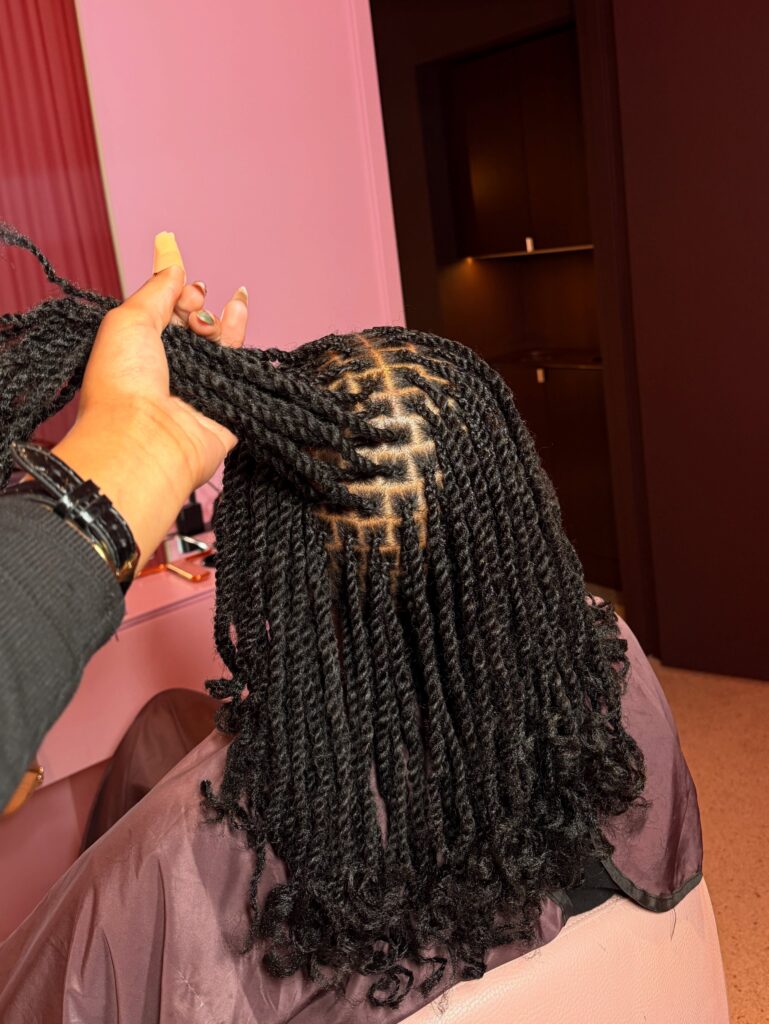
Marley twists use Marley or Afro textured extension hair to create full, voluminous twists that mimic the look of natural locs or large two-strand twists. The texture of Marley hair means it grips your natural hair gently — no tight wrapping required.
Large Marley twists installed loosely at the root are one of the most scalp friendly extension styles available. They also don’t require heat, glue, or heavy tension to attach. This style typically lasts 4–6 weeks with proper maintenance (scalp oiling and nightly wrapping).
Practical tip: Dip the ends of your Marley twists in hot water to seal and prevent unraveling — this keeps your style lasting longer without retouching.
8. Sisterlocks (Properly Installed)

Source: @Instagram
Sisterlocks are a specific, trademarked locking system that creates very small, uniform locs using a special tool — no glue, no harsh chemicals, no excessive tension. When installed by a certified Sisterlock consultant, they are genuinely low tension.
The key phrase here is “properly installed.” Sisterlocks installed by an untrained person can cause significant damage. Done right, they’re a lifetime protective style that promotes healthy scalp circulation and requires minimal daily manipulation. They’re a longer commitment (several hours for installation), but the low daily tension over years makes them a fantastic choice for long-term hair health.
Practical tip: Retightening frequency matters. Stick to the recommended schedule from your consultant — retightening too often or too infrequently both add unnecessary stress.
9. Loose French Braid

Source: @Instagram
The French braid doesn’t have to be a tension nightmare. A loose French braid — one where you add hair to the sections without pulling tightly to the scalp — is a beautiful low tension style that works on Type 2 through Type 4 hair.
Start from the nape or crown, adding sections loosely as you braid downward. Secure with a soft elastic. The “undone” look of a loose French braid is actually on-trend right now, and the relaxed tension means your edges and scalp stay happy all day long.
Practical tip: Never French braid on dirty hair about to be washed — product buildup mixed with tension increases breakage risk. Braid on freshly moisturized hair instead.
10. Crochet Braids (Large Patterns)

Source: @Instagram
Crochet braids use a latch hook to loop extension hair through cornrows. The key: the cornrows underneath should be loose and flat, and the crochet hair should hang freely without pulling. Large crochet patterns (Marley hair, water wave, loose curls) add the least weight and therefore the least downward tension on the scalp.
This is one of the most versatile low tension styles because the “look” can change completely with the type of extension hair used. Crochet braids protect your natural hair underneath completely, making them an excellent growth-retention style.
Practical tip: Keep your cornrow base moisturized with a nozzle-tip oil bottle throughout the wear period — dry cornrows = brittleness = breakage at takedown.
11. Space Buns

Source: @Instagram
Space buns are having a major moment — and they’re legitimately one of the most playful low tension styles for natural hair. Simply part your hair down the middle, gather each half into a loose bun, and pin softly. No sleek, pulled back edges required.
The natural texture version of space buns celebrates your curl pattern, letting baby hairs and flyaways frame your face freely. Use a satin scrunchie instead of a hair tie to prevent friction damage. This style works on all natural hair lengths from TWA (Teeny Weeny Afro) upwards.
Practical tip: Don’t part too precisely — a loose, organic part adds to the low tension approach and looks more relaxed and intentional.
12. Pineapple Updo

Source: @Instagram
The pineapple isn’t just a nighttime protective style — it’s a stunning daytime look in its own right. Gather all your hair loosely at the very top of your head and secure with a soft elastic or satin scrunchie, letting the curls or coils cascade freely downward.
Because the gathering happens at the crown — not at the nape or sides — this creates almost zero tension on the edges and sides of your head. It’s one of the only updo styles where your hairline is completely stress free. Perfect for humid days when you don’t want to fight frizz.
Practical tip: The higher you place the pineapple, the more elongated your curls will appear when they hang down — experiment with placement.
13. Flexi Rod Set

Source: @Instagram
A flexi rod set creates gorgeous defined spirals without heat and without tension. You simply wrap damp, product coated hair around a flexible foam rod, bend the ends to secure, and let dry. No clamps, no heat, no pulling.
The result is a set of beautiful uniform curls that mimic a roller set but with zero mechanical stress on the hair shaft. Flexi rod sets work on Type 3b through 4b hair and typically last 5–10 days. They’re one of the few curl defining methods that look equally good on day 1 and day 5.
Practical tip: Always work in sections from the bottom up, and use rods that match your desired curl size — thinner rods for tighter curls, thicker rods for looser waves.
14. Headband Braid (with Natural Hair)
Source: @Instagram
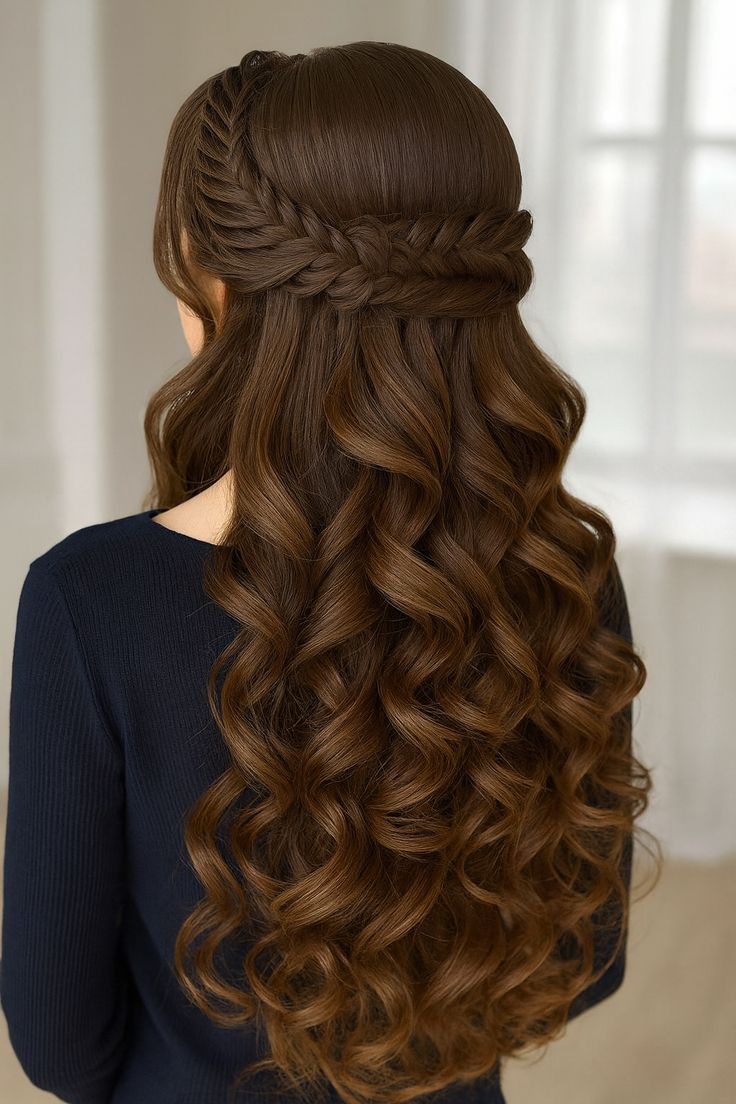
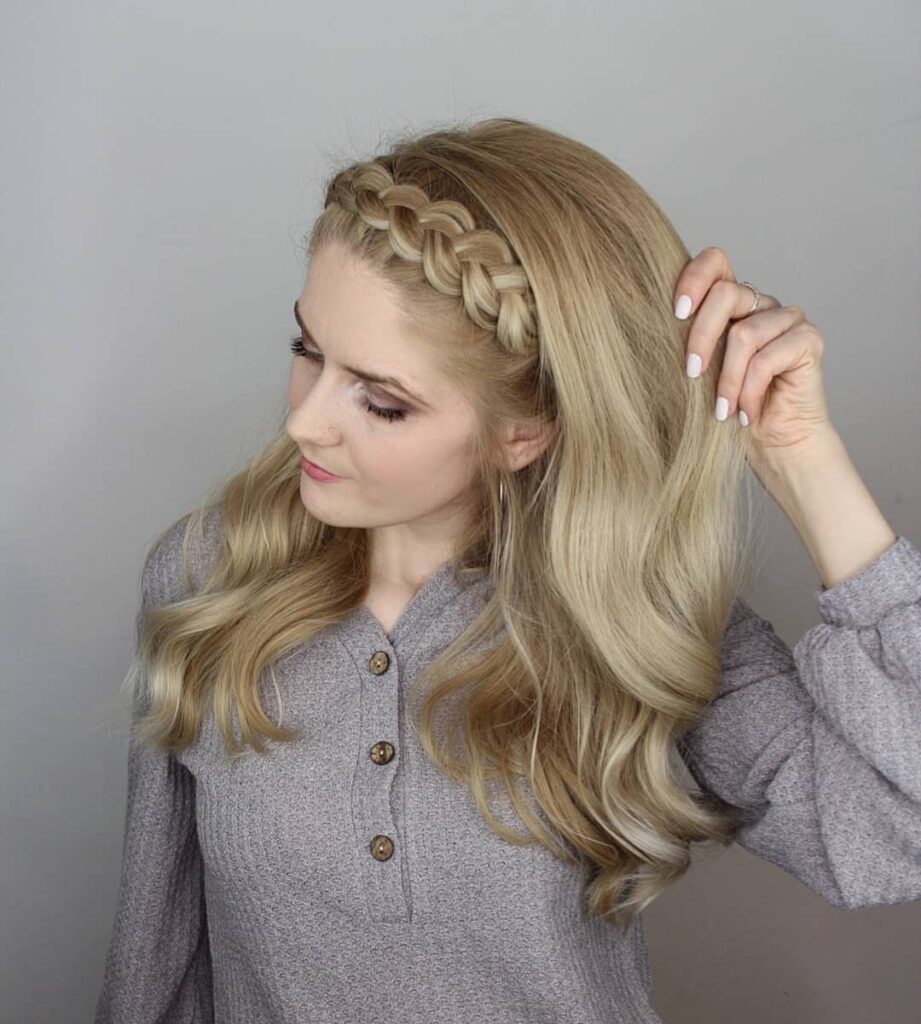
A headband braid uses a small section of your own natural hair braided loosely from one side of the head to the other, framing your face like a headband. The rest of your hair hangs freely or is gathered into a loose bun or puff behind it.
This is an incredibly low tension style because you’re only braiding a thin strip of hair and the rest of your length sits naturally. It adds immediate elegance to a simple wash-and-go or twist out, making it look like a fully styled look with minimal effort.
Practical tip: If your hair is too short for a full headband braid, use a small flat twist pinned from one ear to the other — same effect, just simpler execution.
15. The Tapered Natural Fro

Source: @Instagram
The tapered natural fro — shorter on the sides and fuller at the top — is a style through shape, requiring zero daily tension. Once you achieve the shape through a professional cut, your daily routine is simply moisturize, fluff, and go.
No pulling, no braiding, no extensions. The tapered fro celebrates natural curl pattern at its most unmanipulated. It suits all face shapes, especially oval and heart-shaped faces where the fullness at the crown balances facial proportions. This style is a phenomenal long-term choice for hair health.
Practical tip: Refresh daily with a water-based leave in conditioner and a light oil seal to keep the fro moisturized and shaped without using any heat.
16. Locs (Freeform)

Source: @Instagram
Freeform locs are one of the most zero-tension styles that exist once they’ve matured. Unlike traditional maintained locs, freeform locs are allowed to develop naturally — sections join together organically without palm-rolling, re-twisting, or interlocking at the root.
The result is a uniquely organic set of locs that experience almost no mechanical stress during the maturing process. Freeform locs are not “unkempt” — they’re intentional. They just follow the natural behavior of the hair rather than forcing a uniform pattern.
Practical tip: The early stages of freeform locs require patience. Keep a clean, moisturized scalp, and avoid manipulation. Let time do the work.
17. Braid Out on Chunky Sections

Source: @Instagram
The braid out is similar to a twist-out but uses three strand braiding instead of two strand twisting. Done in large, chunky sections (6–8 braids across the entire head), it creates a gorgeous crimped texture with minimal tension.
Section the hair, apply a moisturizing product, braid loosely from root to tip, and unravel after 24 hours for a defined, textured look. The chunky sections mean less overall braiding, less time spent manipulating the hair, and a more voluminous result. This is a great weekend style that sets up effortlessly.
Practical tip: Braid outs on stretched hair (after a banding method) give you more length and less shrinkage in the final result.
Quick Comparison Table: 17 Low Tension Natural Hairstyles at a Glance
Style Overview: Time, Duration & Hair Type
| # | Style | Install Time | Lasts | Best For Hair Type | Tension Level |
|---|---|---|---|---|---|
| 1 | Loose Twist-Out | 30–60 min | 5–7 days | 3c–4c | Very Low |
| 2 | Bantu Knot-Out | 30–45 min | 4–6 days | 4a–4c | Very Low |
| 3 | Flat Twist Updo | 20–40 min | 2–5 days | 3b–4b | Low |
| 4 | Finger Coils | 60–90 min | 7–14 days | 4a–4c | None |
| 5 | Wash-and-Go Puff | 15–20 min | 3–5 days | 3a–4a | None |
| 6 | Loose Box Braids (Large) | 3–6 hrs | 4–8 weeks | All Types | Low (if done correctly) |
| 7 | Marley Twists (Large) | 2–4 hrs | 4–6 weeks | 4a–4c | Low |
| 8 | Sisterlocks | 8–16 hrs | Permanent | 3c–4c | Very Low (when certified) |
| 9 | Loose French Braid | 10–15 min | 1–3 days | 2b–4b | Low |
| 10 | Crochet Braids (Large) | 1–3 hrs | 3–6 weeks | All Types | Low |
| 11 | Space Buns | 5–10 min | 1–2 days | All Types | Very Low |
| 12 | Pineapple Updo | 2–5 min | 1 day | 3a–4c | None |
| 13 | Flexi Rod Set | 45–90 min | 5–10 days | 3b–4b | None |
| 14 | Headband Braid | 10–15 min | 1–3 days | 3a–4c | Very Low |
| 15 | Tapered Natural Fro | 0 min daily | Ongoing | All Types | None |
| 16 | Freeform Locs | 0 min daily | Permanent | 3c–4c | None |
| 17 | Chunky Braid-Out | 20–40 min | 4–6 days | 3b–4c | Very Low |
Common Mistakes — and How to Avoid Them
Even the most careful naturalistas fall into these traps. I’ve made most of these myself, so no judgment here.
1. Installing styles on dry, unmoistured hair This is the number one mistake. Tension (even low tension) on brittle, dehydrated hair leads to breakage. Always start with moisturized, detangled hair. The LOC (Liquid, Oil, Cream) method before any style installation is a non-negotiable.
2. Ignoring scalp pain as “normal” Pain is never just part of the process. If your scalp aches, burns, or feels tight after styling, that’s your body signaling traction. Loosen the style, massage the scalp with a diluted peppermint oil blend, and let it breathe for a day.
3. Sleeping without protection Even the loosest style can be disrupted by friction against cotton pillowcases. A satin bonnet or satin pillowcase is mandatory for extending your style and preventing unnecessary mechanical damage overnight.
4. Keeping styles too long Protective styles left in too long become traps for shed hair. That shed hair, tangled up in your style, leads to matting and breakage at takedown. The general rule: even the best low tension style should come down by the 8-week mark, regardless of how it looks.
5. Using too much product Heavy product buildup weighs down the hair shaft and makes takedown harder, leading to increased pulling at removal. Less is almost always more — especially for low tension styles where you want the hair to behave naturally.
6. Re-doing styles too frequently Some naturals get anxious and re-do their styles every few days, thinking they’re “keeping things neat.” But constant manipulation — even gentle manipulation — adds up. Commit to a style for at least 3–5 days before touching it again.
Similar Variations Worth Knowing
If you love a specific style above, here are close relatives worth exploring:
- Twist-Out → Braid-Out: Similar vibe, slightly different texture
- Finger Coils → Shingling: Shingling uses your palm to smooth product-loaded hair into coils; great for very tight patterns
- Bantu Knots → Pin Curls: Same principle, works on looser curl types
- Flat Twist → Ghana Braids (loose): More intricate patterning with similar scalp pressure
- Pineapple Puff → Top Knot Bun: For longer hair, a high top knot achieves the same zero-edge-tension effect
- Freeform Locs → Butterfly Locs: A temporary locking style using extension hair; low tension when installed loosely
Hair Care Tips for Low Tension Natural Hairstyles
Adopting a low tension approach to styling only goes halfway. Your overall hair care routine needs to support the mission too.
Moisturize consistently. Natural hair (especially Type 4) loses moisture quickly. Spritz with a water-based leave-in every 2–3 days while in a low tension style to prevent dryness-related breakage.
Oil your scalp, not just your hair. Jojoba, castor, or sweet almond oil massaged lightly into the scalp improves circulation and keeps follicles nourished — particularly important when hair is in a resting state under a protective style.
Clarify monthly. Buildup from styling products clogs follicles and contributes to scalp inflammation. Use a clarifying shampoo or an apple cider vinegar rinse once a month to keep the scalp clean without stripping moisture.
Detangle gently, always. Use your fingers first, then a wide-tooth comb on soaking-wet, conditioner-saturated hair. Never dry-detangle. This single habit can cut your breakage by more than half.
Protein-moisture balance matters. If your hair is feeling overly mushy or overly brittle, you’re out of balance. Alternate deep moisture treatments with light protein treatments (like a rice water rinse) every 2–4 weeks to maintain strand integrity.
Protect at night, always. Satin bonnet. Silk pillowcase. Pineapple method. Choose one and commit to it every single night. Your styles will last longer and your ends will thank you.
Outro
Low tension natural hairstyles aren’t just a styling trend — they’re a commitment to treating your hair with the care it deserves. From the effortless finger coil to the freedom of a freeform loc journey, there are 17 genuinely beautiful ways to protect your hair while still showing up looking incredible. The best part? Once you shift away from tight styles, you’ll likely start noticing real improvements: fuller edges, less breakage, and longer retained length over time. Your natural hair journey is your own — start it with kindness, and these low tension natural hairstyles will take you far.