
16 Low Tension Curly Hairstyles That Protect Your Curls Without Sacrificing Style
If you’ve been dealing with thinning edges, breakage, or a tender scalp, low tension curly hairstyles might be the single most important thing you read today. I’ve spent years studying natural hair care, and the number one silent destroyer of curly hair health isn’t dryness or heat — it’s tension. Chronic pulling, tight bands, and overly snug styles quietly damage the hair follicle until the breakage becomes impossible to ignore.
So what are low tension curly hairstyles? Low tension curly hairstyles are styles that place minimal mechanical stress on the hair shaft and scalp. They avoid tight bands, heavy extensions, and taut manipulation, reducing traction alopecia risk while keeping curls defined and healthy.
Read on — because I’m covering 16 specific low-tension styles with product guidance, a full comparison table by curl type, the most common tension mistakes people make without realizing it, and a hair care routine built specifically for curly textures under stress.
Why Low Tension Styling Is Non-Negotiable for Curly Hair
Curly hair — particularly 3C through 4C textures — is structurally more fragile than straight hair at the point where the curl bends. Every tight braid, strained ponytail, or aggressive pull concentrates mechanical force at those bend points, weakening the strand over time. Add daily repetition and you have a recipe for breakage, follicle fatigue, and eventually traction alopecia — a form of hair loss that starts at the edges and temples.
The good news? You don’t have to choose between protecting your hair and looking incredible. These 16 low tension curly hairstyles prove that the most beautiful styles are also the gentlest ones.
16 Low Tension Curly Hairstyles
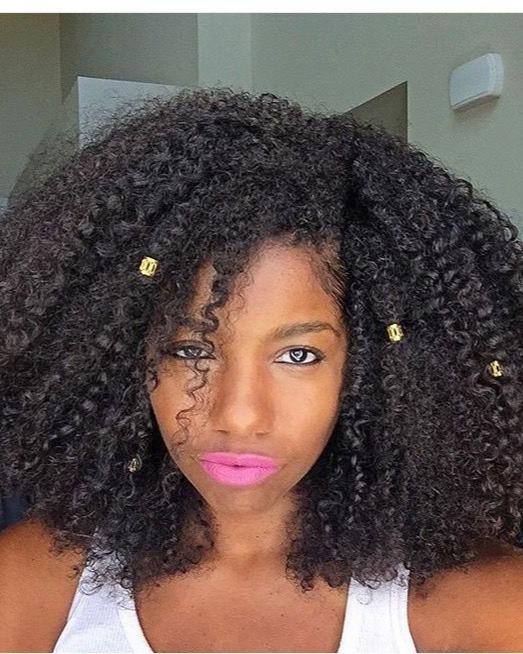
1. The Wash and Go
Source: @Instagram
The wash and go is the ultimate low-tension style — because there is no tension at all. You wash, apply product, and let your curl pattern do everything. No bands, no pins, no pulling. Just your natural texture expressed freely. The key to a great wash and go is layering products on soaking wet hair: start with a water-based leave in conditioner, follow with a curl cream for clumping, and seal with a light gel for hold. The “squish to condish” technique — cupping handfuls of hair and squishing upward — encourages curl definition without manipulation. Diffuse on low heat or air dry, and avoid touching the hair until it’s fully dry to prevent frizz. This style suits all curl types but is especially spectacular on 3A through 4A patterns.
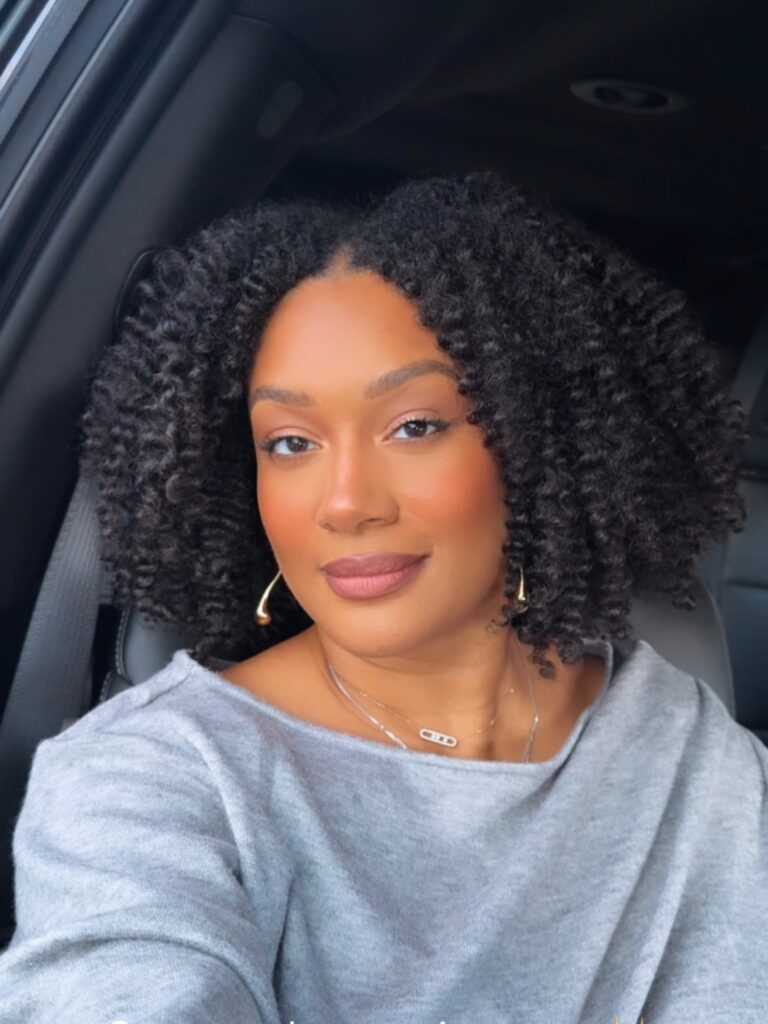
2. Loose Twist Out
Source: @Instagram
The twist out delivers defined, stretched curls without a single tight moment in the process. Two strand twists are installed with loose tension — think “gentle wrap,” not “tight coil” — and left to set overnight under a satin bonnet. When released in the morning, the result is elongated, voluminous curls with beautiful separation. The looser you install the twists, the less tension on the scalp and the bigger, fluffier the result. For added moisture retention, apply a curl cream followed by a light oil before twisting. This style lasts 3 to 5 days with a nightly bonnet routine, making it one of the most practical low-tension options for busy schedules.
3. Pineapple Updo
Source: @Instagram
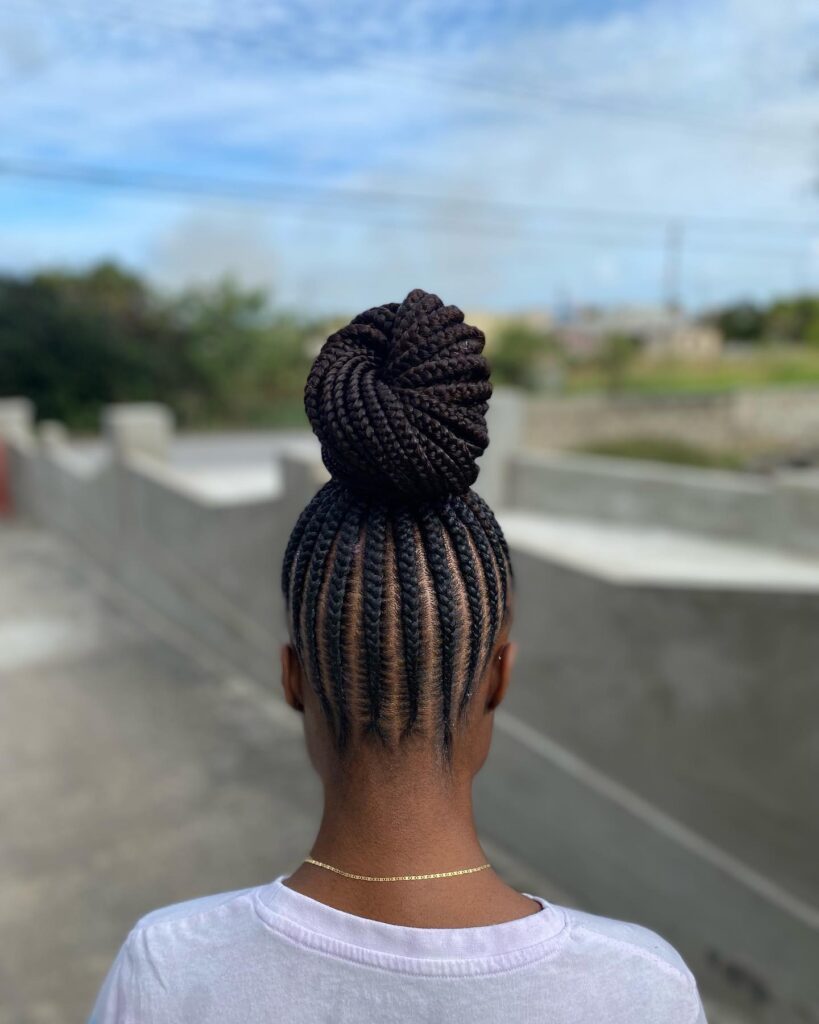
The pineapple is exactly what it sounds like — all your curls gathered loosely at the very top of the head and secured with a stretched scrunchie or soft fabric hair tie. No tight band. No plastic clip. The goal is to keep the curls off your neck and out of your face while preserving their shape overnight or during workouts. The key word here is loose. The pineapple should feel like it could almost fall out on its own — that’s when you know the tension is low enough. Use a satin scrunchie or a velvet hair tie to avoid friction and creasing. This style is a protective night routine staple, not a daytime look, but it directly improves how your curls look the next morning.
4. Low Loose Bun

Source: @Instagram
A low bun placed at the nape of the neck — rather than at the crown — dramatically reduces the tension placed on the hairline and edges. Gather your curls with your hands (no brush dragging) into a loose bundle at the nape, secure with a soft scrunchie, and gently release a few curls at the front for a relaxed, elegant finish. The low placement means gravity isn’t pulling your curls against the direction of growth, which is the primary cause of edge thinning with high buns. Add a decorative clip, a silk scarf, or a pearl pin for a polished result. This style works on 2C through 4B curl types and is genuinely office-appropriate.
5. Bantu Knots

Source: @Instagram
Traditional Bantu knots can be installed too tightly — Small sections of hair are coiled loosely around themselves into a knot shape and secured with a soft hair tie or bobby pin rather than stretched bands. The knots protect the ends (the oldest and most fragile part of your hair) while the looseness prevents scalp soreness. Left in for 6 to 8 hours or overnight, they release into gorgeous, defined spiral curls. The size of the knot determines the size of the resulting curl — smaller knots create tighter spirals, larger knots create loose waves.
6. Finger Coils
Source: @Instagram
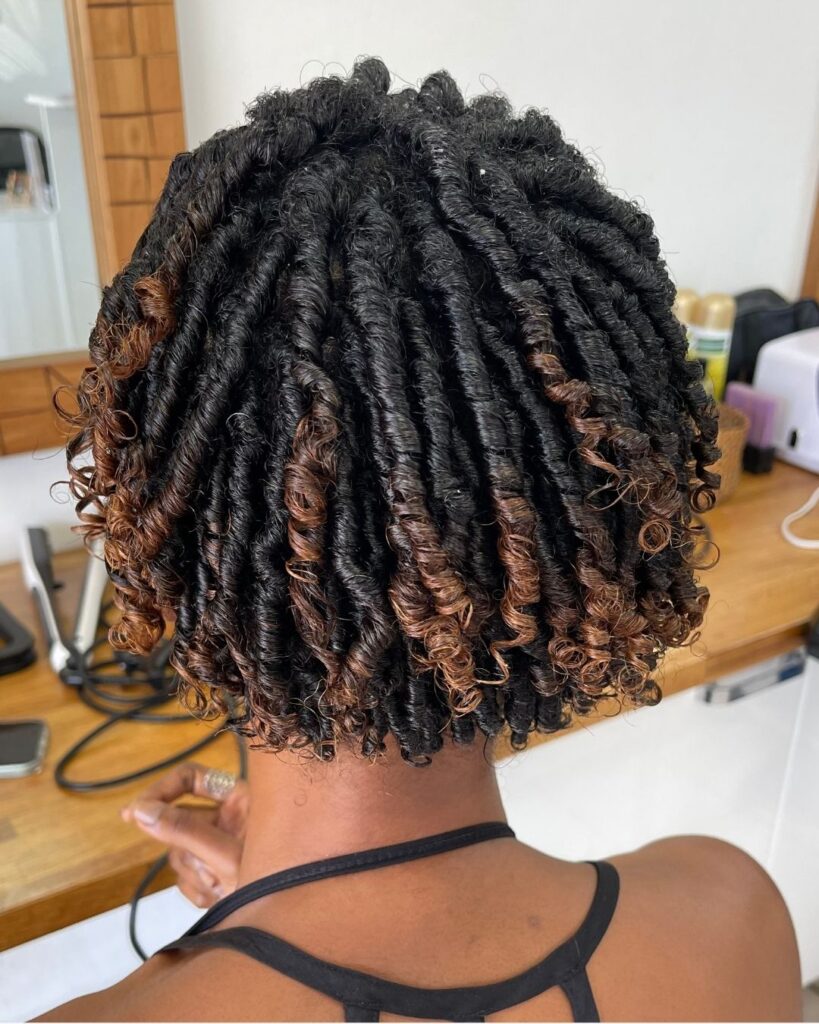
Finger coiling is the most hands on low tension style on this list, but once you understand it, it’s also one of the most rewarding. Each small section of wet hair is wrapped around a finger while a curl cream or gel is applied, then released to set. The result is uniform, beautifully defined coils across the entire head. There are no bands, no pins, and no tight manipulation — just your fingers guiding each strand. Finger coils work best on 3C to 4C curl types and are particularly effective on hair that struggles to clump naturally. They last 3 to 7 days and refresh beautifully with a light water-glycerin spray mist.
7. Halo Braid (Loose Version)
Source: @Instagram
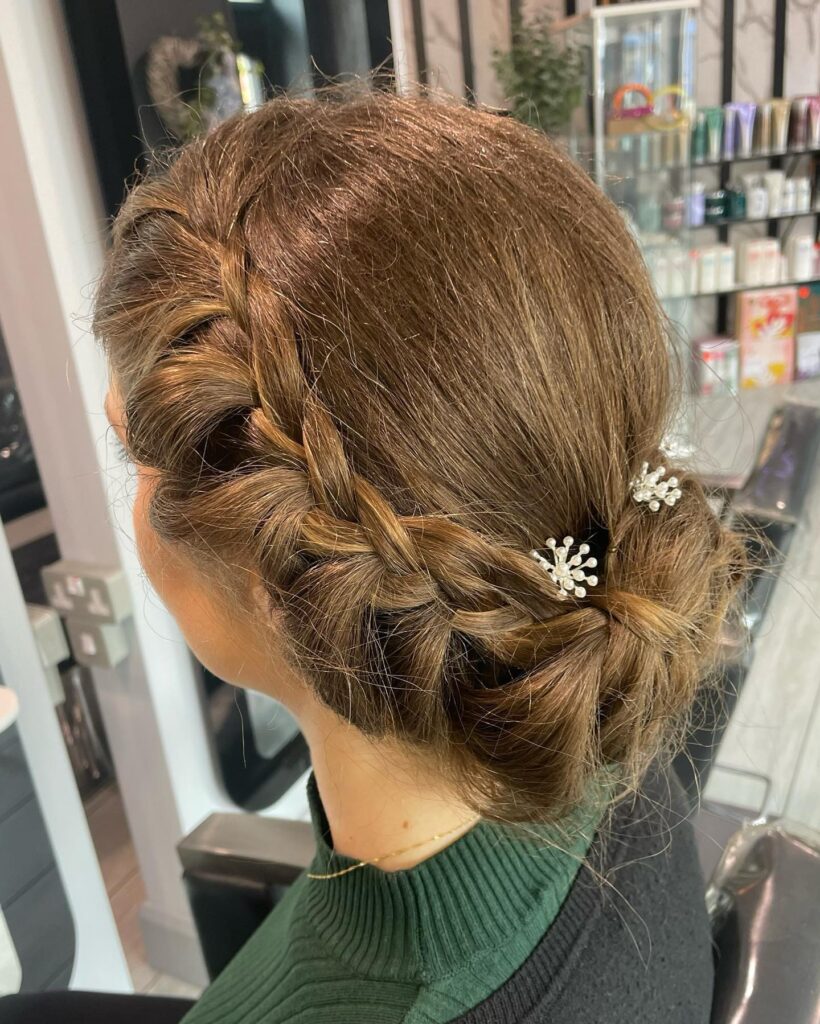
The halo braid — a single braid that wraps around the crown of the head like a crown — can be protective and low-tension when done loosely with no added extensions. The braid sits along the hairline without pulling it, and the sections are thick enough that the tension is distributed across many strands rather than concentrated on a few. Add a satin hair liner underneath for zero friction on the scalp. Style it with a few loose curls released at the nape or temples for a romantic, editorial finish. This is one of the most universally flattering low-tension styles and works beautifully on 3A through 4A curl types with length past shoulder height.
8. Flat Twist Out

Source: @Instagram
The flat twist out is the two dimensional sister of the twist-out. Instead of free hanging twists, flat twists lie against the scalp in rows and are secured at the end without pulling. The scalp portion sits flat with minimal tension, while the length hangs freely. When released, you get a combination of volume at the roots and defined curl texture through the length. This style is particularly flattering on 4A to 4C hair types that want definition with a bit of root stretch. The flatter installation at the scalp means even less tension than a traditional twist-out — making it a top pick for anyone actively managing edge thinning or scalp sensitivity.
9. Loose Box Braids (Knotless)

Source: @Instagram
Traditional box braids begin with a knot at the root — and that knot is exactly where the tension concentrates. Knotless box braids, by contrast, begin with your own natural hair and gradually incorporate extensions as the braid continues downward. The result is the same beautiful braid with dramatically less weight and tension at the scalp. Keep the braids medium to large in size (smaller braids = more weight per section = more tension), use lightweight extensions, and avoid leaving them in longer than 6 to 8 weeks. This is one of the best semi-permanent low-tension protective styles for 3C through 4C hair types.
10. Stretched Wash and Go with African Threading

Source: @myfunkyafro
African threading is an ancient hair stretching technique where thread is wrapped around sections of damp hair from root to tip, then left to dry. When removed, the hair is dramatically elongated without heat damage or tension — just the weight of the thread guiding the curl downward as it dries. The resulting stretched wash and go has more length, less shrinkage, and a beautiful flowing texture. It’s a particularly powerful technique for 4B and 4C hair types where shrinkage can be 70 to 80% of the total hair length. Threading exerts no pulling force on the scalp and protects the strands by keeping them straight while wet and fragile.
11. Chunky Curly Puff

Source: @Pinterest
The puff is a natural hair classic — but done with intention, it becomes a genuine low tension style. A chunky curly puff gathers the hair loosely at the crown (or sides, or back) using a very large, soft scrunchie positioned as loosely as possible. The “chunky” part means you’re not smoothing or slicking the edges — you’re letting the curls maintain their natural texture all the way to the root. Edge taming is optional and done with a light gel on damp hair only (never dry). No gel brush dragged tightly along the hairline. The result is a full, airy, voluminous puff that celebrates shrinkage rather than fighting it.
12. Side Swept Loose Curls

Source: @Instagram
This style requires zero products, zero tools, and zero tension — just gravity and your curl pattern doing what they naturally do. Using your fingers (never a brush on dry curly hair), loosely gather your curls to one side and clip or pin them at the ear using a flat, smooth barrette or a silk scrunchie. A few curls released at the front and around the face soften the look beautifully. The side sweep adds visual asymmetry that feels purposeful and chic, while keeping all the hair away from the face without any pulling. This is the ultimate “I’m running 10 minutes late” low tension style that still looks polished.
13. Low Space Buns

Source: @Instagram
Two small buns placed low — at or below ear level — on either side of the head are exponentially gentler on the scalp than a single high bun or top knot. The lower placement means less gravitational pull on the hairline, and splitting the hair into two sections reduces the weight each anchor point must support. Use soft velvet scrunchies and secure loosely. Leave a few curls loose around the face for a playful, youthful feel. This style works from the gym to a casual workday and suits 2C through 4B curl types with medium to long hair length. It’s particularly popular among teenagers and young adults who want something cute without the scalp soreness that comes from tighter styles.
14. Loose Locs (Faux Locs — Lightweight)

Source: @Instagram
Lightweight faux locs — installed without heavy extension hair, using only thin wrapping yarn or very light synthetic hair — can be a genuinely low-tension protective style when done by an experienced stylist. The key is the weight: overly heavy or overly long faux locs place significant strain on each attachment point. Keep the length to mid-back or shorter, use lightweight materials, and have them installed with minimal root tension. This style protects the natural hair completely for 4 to 8 weeks and requires minimal daily manipulation. When installed correctly, they feel almost weightless and allow the scalp to breathe freely.
15. Satin Wrapped Curls

Source: @Instagram
The satin wrap isn’t a style in the traditional sense — it’s a method of maintaining your existing style with zero additional tension. After styling your curls, a large piece of satin fabric (or a satin bonnet) is placed over the hair and tied loosely at the front. The smooth surface eliminates friction against pillowcases and clothing throughout the day. Worn as an actual daytime style (with a decorative wrap in a bold color or print), the satin wrap has become a runway inspired look embraced in natural hair communities worldwide. It protects the hair completely while being one of the most tension-free options possible.
16. Chunky Twist Puff
Source: @Instagram
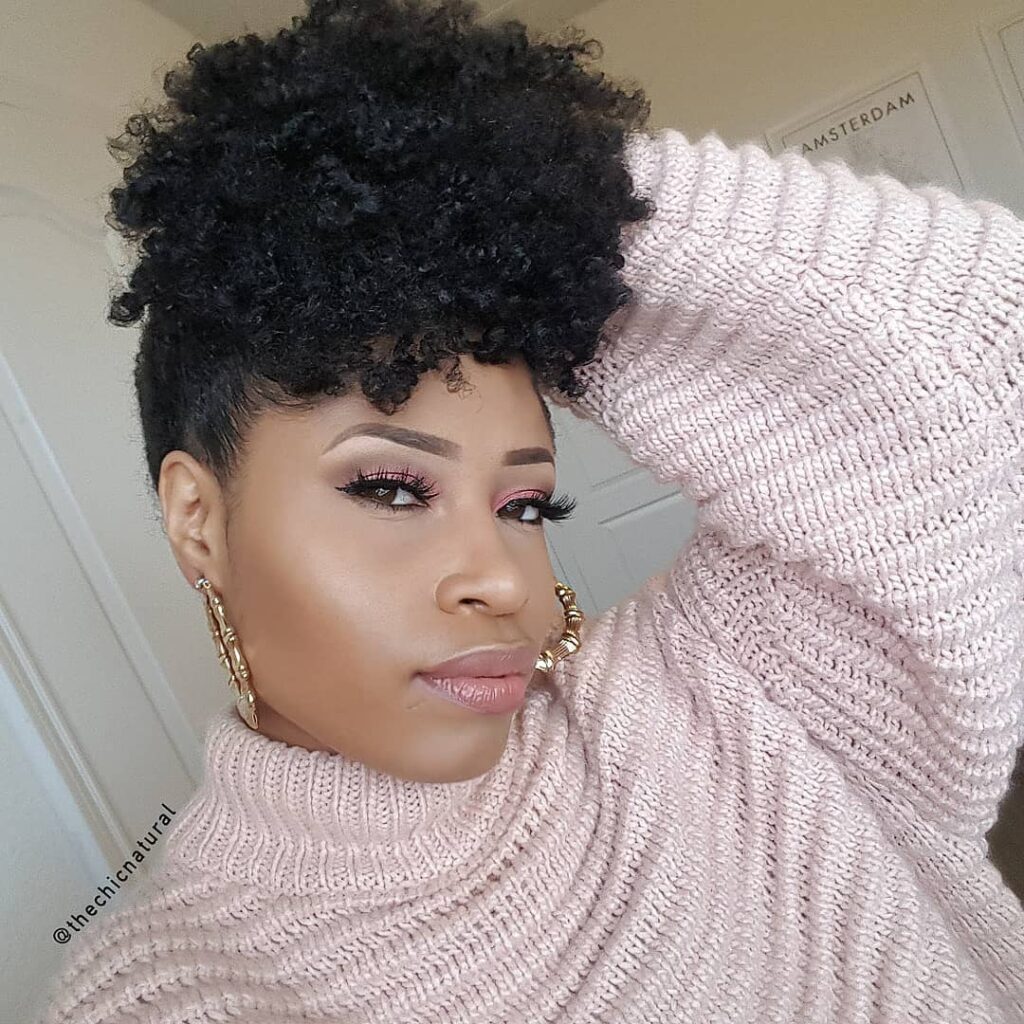
This hybrid style combines the elongation of large two strand twists with the voluminous finish of a puff. The front sections of the hair are twisted loosely in large sections and gathered back into the puff, while the crown and back of the hair are left loose in their natural curl pattern. The twists at the front lay flat with minimal tension, adding definition and shape to the hairline area — a great solution for women whose edges are recovering and can’t withstand even the lightest edge control. The puff sits loosely at the crown or back, secured with a soft band. The contrast between the defined front twists and the voluminous puff creates a look that’s genuinely architectural and unique.
Low Tension Style Comparison Table
Which Style Is Right for Your Curl Type and Lifestyle?
| Style | Best Curl Type | Tension Level | Duration | Daily Maintenance | Best For |
|---|---|---|---|---|---|
| Wash and Go | 3A–4A | Zero | 1–3 days | Low | Daily wear, beginners |
| Loose Twist Out | 3C–4C | Very Low | 3–5 days | Low | Stretched definition |
| Pineapple Updo | All types | Very Low | Overnight | None | Night protection |
| Low Loose Bun | 2C–4B | Low | 1 day | None | Office, events |
| Loose Bantu Knots | 3C–4C | Very Low | 6–8 hrs set | None | Curl definition |
| Finger Coils | 3C–4C | Low | 3–7 days | Low | Defined curl pattern |
| Loose Halo Braid | 3A–4A | Low | 1–2 days | None | Protective + elegant |
| Flat Twist Out | 4A–4C | Very Low | 3–5 days | Low | Edge-thinning recovery |
| Knotless Box Braids | 3C–4C | Low | 6–8 weeks | Low | Long-term protection |
| African Threading Stretch | 4B–4C | Zero | 1 session | None | Shrinkage reduction |
| Chunky Curl Puff | 3B–4C | Low | 1–2 days | None | Quick, casual |
| Side Swept Loose Curls | 2C–4B | Zero | 1 day | None | Last-minute styling |
| Low Space Buns | 2C–4B | Low | 1 day | None | Active, fun looks |
| Lightweight Faux Locs | 3C–4C | Low–Medium | 4–8 weeks | Low | Long-term protection |
| Satin Wrapped Curls | All types | Zero | Any | None | Daily + nighttime |
| Chunky Twist Puff Combo | 3C–4C | Very Low | 2–3 days | Low | Edge recovery |
Tension Level vs. Hair Loss Risk: What the Research Says
Understanding Traction Alopecia Risk by Style Type
| Tension Category | Style Examples | Alopecia Risk Level | Recovery Timeline |
|---|---|---|---|
| Zero tension | Wash-and-go, satin wrap, African threading | Negligible | N/A |
| Very low tension | Loose twist-out, bantu knots, flat twist-out | Very Low | Days |
| Low tension | Knotless braids, finger coils, low bun | Low | Weeks |
| Moderate tension | Traditional box braids, tight buns | Moderate | 1–3 months |
| High tension | Tight ponytails, traditional box braids (small), extensions on fine hair | High | 3–12 months+ |
| Chronic high tension | Daily tight styles without breaks | Severe risk | May be permanent |
Common Mistakes That Add Hidden Tension
1. Using the wrong hair tie. Standard rubber bands and thin elastics are the most common source of hidden edge breakage. They grip too tightly, create friction, and can tear strands when removed. Replace every rubber band and thin elastic in your life with silk scrunchies, velvet scrunchies, or seamless spiral ties. This single swap reduces tension significantly.
2. Installing styles on dry hair. Curly hair is most elastic when wet and most fragile when dry. Detangling, twisting, or braiding dry curly hair dramatically increases the tension required to manipulate each section. Always work with damp or well-moisturized hair. Apply a detangling leave-in before any manipulation.
3. Sleeping without protection. Even a loose style creates friction against a cotton pillowcase overnight — and that friction cumulates into breakage, frizz, and edge thinning over time. A satin bonnet or silk pillowcase is non-negotiable. This is especially true for 4B and 4C hair types that are most vulnerable to overnight friction.
4. Over-tightening “just the edges.” Many people install the rest of a style loosely but pull the hairline sections taut to achieve a “sleek” look. The hairline is where follicles are most delicate. Traction alopecia almost always begins here. Let the edges lay naturally, or use a light gel on damp hair only — never pull or stretch them tight.
5. Leaving protective styles in too long. Even the gentlest protective style becomes a tension problem after too long. Hair shed inside the style tangles with installed hair and creates tension when you eventually detangle. Knotless braids and faux locs should come out by week 8 at the absolute latest.
6. Using a brush on dry curly hair. A brush on dry curly hair doesn’t detangle — it tears. Every broken curl is a strand removed before its time. Use a wide-tooth comb or your fingers on damp, conditioned hair only. For daily refreshing, hands only.
Similar Variations Worth Exploring
- Stretched Braid-Out: Similar to a twist-out but uses three-strand braids for a more defined, angular wave pattern. Equally low-tension when installed loosely.
- Shingling: A wash-and-go technique where each curl is individually coated with product using a smooth, downward stroke. More defined than a standard wash-and-go with the same zero-tension profile.
- Flat Twists into a Puff: A combination style where the crown is flat-twisted back and gathered into a puff at the back — less tension than a full flat twist-out and a great transition look.
- Rod Sets (Flexi-Rods or Perm Rods): Rollers placed on damp hair without heat, creating uniform curls across the head. Completely tension-free and particularly good for 4A–4C hair types who want a consistent curl pattern.
- Two-Strand Twists (Worn as a Style): Instead of releasing twists into a twist-out, wearing the twists themselves as a finished style. They sit loosely, protect the ends, and require zero daily manipulation.
Hair Care Tips for Low Tension Curly Hairstyles
Great low-tension styling starts before you even pick a style. Here’s how to build the hair health that makes every style look better and last longer:
Prioritize Moisture Above Everything Dry hair is brittle hair — and brittle hair breaks under even the lightest tension. The goal is to maintain moisture in your hair at all times. Use a hydrating shampoo, follow with a moisturizing conditioner every wash day, and apply a leave-in immediately after rinsing while hair is still dripping wet. Seal with a light oil to lock that moisture in.
Scalp Health Is Hair Health A healthy scalp grows healthy hair. Massage your scalp gently with your fingertips (never your nails) for 3 to 5 minutes on wash day to stimulate blood circulation to the follicles. Use a scalp oil with peppermint or tea tree if you experience buildup or sensitivity. A clean, well-nourished scalp is your best long-term investment.
Protein and Moisture Balance Curly hair needs both protein (to maintain strength and elasticity) and moisture (to maintain softness and flexibility). Too much protein makes hair stiff and prone to breakage. Too much moisture makes it mushy and limp. Alternate between a moisture-focused deep conditioner and a light protein treatment every two weeks to keep the balance right.
Detangle Only When Wet Detangling dry curly hair causes breakage — period. Always detangle on freshly washed, generously conditioned hair. Work in small sections from the ends upward using a wide-tooth comb or your fingers. Never force through a knot; add more conditioner and work gently until it releases.
Take Style Breaks Even the most protective low-tension style needs a break period. After 6 to 8 weeks in any installed style, give your hair 1 to 2 weeks of free, unmanipulated styling before reinstalling. This allows the scalp to breathe, gives you a chance to assess the health of your hair, and prevents the cumulative tension that even gentle styles can build over time.
Trim Regularly Split ends travel up the hair shaft and cause more breakage over time. A small trim every 8 to 12 weeks removes damaged ends before they become damaged inches. This is especially important for natural and curly hair, where split ends can cause single-strand knots (SSKs) — tiny knots that tangle with surrounding strands and create tension all on their own.
Outro
Low tension curly hairstyles aren’t just a trend — they’re a long-term investment in the health and longevity of your hair. Whether you’re recovering from traction alopecia, protecting fragile edges, or simply choosing to treat your curls with more care, every style on this list gives you something beautiful to wear without the cost of breakage.
The truth is, the healthiest hair I’ve ever seen belongs to women who stopped fighting their texture and started working with it. Loose twists, soft scrunchies, satin bonnets, gentle hands — these aren’t limitations. They’re the secret. I hope this guide helps you build a styling routine that keeps your low tension curly hairstyles looking their absolute best, today and for years to come.