15 How to Get Wavy Hair Overnight (No Heat, No Hassle)
Ever gone to bed with flat, straight hair and woken up wishing you’d somehow woken up with gorgeous, effortless waves instead? That’s not a fantasy — it’s genuinely achievable, and learning how to get wavy hair overnight is one of the best low-effort, no-heat style tricks out there.
So, how do you get wavy hair overnight? You can get wavy hair overnight by sleeping with damp hair in braids, twists, buns, or rag curls. The hair dries in a bent or coiled shape, creating waves by morning. Results depend on hair type, dampness level, and technique used.
Stay with me — I’ve broken down 15 specific methods ranked by wave intensity, put together a full comparison table by hair type, covered the most common overnight wave mistakes people make, and added the hair care tips that make every technique work better.
Why Overnight Waves Work (The Science in Plain Terms)
Here’s the simple version: hair is most moldable when it’s wet or damp. When you shape damp hair into bends and hold it there while it dries overnight, the hair sets into those bends. When you release it in the morning, those bends become waves. The tighter the bend, the tighter the wave. The looser the bend, the more relaxed the wave. No heat required. No damage. Just physics doing the work while you sleep. The key — and this is where most people go wrong — is that the hair needs to be damp, not soaking wet. Soaking wet hair won’t dry fully overnight and leads to frizz and a barely-there wave. More on that below.
15 Methods to Get Wavy Hair Overnight
1. Two Braids (The Classic Method)
Source: @Instagram
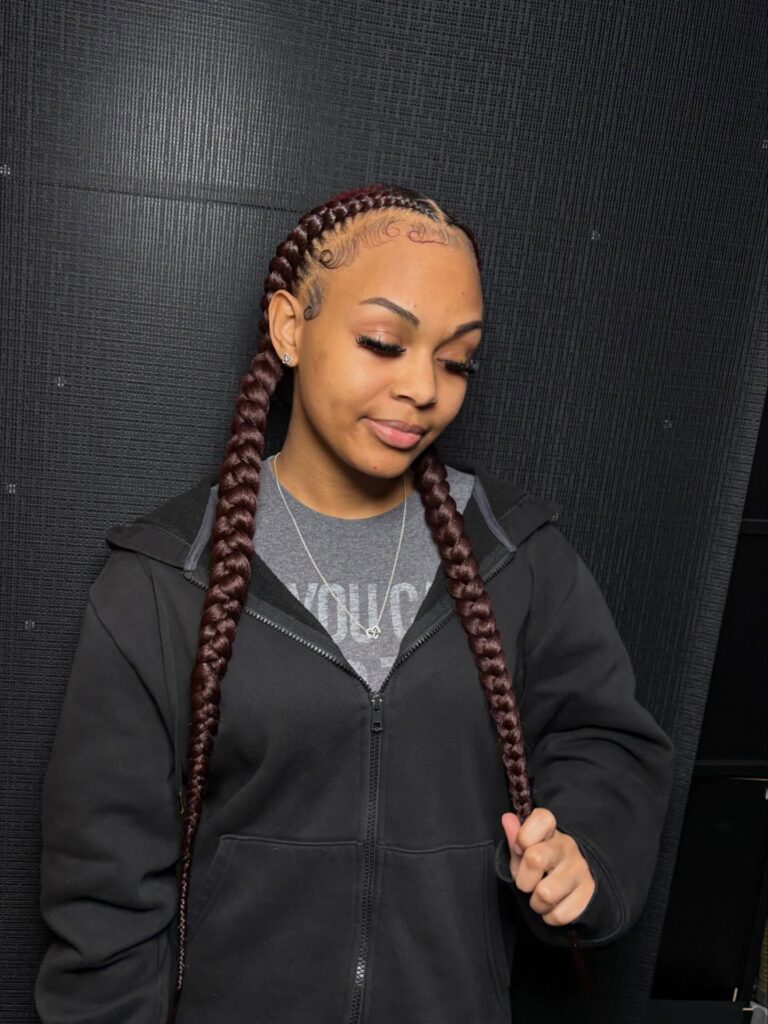
Two braids overnight is probably the most widely known method for getting wavy hair without heat — and it remains one of the best because it’s reliable, beginner-friendly, and produces beautiful, even waves from root to tip. Wash your hair, towel dry until damp (not wet), apply a light leave-in conditioner or mousse, then divide into two sections and braid each side as you normally would. Secure with soft elastics. In the morning, gently undo the braids, separate the waves carefully with your fingers (not a brush), and finish with a light-hold spray. The tighter the braid, the crimpier the wave. A loose braid creates a gentle, beachy S-wave. Works brilliantly on straight and fine hair types.
2. Three or Four Braids for More Defined Waves
Source: @Instagram
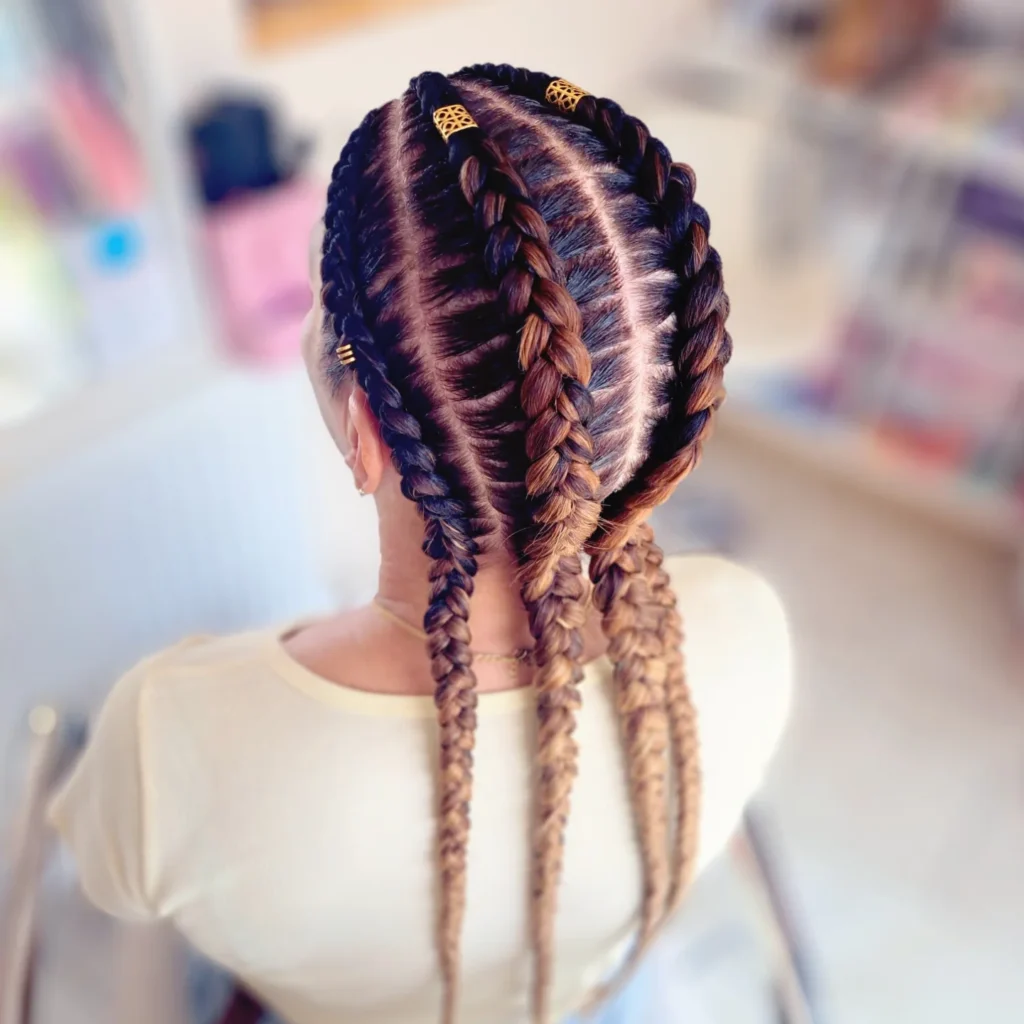
More braids equal more waves — it’s that simple. Instead of two large braids, divide the hair into three or four sections and braid each one. The additional sections create more distinct wave patterns that are closer together, giving the finished look more volume and a fuller, more textured result. This method works especially well on thick hair that tends to produce looser results from just two braids. Apply a curl-enhancing cream before braiding if you want extra definition. This is a great technique for anyone who’s tried two braids and found the waves too subtle — more sections give the hair more opportunity to set.
3. Overnight Buns (Heatless Curls Method)

Source: @Instagram
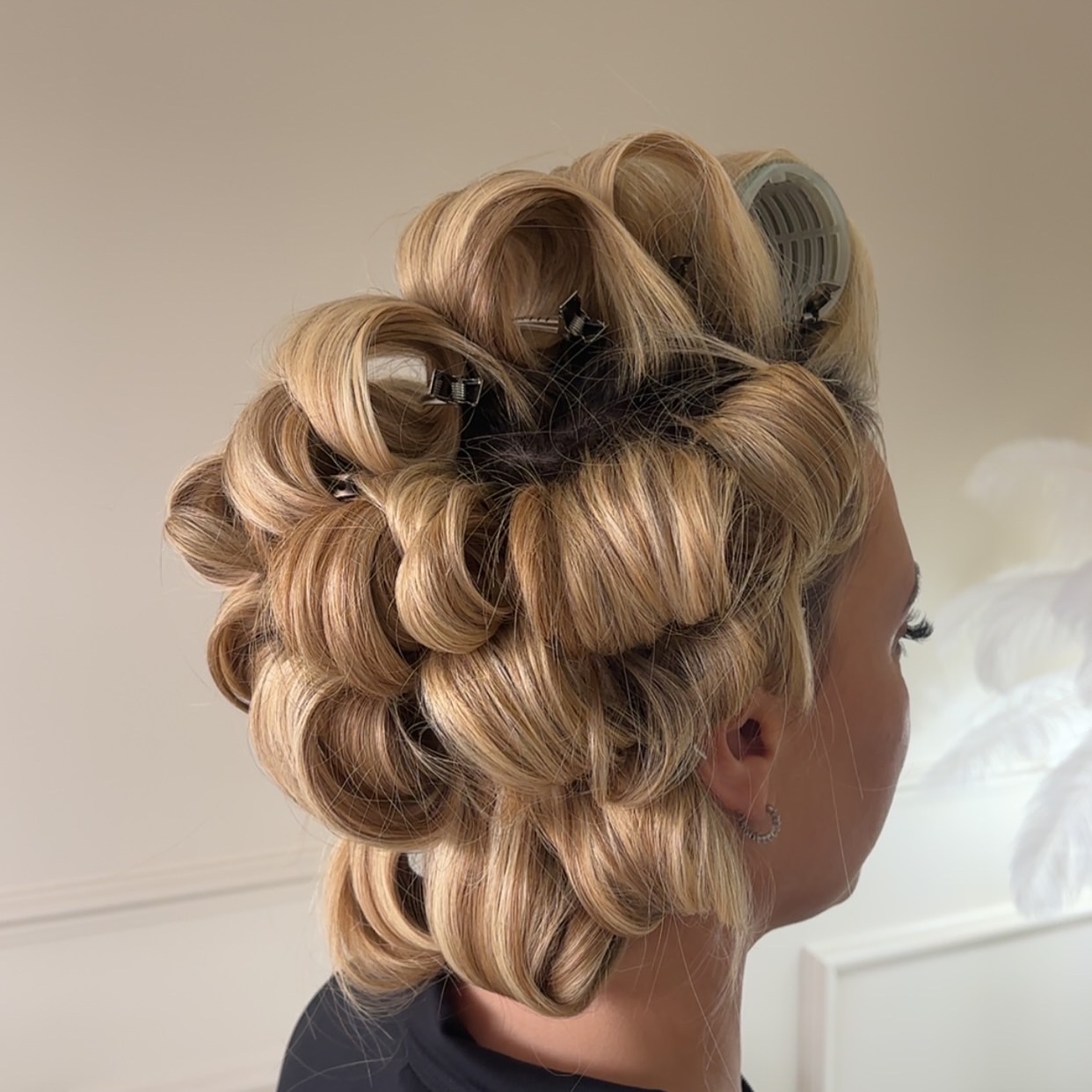
Overnight buns are the fastest “set it and forget it” method on this list. Twist damp hair into one, two, or three buns depending on how much hair you have and how defined you want the waves. Secure with soft scrunchies or gentle elastics. The more buns, the smaller and tighter the wave. One bun creates a loose, wavy texture. Two or three buns create defined, beach wave-style movement. In the morning, unravel slowly and separate with fingers. This works on all hair lengths as long as there’s enough hair to form a bun. Apply a light mousse beforehand for better hold and definition once released.
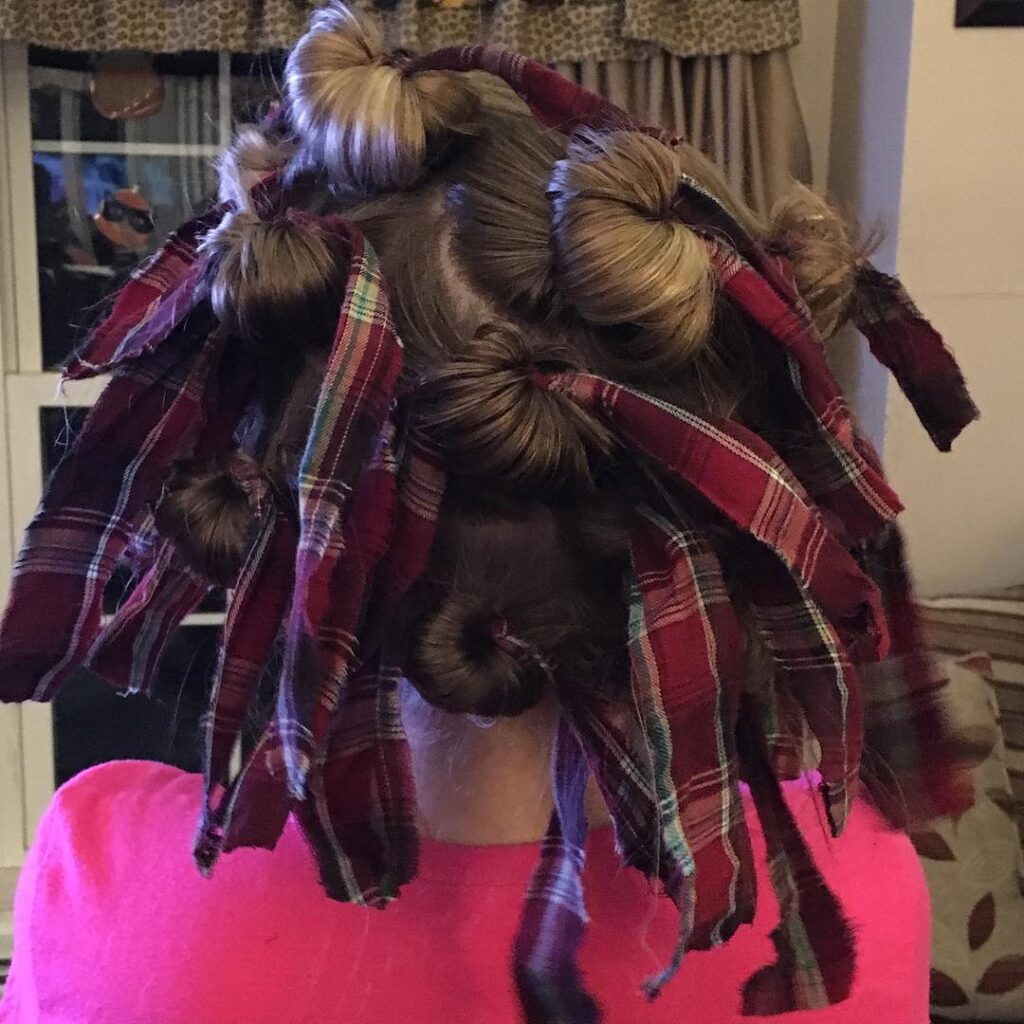
4. Rag Curls (Old-School But Outstanding)
Source: @Instagram
Rag curling is one of the oldest hair-waving techniques in existence, and it still works better than most modern methods for creating defined, long-lasting waves without any heat. Tear an old soft t-shirt or use strips of fabric (about one inch wide and eight to ten inches long), wrap small sections of damp hair around each strip from the ends upward, then tie the fabric in a knot at the scalp. Sleep in them and unravel in the morning. The fabric holds the hair gently without creating creases or dents that hard rollers leave. The result is a beautifully soft wave with impressive longevity. Works particularly well on fine and medium hair.
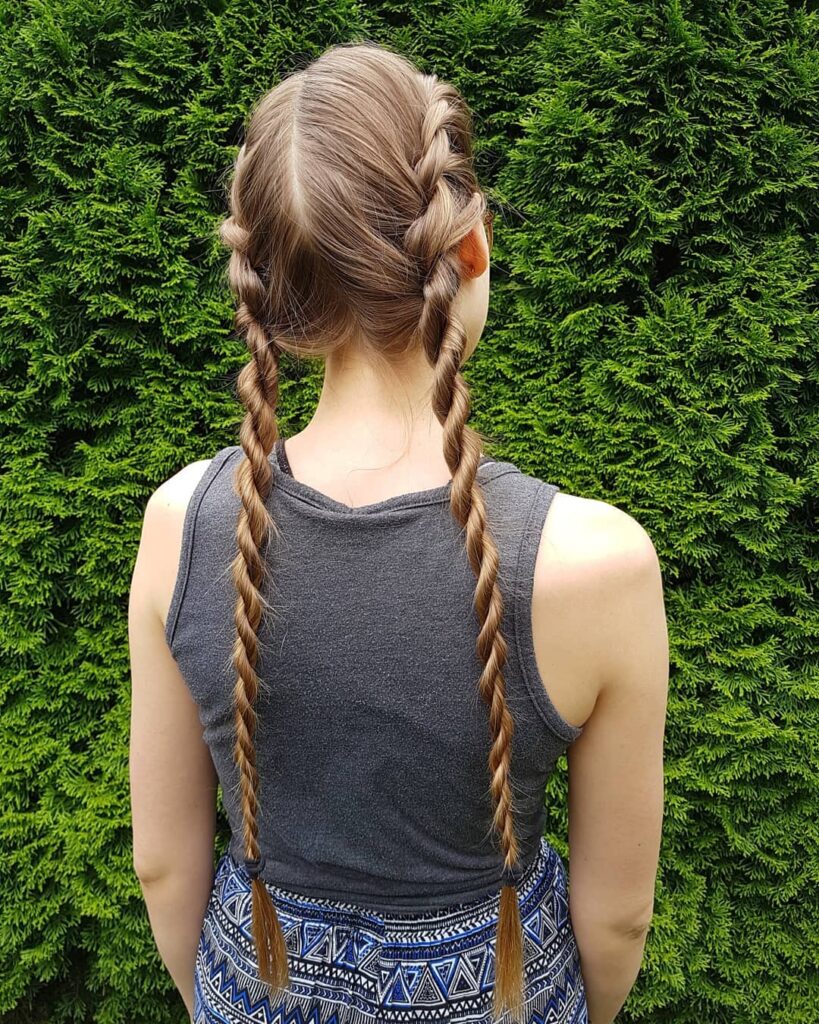
5. Twisted Rope Braids
Source: @Instagram
Instead of standard three-strand braids, try a rope twist — simply take a section of hair, split it into two, twist each half clockwise individually, then twist both pieces together counterclockwise. Secure at the end and repeat on the other side. The double-twist structure creates a slightly different wave pattern from standard braids — the waves are tighter and more spring-like, with a slight corkscrew quality rather than a flat crimp. This is a great technique for people who want more texture and bounce than a regular braid gives them. Works best on medium to long hair of straight or slightly wavy texture.
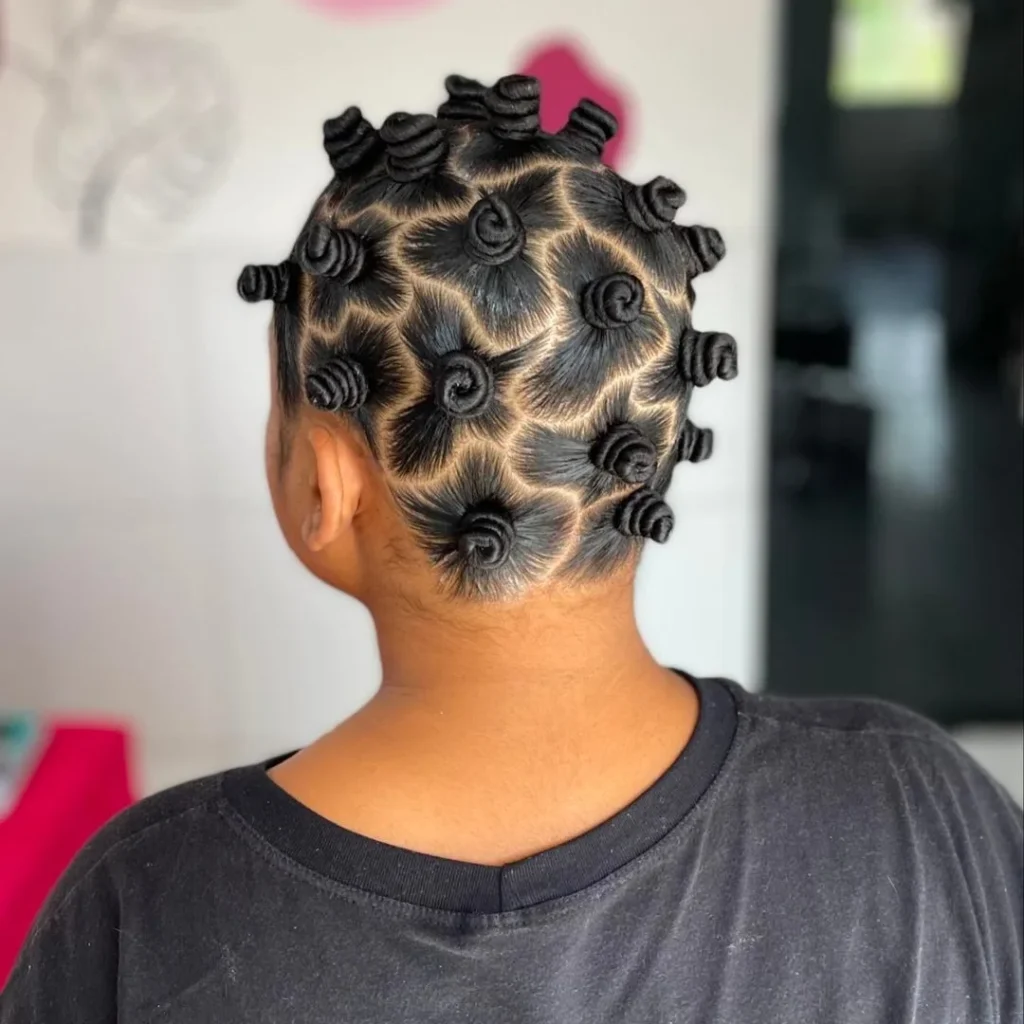
6. Bantu Knot Out
Source: @Instagram
A Bantu knot out is a classic natural hair technique that translates brilliantly to all hair types looking for overnight waves. Divide damp hair into sections, apply a curl cream or defining product to each section, then twist each section tightly from root to tip and coil it against the scalp into a small flat knot. Pin the knot in place if needed. Sleep on it. In the morning, carefully unravel each knot and gently separate the resulting spirals with fingers. On naturally straight hair, this produces tight, defined waves with gorgeous shape and shine. On wavy or curly hair, it creates beautiful, uniform ringlets. The bigger the sections, the looser the wave.
7. Heatless Curling Ribbon or Rod

Source: @Instagram
The heatless curling ribbon (a soft, flexible rod or ribbon that wraps around hair) became hugely popular online and for good reason — it actually works. Position the ribbon vertically at the top center of the head, then wrap small sections of damp hair around it in opposite directions (left section wraps left, right section wraps right), working from roots to ends, all the way down. Sleep with the ribbon in place. In the morning, unravel the wrapped hair carefully from bottom to top. The result is consistent, uniform waves from root to tip — arguably the most even wave pattern of any method on this list. Works on all lengths and types of straight hair.
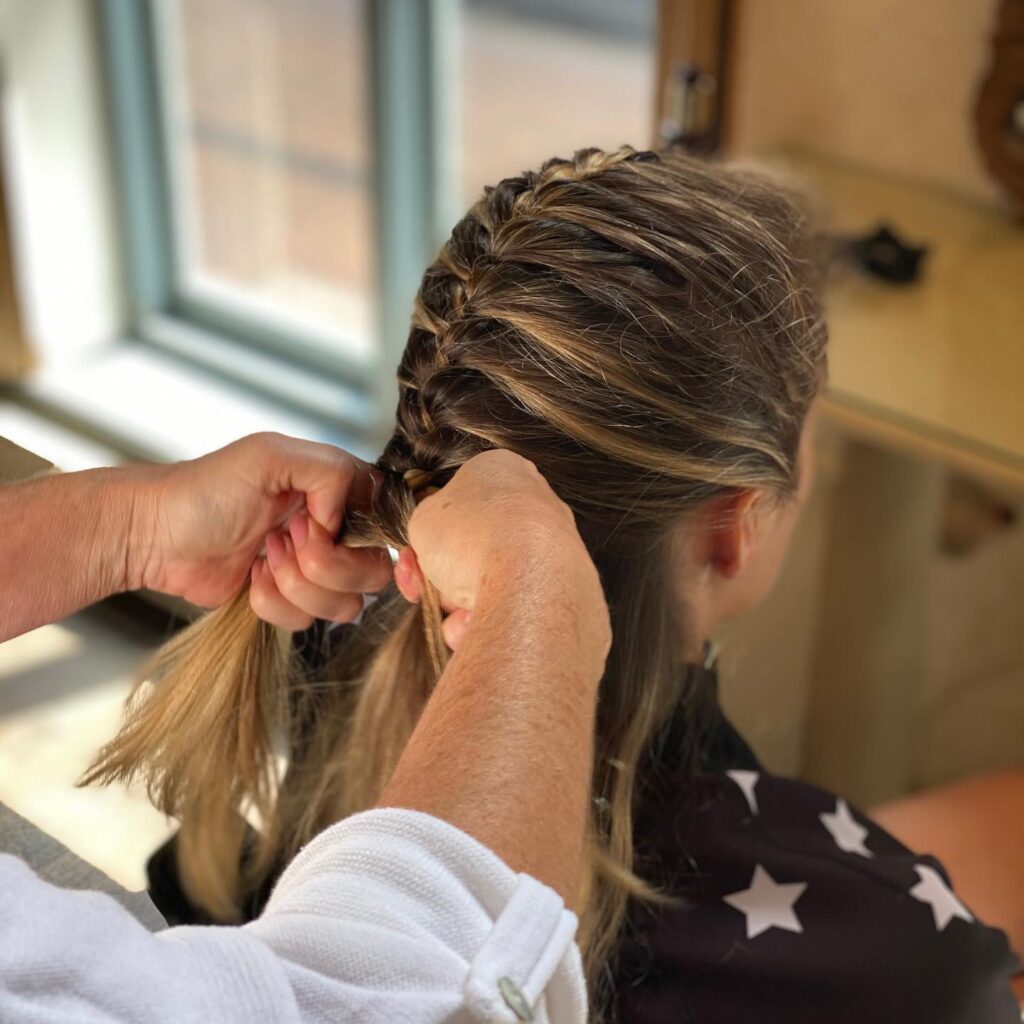
8. Overnight French Braid
Source: @Instagram
A single French braid — starting at the crown and braiding all the way down — creates a different wave pattern from regular braids. Because the hair is added in sections from different parts of the head as you French braid, the finished wave has more variation and depth than a standard braid. The crown area gets a slightly stretched, volumized wave, and the lower sections get a crimpier, more defined texture. Apply a light-hold mousse before braiding and leave the end of the braid slightly loose. For a voluminous morning result, flip hair upside down and gently shake before finger-combing through the waves.
9. Pin Curl Set
Source: @Instagram
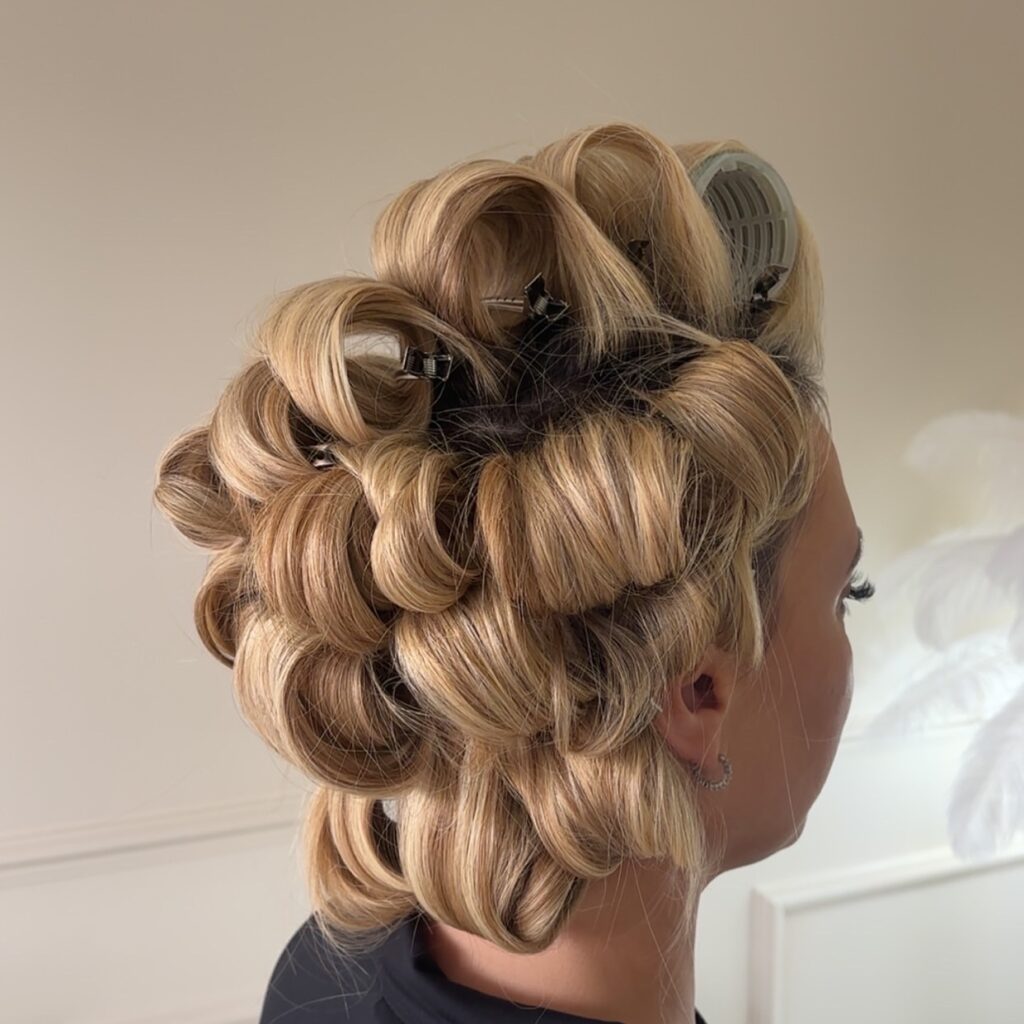
Pin curls are a vintage technique with very modern results. On damp hair, take a small section, coil it flat against the scalp in a circular shape, and pin it with a bobby pin or clip. Continue across the entire head. Sleep in the pin curls (use a silk or satin scarf or bonnet to prevent frizz). In the morning, remove all the pins carefully and separate the curls gently. The result is a soft, polished wave set that looks like a professional blowout with vintage character. This is one of the best techniques for fine hair because the pin curls sit flat and don’t require the hair to support any weight or tension overnight.
10. Straw Set on Damp Hair
Source: @Instagram
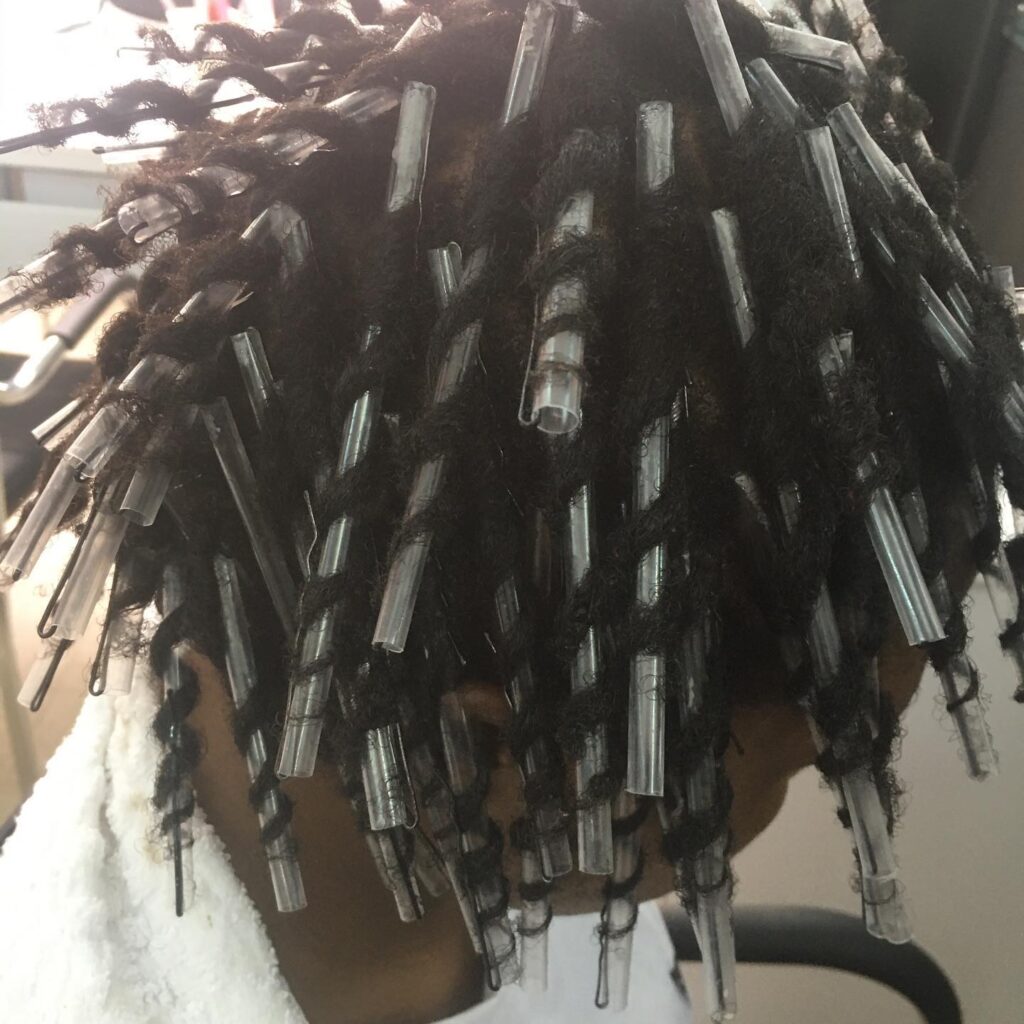
Straw sets — yes, actual drinking straws — create tiny, uniform spirals when left overnight in damp hair. Roll small sections of damp, product-coated hair around a straw from the ends upward toward the scalp, then fold the straw ends to hold it in place. Sleep with the straws in (it’s less uncomfortable than it sounds with practice), then remove in the morning and separate gently. The result is very defined, tight waves that can be loosened to beachy texture by running fingers through them with a little serum. This works particularly well on short to medium hair and gives the most defined result of any no-heat method.
11. Sock Curls
Source: @Instagram
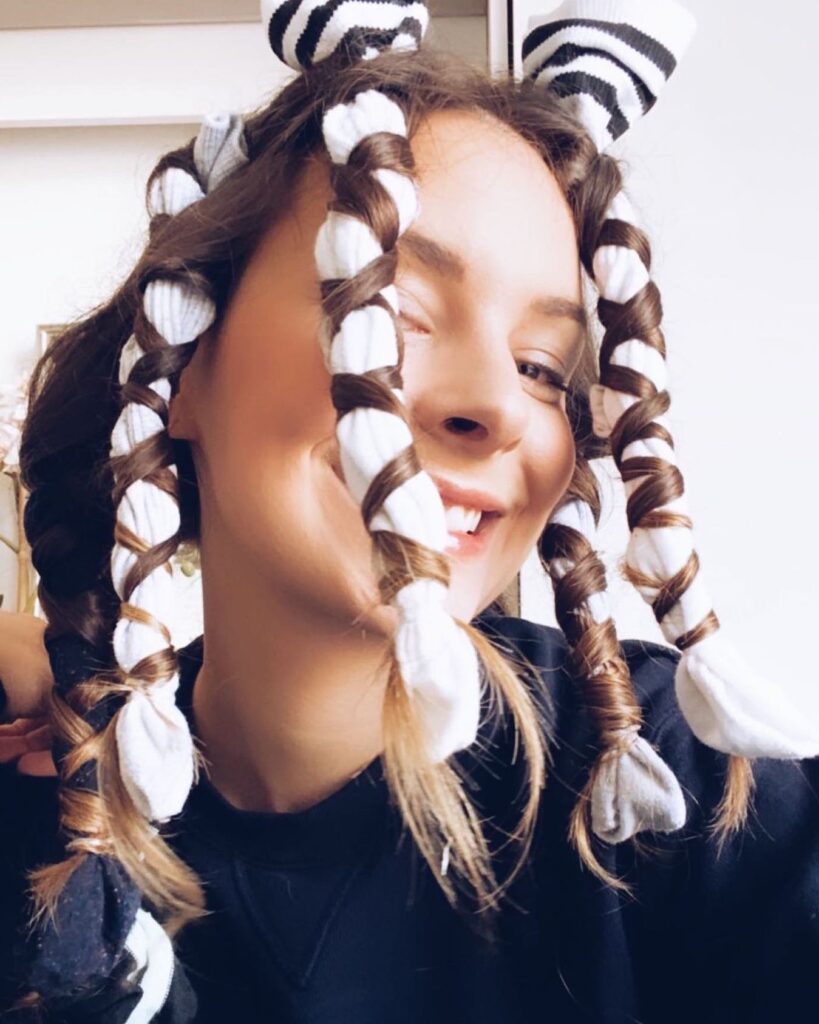
Sock curls use the same principle as rag curls — soft, fabric-covered wrapping — but with clean socks instead of fabric strips. Cut the toe section off old socks and use the tube portion. Wrap small sections of damp hair from ends to roots around the sock tube, then roll the sock up toward the scalp and tie or tuck the ends. Sleep in them, unravel in the morning, and finger-separate the waves. This is a great budget-friendly alternative for people who want rag curl results without cutting up fabric. The sock’s stretchy material is gentle and crease-free. Works particularly well on shoulder-length to long hair.
12. Braided Low Bun
Source: @Instagram
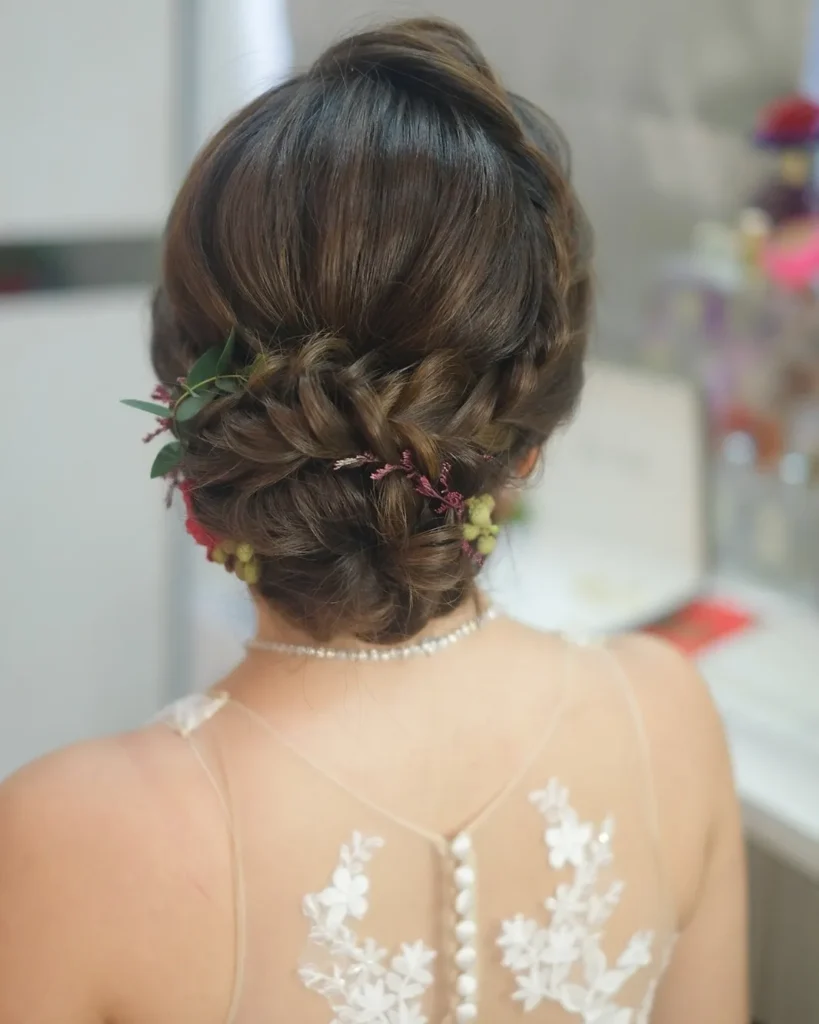
This hybrid technique combines braiding and bun-setting for a wave pattern that’s different from either method alone. Braid the hair loosely from the nape of the neck downward, then coil the braid into a bun and pin it in place. The braid adds texture within the wave, while the bun shape curves the entire braid as it sets. The result is a wave with both crimping texture and directional curl — a layered, dimensional wave that looks more natural and effortless than a standard braid wave. Release gently in the morning, separate with fingers, and apply a light hold spray. Best on medium to long hair.
13. T-Shirt Twists
Source: @Instagram
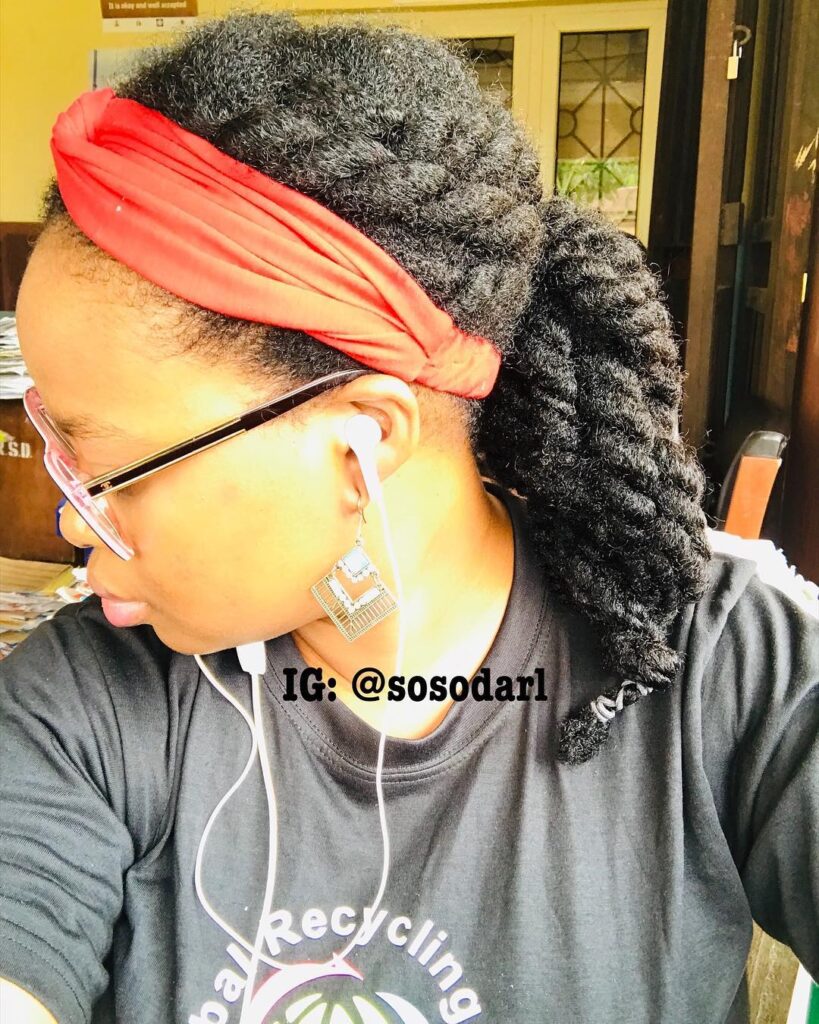
Wrapping damp hair in a t-shirt — not for drying, but for wave-setting — is a technique that most people haven’t tried and almost everyone is surprised by. Lay an old soft t-shirt flat, place the ends of your hair at the center, then twist sections of hair loosely around the twisted body of the shirt, working upward. Wrap the remaining shirt material around the head and secure. Sleep in it. The soft cotton creates zero friction, and the twisting motion sets loose, tousled waves with almost no frizz. This is especially effective on medium-density straight hair that tends to resist traditional braid waves.
14. Overnight Flat Twist Out
Source: @Instagram
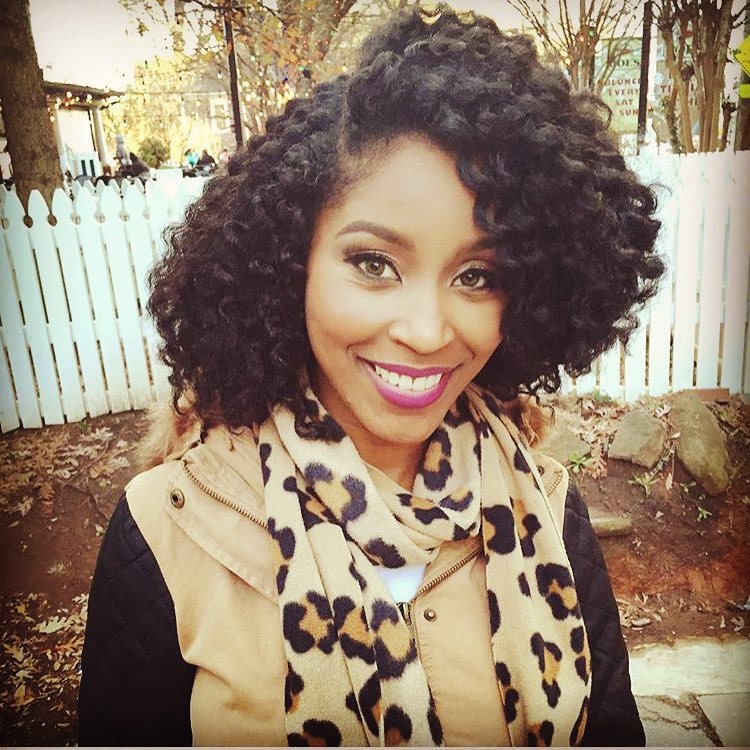
The flat twist out is similar to the Bantu knot out but uses a flat twist (two-strand twist done flat against the scalp in a line) rather than a coiled knot. Take sections of damp, product-coated hair and flat twist each section from the hairline toward the nape or crown, then pin the ends. Sleep with the flat twists in. In the morning, unravel from ends upward and finger-separate carefully. The flat twist creates a wider, flatter wave pattern than the knot out — it’s more of a body wave than a tight curl. Excellent for people who want volume and movement rather than defined spirals.
15. Damp Braid + Dry Shampoo Trick

Source: batistehair
This final method is the most refined technique for getting wavy hair overnight — it combines the standard braid method with a product trick that dramatically improves the result. After applying leave-in conditioner to damp hair, lightly spritz dry shampoo at the roots before braiding. The dry shampoo absorbs any excess moisture at the scalp (which is where waves always fall flat first), giving the roots lift and volume that the standard braid-and-go method misses entirely. Braid as normal, sleep, and release in the morning. The waves at the root will have the same volume and texture as the mid-lengths and ends — a consistent, full-headed wave result that almost no other technique achieves.
Overnight Wave Methods Comparison Table
By Hair Type and Result
| Method | Best Hair Type | Wave Intensity | Time to Set | Longevity | Skill Level |
|---|---|---|---|---|---|
| Two Braids | Straight/Fine | Gentle–Medium | 6–8 hours | 1–2 days | Beginner |
| Multiple Braids | Thick/Medium | Medium–Strong | 6–8 hours | 1–2 days | Beginner |
| Overnight Buns | All types | Gentle–Medium | 6–8 hours | 1 day | Beginner |
| Rag Curls | Fine/Medium | Medium–Strong | 6–8 hours | 2 days | Beginner |
| Rope Twists | Straight/Wavy | Medium | 6–8 hours | 1–2 days | Beginner |
| Bantu Knot Out | All types | Strong | 6–8 hours | 2 days | Intermediate |
| Heatless Ribbon | Straight/Fine | Medium–Strong | 6–8 hours | 1–2 days | Beginner |
| French Braid | Straight/Wavy | Medium–Deep | 6–8 hours | 1–2 days | Intermediate |
| Pin Curls | Fine/Straight | Gentle–Medium | 6–8 hours | 2 days | Intermediate |
| Straw Set | All types | Very Strong | 7–8 hours | 2–3 days | Intermediate |
| Sock Curls | Medium/Long | Medium | 6–8 hours | 1–2 days | Beginner |
| Braided Low Bun | Medium/Long | Medium–Deep | 6–8 hours | 1–2 days | Beginner |
| T-Shirt Twists | Medium density | Gentle | 6–8 hours | 1 day | Beginner |
| Flat Twist Out | Wavy/Curly | Medium | 6–8 hours | 2 days | Intermediate |
| Braid + Dry Shampoo | All types | Medium + Volume | 6–8 hours | 1–2 days | Beginner |
Dampness Level Guide (This Is Critical)
| Dampness Level | Result | Notes |
|---|---|---|
| Soaking wet | Little to no wave, frizz | Hair won’t dry fully overnight |
| Very damp (80% dry) | Good wave definition, minimal frizz | Ideal for thick hair |
| Damp (70% dry) | Best results for most hair types | The sweet spot for most methods |
| Nearly dry (90% dry) | Lighter wave, more volume | Better for fine hair that over-absorbs moisture |
| Fully dry | No wave — technique will not work | Must start with at least some dampness |
Common Mistakes and How to Avoid Them
1. Starting with Soaking Wet Hair
This is the most common reason overnight wave methods fail. Soaking wet hair takes too long to dry fully, leaving the inner sections still damp by morning. The result is a flattened, frizzy wave rather than a defined one. Fix: Towel dry or air dry for 20–30 minutes until hair is damp but not dripping before beginning any overnight method.
2. Skipping Product Entirely
Trying to set waves on completely product-free hair gives faint, short-lived results. Product helps hold the wave pattern as the hair dries. Fix: Apply a light mousse, leave-in conditioner, or curl cream to damp hair before setting. You don’t need much — a dime-sized amount is usually enough for medium-length hair.
3. Sleeping on a Cotton Pillowcase
Cotton creates friction against hair overnight, causing frizz, breakage, and waves that look rough and undefined by morning — even when the technique was done perfectly. Fix: Switch to a satin or silk pillowcase, or wrap the set hair in a satin scarf or bonnet before sleeping. This single change makes a significant difference.
4. Unraveling Too Quickly and Aggressively
Yanking or brushing out overnight waves immediately causes them to frizz and separate into a poofy, undefined mess. Fix: Unravel each braid, bun, or knot slowly and gently. Then use only your fingers — never a brush — to separate the waves. A very light mist of hair oil or anti-frizz serum before separating adds shine and control.
5. Setting Too-Large Sections
Very large braids or buns on thick hair produce barely-there waves because there’s too much hair in each section for the bend to penetrate all the way through. Fix: Use more, smaller sections. The more sections you create, the more consistently the wave sets throughout the entire thickness of the hair.
6. Not Accounting for Hair Length Shrinkage
Wavy hair appears shorter than straight hair — sometimes significantly, depending on the tightness of the wave. People with fine or medium hair are often surprised when their waves make the hair look several inches shorter. Fix: If length matters, use looser techniques (large braids, single bun) that produce gentle waves rather than tight methods that create significant shrinkage.
Similar Variations Worth Exploring
If you love the overnight wave concept, here are adjacent heat-free techniques worth knowing about:
- Flexi Rod Set: Small, flexible rubber rods wrapped with hair and left in overnight — produces defined spiral waves with zero heat, especially effective on natural and wavy hair.
- Perm Rod Set: Smaller, stiffer rods used for tighter wave or curl definition — a more traditional salon technique adapted for DIY overnight use.
- Curl Sponge on Dry Hair: Not an overnight technique, but a heat-free way to add texture and wave-like definition to short natural hair in minutes.
- Sea Salt Spray + Air Dry: Spritz sea salt spray on damp hair and let it air dry naturally for a subtle, effortless beach wave that requires no setting at all.
- Diffuser Drying: Using a diffuser attachment on a blow dryer on low heat to dry waves into place — slightly faster than overnight but much gentler than direct heat styling.
Hair Care Tips for Getting Wavy Hair Overnight
Getting great overnight waves regularly means taking care of the hair that’s doing the work. Here’s what I recommend:
Pre-Wave Prep
- Deep condition weekly. Dry, brittle hair doesn’t hold a wave set as well as hydrated hair. A weekly deep conditioning treatment dramatically improves overnight wave results on all hair types.
- Use a microfiber towel or cotton t-shirt to remove excess water instead of a regular terrycloth towel. Regular towels cause friction and rough up the hair cuticle, which means more frizz in your morning waves.
- Apply product on damp hair, not dry. Products spread more evenly and penetrate better on damp hair, which means better wave definition.
During and After the Wave Set
| Step | Tip | Why It Matters |
|---|---|---|
| Product application | Apply evenly from mid-shaft to ends | Roots need less product to avoid greasiness |
| Sleeping protection | Satin pillowcase or bonnet | Prevents friction frizz overnight |
| Morning unraveling | Slow, finger-only separation | Preserves definition and reduces frizz |
| Finishing product | Light anti-frizz serum or hair oil | Adds shine and seals the wave |
| Hold product | Light-hold hairspray | Extends wave longevity through the day |
Maintaining Waves Beyond Day One
Overnight waves don’t have to disappear by the next morning. Refresh day-two waves by lightly spritzing with a mix of water and a few drops of conditioner, then scrunching gently. This reactivates the wave pattern without resetting the whole process. Avoid brushing wave-set hair at any point — once you brush it, the wave is gone and you’ll need to reset.
Outro
Learning how to get wavy hair overnight is genuinely one of the most useful no-heat styling skills you can pick up — once you find the method that works for your hair type, it becomes second nature. From the classic two-braid method to the heatless ribbon to the more advanced Bantu knot out, the 15 techniques in this guide give you options for every hair type, every wave intensity, and every schedule.
The real keys? Start with damp (not wet) hair, use a small amount of product, protect against friction overnight, and separate gently in the morning. Nail those four steps with any method on this list and you’ll wake up with beautiful waves reliably — and that’s how to get wavy hair overnight, done right.